Sterilize Growing Media
Before inoculation, pressure-cook or steam-pasteurize your substrate and tools to reduce contamination from competing fungi and bacteria, which is critical for successfully growing Gymnopilus purpuratus.

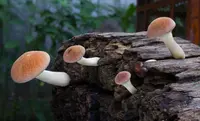
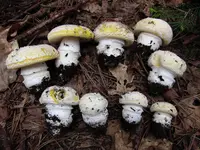
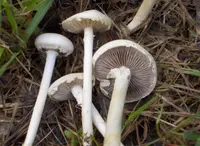
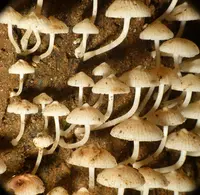
Gymnopilus purpuratus is not a vascular plant but a wood-inhabiting mushroom species. It typically grows in dense clusters on decaying wood, with reddish to purplish caps and yellowish to rust-colored gills.
This species is reported mainly from temperate regions, often in forests where fallen logs and stumps stay moist. It is not usually grown as a decorative or culinary organism, and attempts to cultivate it at home are considered challenging.
Conditions that favor it in nature include consistently damp, shaded habitats and decomposing woody material. For anyone researching how to care for Gymnopilus purpuratus, it is important to understand that this is primarily a wild fungus rather than a conventional garden or houseplant species.

Care Difficulty
Hard Care

Light Preference
Shade

Water Requirements
Keep Soil Moist

Temperature Preference
Cool Climate

Hardiness Zone
Unknown

Soil Texture
Organic-rich, Peaty

Soil pH
Acidic (5.5–6.5)

Soil Drainage
Moist but well-drained

Fertilization
Minimal (feed rarely)
Scan your plant to receive care tips personalized for your specific plant
Available on iOS and Android
This wood-decaying fungus prefers shaded woodland conditions rather than direct open sun.
Moist, not waterlogged, conditions are essential for reliable fruiting.
Stable, cool to mild temperatures support healthy mycelial growth and fruiting.
Humidity is not a key control factor for Gymnopilus purpuratus cultivation compared with temperature, substrate, and moisture management.
This fungus grows on nutrient-rich woody or lignin-containing substrates rather than true soil, so focus on structure, aeration, and controlled moisture.
This species is only moderately suitable for container cultivation and requires careful moisture and substrate management.
This wild saprophytic fungus is adapted to low-nutrient wood and typically does not require supplemental fertilization in cultivation.
As a mushroom-forming fungus, this species does not undergo conventional pruning and needs no structural shaping.
Cultivation focuses on renewing the substrate rather than traditional repotting, since the organism grows through wood-based material.
Propagation of Gymnopilus purpuratus is usually done by expanding mycelium rather than through typical plant-style methods.
Outdoor colonies in suitable climates are generally hardy and need minimal targeted winter care.

Plant Health Check
Not sure what's wrong with your plant? Check your plant's health inside the app.
This species produces a distinct purplish-brown spore print, which helps separate it from many other rusty-orange Gymnopilus species that have more orange- to cinnamon-colored spores.
The fruiting bodies are reported to have a pronounced, persistent bitterness, making them unpalatable despite their otherwise typical agaric appearance.
Documented occurrences are scattered and relatively localized, with confirmed collections mainly from parts of Europe and South America, suggesting it may be less widespread than some closely related Gymnopilus species.
This species is not recommended for consumption. It belongs to a group of wood‑rotting mushrooms that can contain psychoactive and potentially harmful compounds. Identification is difficult, and misidentification with dangerously toxic species is common, so foraging is unsafe.
Keep your plants happy and healthy with plant identification, disease detection, and easy care guidance.