Brittle Cinder Care (Ustulina deusta)

Brittle Cinder

About Brittle Cinder

Brittle cinder, Ustulina deusta, is not a garden ornamental but a wood-decay fungus that colonizes the bases of living and dead trees. It forms flat, crust-like fruiting bodies that turn dark, cracked, and coal-like as they age, often blending into bark and old wood.

This fungus occurs mainly on broadleaf trees in temperate regions, especially in parks, streets, and woodlands. It weakens structural wood by causing a brittle rot, which can lead to sudden branch or trunk failure. Because it is a pathogen rather than a cultivated plant, it is not practical to care for Brittle Cinder or grow it intentionally in typical home settings.

Main Plant Requirements

Care Difficulty

Hard Care

Light Preference

Partial Shade

Water Requirements

Moderate Water

Temperature Preference

Cool Climate

Hardiness Zone

5–9

Soil Texture

Loamy, Clay, Organic-rich

Soil pH

Slightly acidic (6.5–7.0), Neutral (7.0)

Soil Drainage

Moist but well-drained

Fertilization

Minimal (feed rarely)

Get Personalized Care Plan

Scan your plant to receive care tips personalized for your specific plant

Available on iOS and Android

How to Care for the Brittle Cinder

This wood-decay fungus develops best on host trees in shaded to semi-shaded locations rather than full sun.

  • Provide dappled or partial shade, such as understory positions receiving 2–4 hours of soft morning sun and indirect light for the rest of the day.
  • Avoid strong, direct afternoon sun on the base of host trees, as this can dry the substrate surface and slightly slow Brittle Cinder colonization.
  • In summer, canopy cover or nearby shrubs help maintain low light at the trunk base, while in winter leaf drop naturally increases light without significant impact on activity.

This fungus relies on consistent ambient and soil moisture around host tree roots and the lower trunk rather than direct watering.

  • Aim for evenly moist but not waterlogged soil around host trees; the top 2–5 cm should feel slightly damp, not saturated or cracked dry.
  • Poor drainage, standing water, and sour, swampy smells near roots indicate excess moisture that can stress the tree even if Ustulina deusta continues to fruit.
  • Extended dry periods that leave soil hard and dusty reduce fungal activity; mulched, well-drained soil that holds moderate moisture supports more stable conditions.

This species is adapted to temperate climates and remains active across a broad temperature range typical for outdoor trees.

  • Optimal activity generally occurs around 50–75°F (10–24°C), matching mild spring and autumn conditions in many temperate regions.
  • The fungus tolerates winter cold down to about 20–25°F (-6 to -4°C) within wood, though visible fruiting bodies may be limited in very cold spells.
  • Hot periods above 85°F (29°C), especially with dry air and soil, tend to slow surface fruiting; shaded, humid trunk bases buffer extreme temperature swings.

Humidity management is not relevant for Ustulina deusta, which is an outdoor wood-decay fungus rather than a conventional potted plant.

This wood-decay fungus colonizes tree roots and lower trunks rather than growing in a conventional potting substrate.

  • It develops on mature trees in compacted or moderately moist mineral soils, often where aeration is reduced and roots are stressed.
  • The organism tolerates a wide pH range but is frequently associated with urban or park soils that are slightly acidic to neutral (pH 5.5–7.5).
  • Because Ustulina deusta damages structural roots, avoid creating wet, poorly drained zones around susceptible trees by limiting heavy irrigation and soil compaction.
  • Managing soil to reduce stress on host trees, such as preventing prolonged waterlogging and maintaining balanced organic matter, can lower vulnerability to infection.

This species is not suitable for container growing, as it is a pathogenic fungus of tree roots and lower stems rather than an ornamental plant.

This fungus does not require routine fertilization; focus on host tree health rather than feeding Brittle Cinder itself.

Pruning relates to managing infected host trees rather than shaping Ustulina deusta itself.

  • Inspect trees late winter to early spring for cankers, dieback, and bark cracks at the base.
  • Remove dead, decayed, or structurally unsafe branches using clean, sharp pruning saws or loppers.
  • Avoid heavy crown thinning; instead, target clearly compromised wood to reduce failure risk.
  • Disinfect tools between cuts when working on suspect areas to limit spread to other trees.

Ustulina deusta is not grown as a potted specimen; management focuses on affected landscape or forest trees.

  • Assess trees annually; if significant root or butt decay is present, plan for staged removal rather than transplanting.
  • Do not attempt to transplant infected trees, as disturbed roots further compromise stability and survival.
  • When planting new trees in previously affected sites, remove infected stumps and major roots where practical.
  • Improve site conditions for replacement trees with proper soil preparation and watering to reduce future stress.

Intentional propagation of Ustulina deusta is not recommended, since it is a destructive wood-decay pathogen.

Specific winter care for this fungus is not required; instead, consider the stability and safety of infected trees.

  • Recognize that infected trees may fail more readily under winter wind, ice, or snow loading.
  • Schedule risk assessments before winter in regions with strong storms or heavy snowfall.
  • Remove or reduce high-risk trees near targets such as buildings, roads, and play areas when decay is advanced.

Care Tips

Early decay scouting

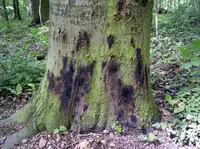
Inspect the lower trunk and major roots 2–3 times per year for flat, sunken, or cracked areas and any black, crusty fungal bodies, then record and photograph changes to help an arborist assess progression over time.

Reduce mechanical stress

Limit mower and string-trimmer contact, avoid parking or stacking materials over the root zone, and keep heavy foot traffic away from the base to reduce stress on already weakened wood.

Crown and weight management

Arrange for a qualified arborist to selectively reduce or thin heavy limbs on infected trees to lower wind load and branch weight, which decreases the chance of sudden structural failure.

Root-zone protection

Maintain a wide, undisturbed mulch ring under the canopy drip line and avoid excavation, trenching, or new paving there, since root damage and compaction can accelerate colonization by this fungus.

Risk-based removal planning

If structural decay is advanced or the tree stands near targets such as buildings, paths, or parking areas, schedule timely removal and stump grinding based on a professional risk assessment rather than waiting for visible dieback.

Common Pests and Diseases

Wood decays in hosts

This disease develops in the living wood of host trees, causing a brittle, charred-looking decay that often progresses from old pruning wounds or root injuries. Symptoms include sunken or cracked bark above infection points, reduced vigor, and a hard, coal-like fungal crust at the base or on lower stems.

Solution

Management focuses on host tree health and structural safety rather than curing the fungus. Remove and dispose of heavily colonized wood during dry weather, avoid wounding roots and trunks, and have a certified arborist assess and, if necessary, reduce or remove high‑risk trees showing advanced decay.

Basidiocarp colonization

This disease stage refers to the formation of black, crusty fruiting bodies on the bark or exposed wood, signaling an established internal decay. Symptoms include small, flat, dark cushions that later merge into irregular plates with a cracked, burnt appearance.

Solution

Fruiting bodies should be removed and destroyed to reduce local spore load, although this does not eliminate internal decay. Inspect the tree for stability, improve soil conditions and moisture balance, and consider targeted pruning or full removal where structural failure risk is high, following formal Brittle Cinder care instructions used in arboriculture.

Secondary wound pathogens

This disease complex involves other wood‑decay fungi and opportunistic microbes that colonize the same weakened tissues already affected by decay. Symptoms include multiple types of fungal bodies on the same trunk, expanding dead bark patches, and accelerated structural decline.

Solution

Limit new infections by keeping tools disinfected, pruning only in suitable dry conditions, and promptly removing loose, dead bark around large cankers without cutting into live tissue. Long term management relies on reducing stress on the host tree, improving soil aeration and nutrition, and scheduling regular professional inspections to decide on staged pruning or safe removal where decline progresses.

Interesting Facts

Hidden root assassin

This fungus primarily decays the roots and butt (basal) wood of living broadleaf trees such as beech, linden, and maple, often leaving the outer wood seemingly sound while the interior is severely weakened and prone to sudden breakage.

Two-faced life strategy

It behaves as a weak parasite on living trees and then continues as a saprotroph, decomposing dead wood, which allows it to persist in the same site for many years as roots and stumps slowly decay.

From cushion to cinder

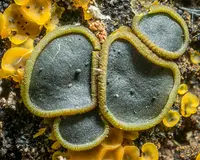
Its fruiting bodies start as pale gray, cushion-like patches with a bumpy surface and over time turn hard, cracked, and coal-black, resembling charred bark, which explains the common name brittle cinder.

Botan icon

Did you know?

Genetic and anatomical studies have shown that wood decayed by this species exhibits a characteristic soft rot pattern, where the fungus bores microscopic cavities inside the cell walls rather than rapidly consuming the entire wall as in classic brown or white rots, making its damage harder to detect by simple visual inspection.

FAQs about Brittle Cinder

This fungus spreads through airborne spores and colonizes weakened or stressed trees, especially maples and other hardwoods. In gardens it is not planted intentionally, as it functions as a wood-decaying pathogen rather than an ornamental species.

Grow Healthy Plants with Botan Care

Keep your plants happy and healthy with plant identification, disease detection, and easy care guidance.

Botan plant care app — identify plants on mobile

Explore More Plants