Sterile Substrate Handling
Use pressure-sterilized or oven-pasteurized substrate and only open it in a clean area to reduce contamination risk from molds and bacteria when growing Miller's oysterling.

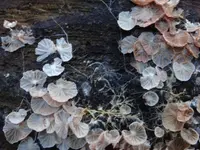
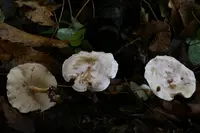
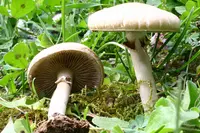
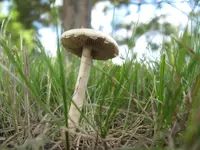
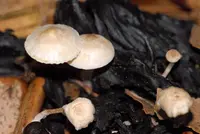
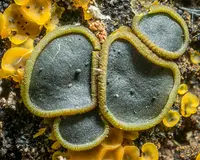
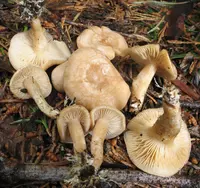
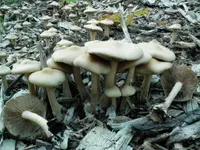
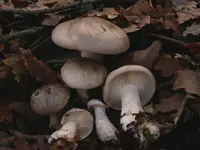
Miller's oysterling (Clitopilus hobsonii) is a small saprotrophic fungus that feeds on decaying plant material rather than forming a typical leafy plant. It usually appears as tiny, shell- or fan-shaped caps on dead herbaceous stems or woody debris.
This species is most often found in temperate regions, especially in damp woodland edges, hedgerows, and shaded gardens where organic litter accumulates. It is not commonly cultivated, but similar fungi favor cool, humid, sheltered spots with consistently moist, well-drained substrate. Gardeners who wish to care for Miller's oysterling mainly support it indirectly by maintaining a healthy layer of leaf litter or mulch and avoiding overcleaning of natural debris.

Care Difficulty
Moderate Care

Light Preference
Partial Shade

Water Requirements
Keep Soil Moist

Temperature Preference
Cool Climate

Hardiness Zone
Unknown

Soil Texture
Organic-rich, Loamy

Soil pH
Acidic (5.5–6.5)

Soil Drainage
Moist but well-drained

Fertilization
Minimal (feed rarely)
Scan your plant to receive care tips personalized for your specific plant
Available on iOS and Android
This small saprotrophic fungus prefers cool, shaded forest conditions rather than direct sun exposure.
Clitopilus hobsonii develops best on consistently moist, but not waterlogged, organic material.
This fungus prefers cool to mild conditions and is sensitive to both hard frost and strong heat.
Humidity is not a primary control factor for Clitopilus hobsonii, which develops mainly in naturally moist outdoor substrates.
Clitopilus hobsonii fruits best in consistently moist, loose, organic-rich substrate that mimics decaying woodland litter.
This species is only moderately suitable for container growing and is usually more reliable in outdoor beds or trays.
Clitopilus hobsonii is a saprophytic fungus that gains nutrients from decaying wood or litter, so added fertilizer is not needed for healthy growth.
Clitopilus hobsonii does not require pruning, since the fruiting bodies are short-lived and the main organism lives hidden in the substrate.
For Miller's oysterling, focus on relocating the colonized substrate rather than treating it like a potted plant.
Propagation of Clitopilus hobsonii is specialist work and not a routine task for home growers.
Outdoor colonies of Clitopilus hobsonii in its natural range are generally cold hardy and need no special winter care.

Plant Health Check
Not sure what's wrong with your plant? Check your plant's health inside the app.
This small agaric forms delicate, oyster-shaped caps only a few millimeters to about 1 cm across, often overlooked among soil particles and leaf fragments on disturbed ground.
It characteristically appears on compacted, nutrient-poor, or recently disturbed soils such as paths, field margins, and garden edges, rather than on wood or rich leaf litter like many other pink-spored fungi.
Although its spores give a pinkish spore print, this color is usually not obvious in the field; the pink tint becomes evident only when many spores collect on a surface or are examined under a microscope.
This small pinkish gilled fungus is considered inedible. It is too insubstantial for culinary use and may be confused with other, potentially harmful, look-alike species. It is best treated as a fungus for observation only.
Keep your plants happy and healthy with plant identification, disease detection, and easy care guidance.