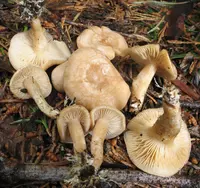
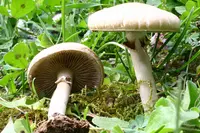
Olive Salver Care (Catinella olivacea)

Olive Salver

About Olive Salver

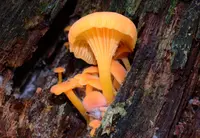
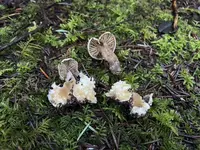
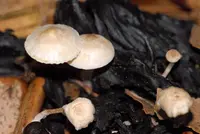
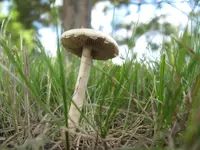
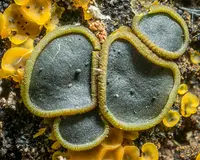
Olive salver, Catinella olivacea, is a small, gelatinous fungus rather than a traditional leafy houseplant. It forms tiny, olive-brown to dark disks or cushions on decaying wood, especially on damp, rotting branches. The texture is soft and rubbery, often appearing in scattered patches.

This species occurs mainly in temperate forests of Europe and North America, where humidity is high and wood stays moist. It relies on consistently damp, shaded conditions, so cultivating it indoors is challenging and usually more of a specialist project than casual care for Olive Salver. In nature, it plays a role in breaking down dead wood and recycling nutrients in forest ecosystems.

Main Plant Requirements

Care Difficulty

Moderate Care

Light Preference

Partial Shade

Water Requirements

Moderate Water

Temperature Preference

Warm Climate

Hardiness Zone

Unknown

Soil Texture

Loamy

Soil pH

Slightly acidic (6.5–7.0)

Soil Drainage

Well-drained

Fertilization

Minimal (feed rarely)

Get Personalized Care Plan

Scan your plant to receive care tips personalized for your specific plant

Available on iOS and Android

How to Care for the Olive Salver

This small, moss-like fungus prefers cool, shaded woodland conditions with only brief gentle sun.

  • Provide dappled or filtered light under shrubs or trees, with no more than 1–2 hours of weak morning sun and full protection from harsh midday or afternoon sun.
  • Site Catinella olivacea where it receives bright, indirect light reflected through canopy gaps rather than direct, open-sky exposure, which can dry and damage the fruiting bodies.
  • In summer, deepen shade or add leaf litter cover; in late autumn to early spring, slightly more ambient light is tolerated as long as the substrate stays moist.

This species depends on consistently moist, well-drained organic substrates rather than a fixed watering schedule.

  • Maintain evenly moist conditions in the top 2–5 cm of leaf litter or soil, allowing the surface to just begin to lose gloss before re-wetting, but never to fully dry out.
  • Use soft spray or gentle trickle watering so the thin, gelatinous structures of Catinella olivacea are not physically disturbed or washed away from decaying wood or humus.
  • Reduce irrigation in cool, wet seasons to avoid stagnant water and anaerobic conditions; increase frequency during warm, dry spells if the substrate lightens in color and feels only slightly damp.

This fungus thrives in cool to mild conditions and declines under hard frost or prolonged heat.

  • Aim for an active growth range around 45–68°F (7–20°C), typical of shaded woodland microclimates with steady moisture and limited direct sun exposure.
  • Protect from hard freezes below about 23°F (-5°C), which can damage tissue and substrate; brief light frost is usually tolerated if the underlying wood or soil stays unfrozen.
  • Limit exposure to sustained heat above 77–82°F (25–28°C); in hotter periods, maintain deeper shade and higher humidity so the substrate does not overheat or dry.

This moss-like fungus prefers consistently moist, cool air and benefits from moderate humidity control.

  • Aim for 60–80% humidity, using a hygrometer near the colony in terrariums or shaded outdoor setups.
  • Tolerates brief dips to 40–50%, but prolonged dry air causes crisping, fading color, and patchy dieback.
  • Increase humidity with covered terrariums, pebble trays under trays, or frequent fine misting that moistens surfaces without leaving standing water.

This species grows best on consistently damp, well-aerated, organic-rich substrates rather than dense mineral soil.

  • Use a fine-textured mix of leaf litter, milled sphagnum, and a little loam or compost that holds moisture but stays airy.
  • Ensure rapid drainage by mixing in 20–30% fine perlite or pumice so water moves through without pooling around the base.
  • Maintain a slightly acidic reaction, around pH 5.0–6.0, which matches natural woodland and decaying-wood habitats for Catinella olivacea.
  • Avoid compacted clay, heavily fertilized mixes, or alkaline substrates, which limit oxygen and encourage competing plants or algae.

This species can be grown in shallow containers or terrariums that maintain stable surface moisture.

  • Choose a wide, shallow container to maximize surface area for spreading while preventing deep waterlogging beneath the substrate.
  • Use plastic or glazed ceramic containers when slower evaporation is needed, reserving porous clay only where drying is a concern.
  • Raise the container slightly on feet or mesh so runoff escapes freely and the base does not sit in residual water, which encourages rot.

Catinella olivacea typically thrives in low-nutrient conditions and usually does not need supplemental fertilizer in natural or woodland-style plantings.

Pruning Catinella olivacea is rarely required and is mainly done to maintain plant health and access in naturalistic plantings.

  • Carry out light pruning in late winter or early spring, before active growth resumes.
  • Remove dead, damaged, or diseased material using clean, sharp scissors or small pruning shears.
  • Thin out badly crowded patches only where they interfere with nearby plants or paths.
  • Avoid heavy cutting, which can disturb the colony-like growth habit and soil surface.

This species is usually grown in the ground, so focus on careful transplanting rather than container repotting.

  • Transplant in early spring or early fall, when temperatures are mild and soil stays evenly moist.
  • Look for signs such as poor establishment, competition from aggressive neighbors, or waterlogging before deciding to move a clump.
  • Lift with a wide soil ball, disturb roots as little as possible, and replant at the same depth in similar conditions.
  • Water gently after transplanting and keep the site evenly moist for several weeks to reduce root stress.

Propagation of Catinella olivacea is possible but generally carried out by specialists rather than casual gardeners.

This species is typically cold hardy in its native range and needs little specific winter care when planted in suitable climates.

  • In exposed sites, apply a light mulch around nearby vegetation to stabilize soil moisture and temperature.
  • Avoid heavy foot traffic over colonies in winter to limit mechanical damage to the delicate structure.
  • Container-grown specimens, if attempted, should be kept in a cold, frost-free, evenly moist environment.

Care Tips

Substrate depth control

Maintain only a thin 0.5–1 cm layer of moist, fine substrate such as well-rinsed peat or rotted wood fibers so the fungus forms even, shallow mats instead of patchy, suffocating clumps.

Rotating collection trays

Rotate culture trays or logs every 1–2 weeks between slightly different micro-sites (e.g., shadier vs. brighter bench positions) to reduce risk of localized mold outbreaks and to observe which conditions this clone prefers.

Gentle airflow management

Use a low-speed fan set well away from the culture to keep air slowly moving across the surface, which limits bacterial films and keeps the fruiting bodies cleaner without drying the substrate edge.

Hygienic tool handling

Disinfect tweezers, blades, and misting nozzles with 70% isopropyl alcohol before every use to prevent introducing competing fungi that can quickly overrun the delicate Olive Salver colonies.

Staggered substrate renewal

Refresh no more than 25–30% of the colonized substrate at one time so the mycelium has stable zones to regrow from, which is important when caring for Olive Salver over multiple fruiting cycles.

Common Pests and Diseases

Slime mould overgrowth

This disease appears as slimy, gelatinous patches on and around the fruiting bodies, often in saturated, nutrient-rich habitats. Symptoms include loss of the neat, olive-brown discs and replacement by amorphous, pale to brightly colored slime masses.

Solution

Remove heavily affected substrate or fruiting material and improve site hygiene by clearing decaying plant debris in a limited radius. Reduce sustained surface wetness by improving drainage or slightly increasing air movement, since slime moulds favor stagnant, waterlogged microhabitats.

Parasitic fungi

This disease is caused by other microscopic fungi that colonize and overgrow the apothecia, leading to discoloration, distortion, or collapse of the small olive discs. Symptoms include patchy white, gray, or darker mould on the surface of fruiting bodies and reduced spore production.

Solution

Carefully remove and discard parasitized fruiting clusters and adjacent substrate to lower local inoculum levels. Avoid highly enriched, compact organic layers and maintain moderate air circulation, since dense, persistently damp litter favors these parasitic species and complicates Catinella olivacea care instructions.

Collembolan grazing

These insects, commonly called springtails, feed on fungal tissue in very moist substrates, sometimes leaving pitted or eroded margins on the discs. This pest usually appears in large numbers in continuously wet, organic-rich environments.

Solution

Lower extreme moisture by allowing the surface layer of substrate to drain between heavy wet periods and avoid unnecessary additional watering in nearby cultivated areas. If densities are very high in container or controlled setups, gently flush and replace the top layer of substrate and increase ventilation to make conditions less favorable for springtails.

Fungivorous mites

This pest consists of tiny mites that feed on fungal tissues and spores, sometimes causing roughened disc surfaces, loss of spore-bearing tissue, and general weakening of fruiting bodies. Symptoms include fine speckling, surface scarring, and occasional web-like strands in severely infested patches.

Solution

In small, managed cultures, remove and discard infested pieces of substrate and introduce fresh, clean material with good structure to avoid compaction. Improve micro-ventilation and avoid chronic, stagnant humidity; in laboratory or collection settings, targeted use of a low-toxicity miticide labeled for fungal cultures may be considered under professional guidance.

Interesting Facts

Gelatinous olive discs

This fungus forms tiny, soft, gelatinous discs that are usually olive-brown and often clustered together on decaying wood, giving a distinctive olive tone to the bark surface when moist.

Preference for wet wood

It typically appears on very damp, decaying wood, especially in wet forests or shaded streamside habitats, reflecting its strong preference for consistently high moisture and cool conditions.

Microscopic diagnostic features

Under a microscope, its spores and tissue structures have characteristic shapes and sizes that mycologists use to distinguish it from other small, jelly-like fungi that look similar to the naked eye.

FAQs about Olive Salver

Growth is slow to moderate. This small jelly fungus expands mainly during cool, consistently moist periods, then pauses in dry spells. Size increase is usually subtle over a season rather than dramatic, even in ideal woodland-style conditions.

Grow Healthy Plants with Botan Care

Keep your plants happy and healthy with plant identification, disease detection, and easy care guidance.

Botan plant care app — identify plants on mobile

Explore More Plants