Use hardwood blocks
For reliable fruiting, introduce the fungus to pre-soaked, pasteurized hardwood blocks or thick chips rather than loose sawdust, as these retain moisture more evenly and support stronger colonization.

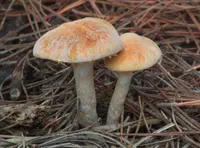
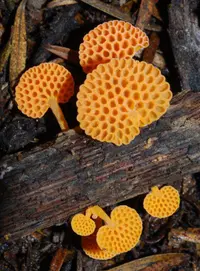
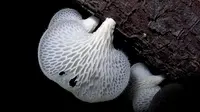
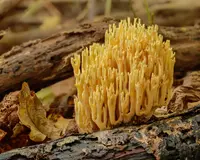
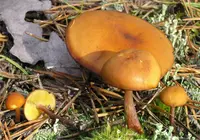
Golden wood fungus, Gymnopilus allantopus, is a wood-decaying mushroom rather than a typical leafy houseplant. It forms dense clusters of yellow to golden-orange caps on dead or dying wood, often creating layered, shelf-like structures. The gills beneath are crowded and similarly colored.
This species is native to Australia, where it commonly colonizes fallen logs and stumps in forests and urban parks. It thrives in humid, shaded environments with constant access to decaying wood.
Because it depends on specific fungi–wood interactions, it is not straightforward to cultivate at home. Those who want to learn how to care for golden wood fungus should understand it behaves more like a specialized decomposer than a decorative indoor plant.

Care Difficulty
Moderate Care

Light Preference
Partial Shade

Water Requirements
Keep Soil Moist

Temperature Preference
Warm Climate

Hardiness Zone
Unknown

Soil Texture
Loamy, Organic-rich

Soil pH
Acidic (5.5–6.5), Slightly acidic (6.5–7.0)

Soil Drainage
Moist but well-drained

Fertilization
Minimal (feed rarely)
Scan your plant to receive care tips personalized for your specific plant
Available on iOS and Android
This wood-decaying fungus prefers low to moderate light similar to shaded forest conditions.
Moisture levels around Gymnopilus allantopus should stay consistently damp but never waterlogged.
This species grows best in mild, consistently cool to warm conditions without temperature extremes.
This wood-decaying fungus prefers consistently moist air but tolerates typical outdoor humidity where it naturally grows.
This fungus does not use conventional soil and instead needs suitable woody substrate conditions to develop well.
This species is generally unsuitable for conventional container growing, since it relies on colonizing substantial pieces of decaying wood rather than confined potting media.
Cultivated Gymnopilus allantopus on logs or substrate needs only modest supplemental nutrition to maintain steady fruiting.
Pruning is generally minimal for Gymnopilus allantopus, since the organism is a fungus rather than a woody plant.
Transplanting mainly involves moving colonized wood or substrate of Gymnopilus allantopus rather than handling roots like a typical plant.
Propagation of Gymnopilus allantopus is done through spores and, more reliably, by spreading live mycelium onto fresh substrate.
Outdoor Gymnopilus allantopus on hardy wood generally tolerates cool weather but benefits from basic winter moisture and substrate protection.

Plant Health Check
Not sure what's wrong with your plant? Check your plant's health inside the app.
This species is native to southwestern Western Australia, where it commonly fruits on fallen logs and stumps of native trees in eucalypt forests and woodlands.
Mature fruiting bodies often form dense, tiered shelves with bright yellow to orange caps and contrasting darker scales, creating a layered effect that is very conspicuous on dead wood.
Gymnopilus allantopus is a saprotrophic fungus, meaning it feeds on dead wood and contributes to the breakdown of lignin and cellulose, helping return locked-up nutrients to forest soils.
This species is not recommended for eating. Identification within the Gymnopilus group is difficult, and some related species contain toxic compounds. Treat it as inedible and avoid tasting, feeding to others, or using in cooking.
Keep your plants happy and healthy with plant identification, disease detection, and easy care guidance.