Gymnopilus picreus Care

Gymnopilus picreus

About Gymnopilus picreus

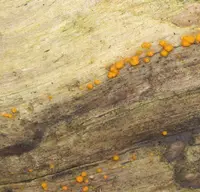
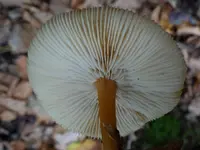
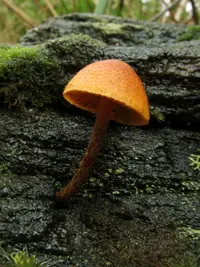
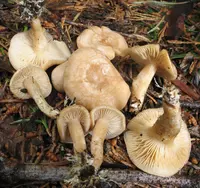
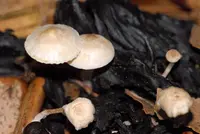
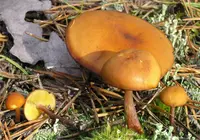
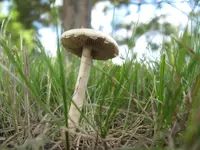
Gymnopilus picreus is not a traditional houseplant but a wood-rotting mushroom species. It forms small to medium, rusty orange to cinnamon-brown caps with slender stems, usually in tight clusters. The gills turn ochre to rusty brown as spores mature.

This fungus typically appears on decaying conifer wood in cool, moist forests of Europe, Asia, and parts of North America. It is not commonly cultivated, and successful attempts to grow Gymnopilus picreus require controlled humidity, stable cool temperatures, and consistently moist but not waterlogged woody substrate.

Because it is specialized to rotting wood and forest microclimates, it is considered difficult for beginners to care for Gymnopilus picreus in artificial conditions.

Main Plant Requirements

Care Difficulty

Hard Care

Light Preference

Partial Shade

Water Requirements

Keep Soil Moist

Temperature Preference

Cool Climate

Hardiness Zone

Unknown

Soil Texture

Loamy, Organic-rich, Peaty

Soil pH

Strongly acidic (4.5–5.5), Acidic (5.5–6.5)

Soil Drainage

Moist but well-drained

Fertilization

Minimal (feed rarely)

Get Personalized Care Plan

Scan your plant to receive care tips personalized for your specific plant

Available on iOS and Android

How to Care for the Gymnopilus picreus

This saprotrophic fungus prefers stable, gentle woodland light rather than strong direct sun.

  • Provide dappled or filtered light, similar to mixed forest understory, with only brief direct sun, mainly early morning or late afternoon.
  • Target 2–4 hours of weak direct sun plus bright shade for the rest of the day; deep shade slows fruiting and produces sparse, pale caps.
  • Avoid intense midday sun, which can dry substrates and scorch developing caps; in open sites, use leaf litter or logs to create partial shade, especially in summer.

Moist but not waterlogged wood or woody debris is critical for reliable fruiting.

  • Keep the substrate consistently damp, with surface material feeling moist but not soggy; visible pooling or standing water indicates excess moisture.
  • Allow the top 1–2 cm of surrounding soil or debris to lose surface sheen before rewetting, then irrigate slowly so water soaks in rather than running off.
  • Reduce supplemental moisture in cool, wet seasons to prevent sour, anaerobic conditions; overwatering shows as sour smell and slimy patches, underwatering as cracking, dry substrate.

This species fruits best in cool to mild conditions and struggles with both hard frost and strong heat.

  • Aim for an active growth range of 50–68°F (10–20°C), which supports steady mycelial activity and predictable fruiting.
  • Tolerates brief drops near 32°F (0°C) in dormant mycelium, but repeated freezing of wet substrates damages tissue and reduces future flushes.
  • Sustained heat above 77–82°F (25–28°C) dries substrates and stresses the fungus; provide shade and moisture buffering during hot, dry periods to maintain a cooler microclimate.

This wood-rotting mushroom develops best in consistently moist air, with humidity more critical than for typical houseplants.

  • Aim for 80–95% humidity around Gymnopilus picreus during active growth for reliable fruiting.
  • Dry air below 60% causes caps to crack, edges to curl, and pins to abort before maturing.
  • Increase humidity by using a closed, ventilated fruiting chamber, fine misting of walls (not directly on caps), and moist perlite or damp towels as evaporation surfaces.

This fungus does not grow in plant potting soil but on decaying wood with consistently moist, aerated structure.

  • Provide a lignin-rich substrate such as hardwood chips, sawdust, or well-aged hardwood logs rather than mineral soil.
  • Ensure the wood-based substrate drains freely yet stays evenly moist; it should feel damp but never waterlogged or soupy.
  • Keep substrate slightly acidic to neutral (about pH 5.5–7) by using non-limed hardwood materials and avoiding ash or alkaline additives.
  • Improve aeration by using a coarse chip mix with varied particle sizes and avoiding dense, compacted sawdust layers that exclude oxygen.

This species can be grown in containers only as a specialized wood-based culture, not as a typical potted plant.

  • Use sturdy plastic tubs or buckets that retain humidity yet allow controlled gas exchange through small filtered holes or a loosely fitted lid.
  • Drill side drainage holes near the bottom so excess water can escape while the interior wood substrate remains evenly damp, not flooded.
  • Pack hardwood chips loosely to allow air pockets, leaving a small headspace at the top so emerging clusters are not pressed against the lid.

This wild, wood-decaying fungus is adapted to low-nutrient substrates and usually does not need supplemental feeding in cultivation.

As a short-lived mushroom forming on wood, this species does not require or respond to conventional pruning practices.

In culture, focus on renewing the woody substrate rather than traditional repotting for Gymnopilus picreus.

  • Replace spent or fully colonized substrate when fruiting declines or contamination appears, rather than waiting for root-bound symptoms seen in plants.
  • Time transfers to fresh, pasteurized or sterilized wood-based substrate when mycelium is actively growing, avoiding very hot or very cold periods.
  • Move colonized blocks gently to new containers or fruiting spaces, limiting vibration and impact that can damage the mycelial network.
  • Maintain stable moisture and temperature for several days after transfer to reduce stress and encourage rapid recolonization.

Propagation of this fungus is specialized and not typically handled by general plant owners, so routine home techniques are not recommended.

Outdoor cultivation of this fungus is generally left to natural conditions, and no specific winter care is needed in most climates.

Care Tips

Use clean substrates

Prepare hardwood sawdust or chips by pressure cooking or steaming at 121°C for 60–90 minutes to reduce competing fungi and bacteria before inoculation.

Control contamination

Work near a still air box or in a draft-free, disinfected area, flame-sterilize metal tools, and wipe gloved hands and inoculation points with 70% isopropyl alcohol to limit mold contamination when growing Gymnopilus picreus.

Optimize log selection

Choose freshly cut, healthy hardwood logs 8–20 cm in diameter, avoid bark damage, and let them rest 2–4 weeks before drilling and plugging with spawn to improve colonization success.

Monitor colonization cues

Check substrate or logs monthly for firm, white to pale mycelial growth and avoid disturbing the material once colonization is visible, as repeated handling can slow spread and invite contaminants.

Manage fruiting moisture

During fruiting, use fine-mist spraying on nearby surfaces rather than directly on developing mushrooms, and provide short daily fresh-air exchange to maintain high humidity without waterlogging caps and gills.

Common Pests and Diseases

Green mold

This disease is caused mainly by Trichoderma species that colonize the substrate and fruiting bodies, outcompeting the mushroom mycelium. Symptoms include dense green patches on the casing or substrate and stunted, deformed caps.

Solution

Remove and discard heavily contaminated blocks or trays, as Trichoderma spreads rapidly by spores. Reduce excess moisture, improve air exchange, sanitize tools and surfaces with 70% isopropyl alcohol, and use properly pasteurized or sterilized substrate for future batches as part of general Gymnopilus picreus care instructions.

Bacterial blotch

This disease is caused by Pseudomonas bacteria in overly wet, stagnant conditions. Symptoms include small, water-soaked, greasy spots on caps that can turn yellow to brown and may cause soft, slimy areas.

Solution

Reduce surface moisture by improving ventilation, avoiding misting directly onto caps, and keeping humidity within the required range without condensation on fruiting bodies. Remove and discard affected mushrooms, and clean growing containers and equipment with a food-safe disinfectant before starting a new flush.

Fungus gnat larvae

These insects are small flies whose larvae feed on mycelium and young primordia in the substrate. Symptoms include slow, uneven pinning, damaged bases of fruiting bodies, and visible tiny maggot-like larvae in the substrate.

Solution

Use fine mesh screens on vents, sticky traps to catch adults, and avoid leaving wet organic debris around the grow area. If infestation is present, remove heavily infested blocks, allow the upper substrate layer to dry slightly between mistings, and consider using a biological control such as Bacillus thuringiensis israelensis (Bti) according to label directions.

Mite infestation

These pests are tiny arthropods that can feed on mycelium, spores, and decaying organic matter in the growing setup. Symptoms include poor colonization, pitted or scarred caps, and fine moving specks on the substrate surface or between gills.

Solution

Discard heavily infested cultures or substrate, as mites are difficult to remove completely once established. Clean and vacuum the grow area, heat-treat or replace shelving where possible, store new substrates in sealed containers, and use high-quality, properly treated substrate to prevent introduction of mites.

Interesting Facts

Characteristically bitter taste

This species is known for its distinctly bitter-tasting flesh and gills, a trait that helps distinguish it from some similar-looking, potentially dangerous orange-brown mushrooms.

Small, rusty-orange cap

It typically produces relatively small fruiting bodies, with orange to rusty-brown caps often less than a few centimeters across, and a spore print that is strongly rusty-orange to cinnamon-brown.

Conifer wood specialist

It is most often recorded on well-decayed conifer wood, including buried wood and stumps, indicating a saprotrophic lifestyle where it breaks down lignin- and cellulose-rich substrates in coniferous forests.

FAQs about Gymnopilus picreus

This fungus should be considered unsafe for pets. It may contain bitter compounds and potentially psychoactive or irritating substances. Prevent dogs, cats, and other animals from eating wild mushrooms, and contact a veterinarian immediately if ingestion is suspected.

Grow Healthy Plants with Botan Care

Keep your plants happy and healthy with plant identification, disease detection, and easy care guidance.

Botan plant care app — identify plants on mobile

Explore More Plants