Turbinellus kauffmanii Care

Turbinellus kauffmanii

About Turbinellus kauffmanii

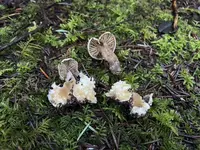
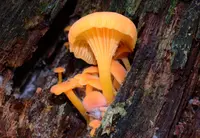
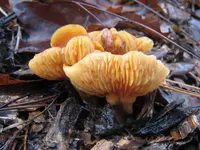
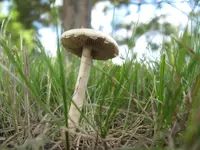
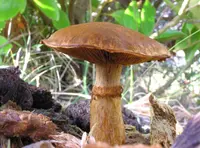
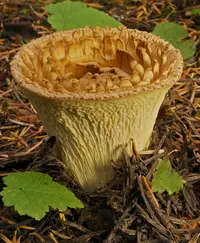
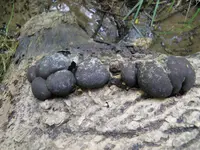
Turbinellus kauffmanii is not a green plant but a large, fleshy fungus, often called a club or funnel mushroom. It forms thick, vase-shaped fruiting bodies with wrinkled, folded surfaces in warm brown to yellow-brown tones.

This species typically occurs on the forest floor in conifer and mixed woodlands, especially in temperate North American regions. It grows from soil rich in decaying organic matter and is usually found in scattered groups.

Its reliance on specific forest soils and moisture conditions makes it difficult to cultivate at home, so information on how to care for Turbinellus kauffmanii is very limited. It generally prefers cool, moist, shaded environments with undisturbed, well-drained, humus-rich ground.

Main Plant Requirements

Care Difficulty

Moderate Care

Light Preference

Partial Shade

Water Requirements

Regular Water

Temperature Preference

Cool Climate

Hardiness Zone

Unknown

Soil Texture

Loamy, Organic-rich

Soil pH

Acidic (5.5–6.5)

Soil Drainage

Moist but well-drained

Fertilization

Minimal (feed rarely)

Get Personalized Care Plan

Scan your plant to receive care tips personalized for your specific plant

Available on iOS and Android

How to Care for the Turbinellus kauffmanii

This forest fungus prefers cool, shaded woodland conditions rather than direct open sun.

  • Provide dappled or filtered light under trees, similar to mixed conifer or hardwood forest shade, with no more than 1–2 hours of weak morning sun reaching the fruiting area.
  • Avoid strong midday or afternoon sun, which can dry the substrate and cause Turbinellus kauffmanii fruiting bodies to shrivel or discolor prematurely.
  • Site patches where surrounding vegetation or leaf litter provides consistent shade through summer, yet allows brighter, indirect light in spring and early autumn as the canopy thins.

This mycorrhizal fungus depends on consistently moist, not saturated, forest soil.

  • Aim for evenly moist mineral soil with a loose organic top layer; the top 2–3 cm should feel slightly damp but not muddy when pressed between fingers.
  • Watch for signs of excess moisture, such as standing water, sour smell, or slimy decay around fruiting bodies, and improve drainage or reduce supplemental watering if present.
  • In dry spells, especially mid to late summer, apply deep, infrequent soakings to the surrounding tree root zone, allowing the upper layer to partly dry between events while avoiding complete dust-dry conditions.

This species fruits best in cool to mild conditions typical of temperate forests.

  • Optimal fruiting usually occurs around 50–65°F (10–18°C), often in late summer to autumn when nights are cool and days are mild.
  • The mycelium in soil can tolerate cooler periods down to about 32°F (0°C), but hard, prolonged frost can damage surface fruiting bodies.
  • High heat above 80°F (27°C) combined with dry conditions tends to halt fruiting and cause rapid drying, so a shaded, humid microclimate helps buffer temperature extremes.

This terrestrial fungus does not depend strongly on ambient indoor humidity but on naturally moist outdoor substrates.

This mycorrhizal fungus does not grow in conventional potting soil and instead relies on specific woodland substrates.

  • Occurs in moist, well-drained forest soil, typically among conifers, where organic litter decomposes above a mineral soil layer.
  • Thrives in loose, aerated leaf litter and decaying wood fragments rather than compacted or heavily tilled ground.
  • Usually associates with slightly acidic substrates, roughly pH 5.0–6.5, common in coniferous and mixed forests.
  • For observing Turbinellus kauffmanii, focus on preserving undisturbed, organic-rich forest floors rather than preparing artificial mixes.

This species is not suitable for container cultivation because it depends on complex forest soil and tree-root associations.

This wild ectomycorrhizal fungus does not benefit from conventional fertilizing and is best left in its natural soil conditions when caring for Turbinellus kauffmanii.

This fungus does not require pruning; fruiting bodies naturally appear, mature, and decay without intervention.

This species is not suited to container culture; it depends on a living tree partner and complex soil fungi, so transplanting is rarely successful.

  • Avoid disturbing natural colonies; the underground mycelium network is sensitive to disruption.
  • Do not attempt routine transplanting based on slow growth or crowding, as these signs do not apply as with potted plants.
  • If disturbance is unavoidable, keep surrounding soil intact and move a large, undisturbed soil block with the host tree roots.
  • After any soil movement, maintain stable moisture and avoid compaction to reduce stress on the hidden mycelium.

Propagation of this mycorrhizal fungus is highly specialized and not practical for typical home cultivation.

No specific winter care is needed; the fungus survives as underground mycelium and tolerates normal seasonal cold in its native range.

Care Tips

Confirm Local Presence

Before planning any cultivation setup, contact a local mycological society or extension service to confirm whether this fungus naturally occurs in your region and which forest types and host trees it associates with there.

Record Habitat Details

When you encounter this species in the wild, take careful notes or photos of tree species nearby, soil texture, slope, and canopy cover, since replicating these site conditions is more useful than trying generic mushroom-growing methods.

Avoid Forest Disturbance

If exploring how to take care of Turbinellus kauffmanii in situ, limit trampling, raking, or digging around fruiting sites so the underground mycelium remains intact and can fruit in future seasons.

Monitor Seasonal Patterns

Track the timing of fruiting in the same area over multiple years, including recent rainfall and temperature patterns, to better understand the environmental triggers that support its recurring appearance.

Practice Responsible Collection

If collecting a small number of specimens for study, cut or twist them gently at the base rather than digging out the underground tissue, and leave most fruiting bodies in place to maintain the reproductive capacity of the population.

Common Pests and Diseases

parasitic mold fungi

This disease appears when rival mold species colonize the same decaying wood or soil substrate, leading to deformed, stunted, or discolored Turbinellus kauffmanii fruiting bodies. Symptoms include fuzzy, often white, gray, or green overgrowth on or around the mushroom clusters.

Solution

Remove and discard heavily overgrown or misshapen fruiting bodies and any obviously contaminated substrate. Improve airflow, reduce excessive surface moisture, and replace contaminated wood or litter to limit competing molds, as there are no practical chemical controls recommended for caring for Turbinellus kauffmanii in naturalistic or cultivation settings.

mycophagous fungus gnats

These insects lay eggs in damp, organic substrates; their larvae feed on fungal tissue and mycelium, causing collapsed, tunneled, or water-soaked fruiting bodies. This pest also spreads spores of opportunistic fungi and bacteria between colonies.

Solution

Reduce standing moisture, avoid waterlogged substrates, and remove decaying mushroom remnants that attract adults. Use fine mesh barriers or sticky traps to reduce gnat populations and, where appropriate, lightly disturb or replace the top layer of substrate to break the larval habitat.

bacterial soft rot

This disease causes localized slimy, foul-smelling patches on the fruiting bodies that quickly collapse and discolor. Symptoms include watery, translucent tissue that breaks down into a mushy mass, especially in warm, very humid conditions.

Solution

Promptly remove and discard all affected mushrooms and adjacent substrate to reduce bacterial spread. Improve drainage and air movement around the fruiting site, avoid direct overhead wetting of caps, and limit handling that bruises tissue, which increases infection risk.

Interesting Facts

Distinctive funnel shape

This species develops large, deeply funnel-shaped fruiting bodies with strongly wrinkled, vein-like ridges on the outer surface, which helps distinguish it from true chanterelles and other look-alike mushrooms in the field.

Pigment color change

The flesh often stains or darkens toward reddish-brown when bruised or with age, a macroscopic feature used by mycologists to help separate it from similar Turbinellus and Gomphus species.

Conifer forest specialist

It typically occurs on the ground in coniferous or mixed forests, often in association with fir and other conifers, indicating a mycorrhizal lifestyle where the fungus forms a nutrient-exchanging partnership with tree roots.

Botan icon

Did you know?

Molecular research has shown that this species, once placed in the genus Gomphus, is genetically distinct enough to justify its current placement in Turbinellus, illustrating how DNA-based studies have reshaped the classification of many club and funnel-shaped fungi.

FAQs about Turbinellus kauffmanii

This fungus is generally considered inedible and is sometimes reported as mildly toxic. It has a tough, unpalatable texture and no culinary value. It should not be collected for food or eaten by humans or animals.

Grow Healthy Plants with Botan Care

Keep your plants happy and healthy with plant identification, disease detection, and easy care guidance.

Botan plant care app — identify plants on mobile

Explore More Plants