Use hardwood blocks
Colonize clean, well-soaked hardwood blocks or tightly packed woodchips rather than loose yard debris, as this provides a dense, stable substrate that supports heavier fruiting bodies and resists drying out.

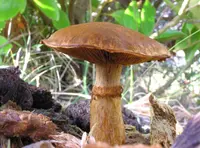
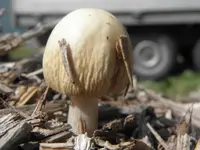
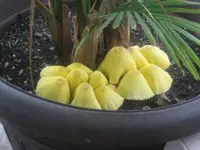
Spectacular rustgill (Gymnopilus junonius) is a large, wood-inhabiting mushroom rather than a leafy plant. It typically forms dense clusters on decaying hardwood or conifer stumps. Caps are bright orange to rusty yellow with rusty brown gills, giving it a striking but sometimes misleadingly attractive look. It is widely distributed in temperate regions, including parts of North America, Europe, and Asia. As a saprophytic fungus, it feeds on dead wood and appears seasonally, often in autumn. This species is not suitable as an edible mushroom and is difficult to manage deliberately in gardens, so most people simply learn how to care for Spectacular Rustgill by recognizing and leaving existing colonies undisturbed.

Care Difficulty
Hard Care

Light Preference
Partial Shade

Water Requirements
Keep Soil Moist

Temperature Preference
Cool Climate

Hardiness Zone
Unknown

Soil Texture
Loamy, Silty, Organic-rich

Soil pH
Acidic (5.5–6.5), Slightly acidic (6.5–7.0)

Soil Drainage
Moist but well-drained

Fertilization
Minimal (feed rarely)
Scan your plant to receive care tips personalized for your specific plant
Available on iOS and Android
This fungus prefers shaded woodland light rather than direct, open sun.
This wood-decaying fungus depends on consistently moist, not waterlogged, substrate.
This species develops best in mild, temperate conditions with cool to warm air temperatures.
Humidity plays only a minor role for this wood-decaying mushroom in outdoor conditions.
This fungus naturally colonizes moist, decaying wood rather than true soil.
This species is not well-suited to conventional container growing and is usually cultivated on outdoor logs or buried wood.
This wood-decaying fungus usually needs no fertilizer when fruiting on nutrient-rich logs or buried wood.
Gymnopilus junonius does not require pruning, as the mushrooms are temporary fruiting bodies that decompose naturally.
Transplanting focuses on moving colonized wood rather than handling individual mushrooms.
Propagation relies on spreading mycelium rather than treating this species like a garden plant.
In most temperate climates, this fungus needs minimal winter care, as the mycelium tolerates normal cold.

Plant Health Check
Not sure what's wrong with your plant? Check your plant's health inside the app.
The fruiting bodies have an intensely bitter flavor that does not disappear with cooking, so they are considered inedible despite their large size.
This species often forms dense clusters on hardwood stumps, logs, and buried roots, with individual caps commonly reaching 5–20 cm across and producing striking orange to rust-brown tiers.
Populations differ in chemical composition: some contain psychoactive tryptamine alkaloids, while others appear to have little or none, which makes reliable prediction of effects impossible.

This fungus is a classic cause of misidentification in mushroom foraging, as its bright orange-brown caps and growth on wood can resemble edible species like honey fungus (Armillaria), yet its bitterness and differing spore print (rusty orange in this species) are key features used by mycologists to separate it from look-alikes.
This mushroom is considered inedible and potentially toxic. It may contain psychoactive and bitter compounds and has been linked to poisoning cases. It should not be collected for food or home consumption under any circumstances.
Keep your plants happy and healthy with plant identification, disease detection, and easy care guidance.