


Substrate refresh cycles
For repeated cultivation in trays or beds, replace or pasteurize the substrate after each fruiting cycle to limit pathogen buildup and maintain reliable yields.

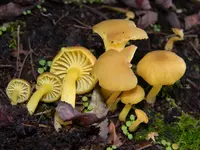
Green navel, Chrysomphalina grossula, is a small, soft-fleshed mushroom rather than a leafy houseplant. It forms low, clustered caps with a rounded, often greenish center that gives it the navel-like look. In nature, it usually appears on mossy ground or decaying wood in cool, moist forests.
This species is not commonly cultivated and is mainly of interest to mushroom enthusiasts and field mycologists. For anyone trying to care for green navel in a controlled setting, conditions need to mimic a damp, shaded forest floor with consistently cool, humid air and clean, well-drained, organic-rich substrate.

Care Difficulty
Moderate Care

Light Preference
Partial Shade

Water Requirements
Moderate Water

Temperature Preference
Cool Climate

Hardiness Zone
Unknown

Soil Texture
Loamy, Organic-rich

Soil pH
Acidic (5.5–6.5)

Soil Drainage
Moist but well-drained

Fertilization
Minimal (feed rarely)
Scan your plant to receive care tips personalized for your specific plant
Available on iOS and Android
This small woodland fungus prefers cool, shaded forest conditions with only brief sun exposure.
This forest-dwelling fungus depends on consistently moist, not waterlogged, substrate.
This species performs best in cool to mild conditions typical of shaded woodland floors.
This fungus favors consistently moist air, so humidity matters in its cultivation.
This species is a woodland saprotrophic fungus, so it performs best in a loose, well-aerated organic substrate rather than mineral garden soil.
This species can be grown in containers if the setup allows for stable moisture and high aeration in the substrate.
This species is typically a wild, nutrient-efficient fungus that requires no intentional feeding in natural or woodland-style plantings.
Pruning is not applicable for Chrysomphalina grossula, as it is a small woodland fungus rather than a plant with woody or leafy growth.
Transplanting is generally unnecessary, as this fungus relies on its natural substrate and mycelial network rather than conventional root systems.
Propagation of this fungus is specialized and usually handled by experienced mycologists rather than casual growers.
Specific winter care for this fungus is generally unnecessary in climates that match its native range, as the mycelium persists in the substrate.

Plant Health Check
Not sure what's wrong with your plant? Check your plant's health inside the app.
This small agaric forms shallow, funnel-shaped caps with a characteristic greenish to yellow-olive center that resembles a small navel, surrounded by paler outer zones. The gills are decurrent, meaning they run slightly down the stem, and are often a lighter, more yellowish tone than the cap surface.
It typically fruits on needle litter and humus in coniferous or mixed forests, especially under spruce. The fungus acts as a saprotroph, breaking down fallen needles and other organic debris and contributing to nutrient cycling in cool, forested ecosystems.
Fruiting bodies are usually found in late summer to autumn in temperate regions, often appearing in small scattered groups rather than dense clusters. The species is considered uncommon to locally rare in many areas, reflecting its preference for specific forest structures and microclimates.
This species is not considered an edible mushroom and should not be collected for food. Identification is difficult, and similar small yellow fungi can be toxic. Treat it as ornamental only and avoid consumption by humans or animals.
Keep your plants happy and healthy with plant identification, disease detection, and easy care guidance.

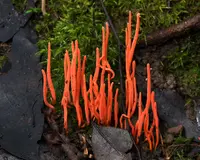
Clavulinopsis corallinorosacea
Clavulinopsis corallinorosacea
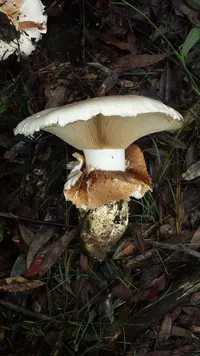
skirt webcap
Austrocortinarius australiensis
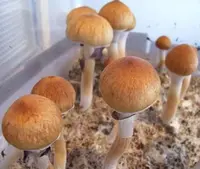
penis envy mushroom
Psilocybe cubensis
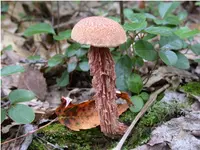
Russell's Bolete
Aureoboletus russellii
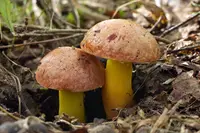
Gilded Bolete
Aureoboletus gentilis
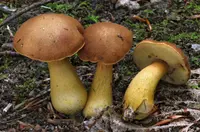
Roxane's bolete
Aureoboletus roxanae
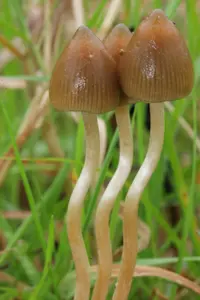
liberty cap
Psilocybe semilanceata
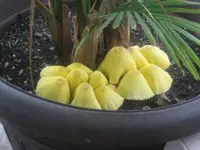
flowerpot parasol
Leucocoprinus birnbaumii