


Spore-source selection
Collect spores only from mature, healthy wild specimens and avoid damaged or moldy caps, since starting from clean material greatly reduces contamination risks when growing liberty cap.

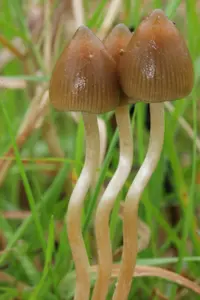
Liberty cap, Psilocybe semilanceata, is a small grassland mushroom, not a leafy houseplant. It produces slender, fragile stems topped with a distinct pointed, bell-shaped cap. Colors range from pale tan when dry to darker brown when moist.
This species naturally occurs in cool, temperate regions, especially in pasturelands and meadows that are not heavily fertilized. It is difficult to cultivate indoors because it has specific ecological requirements and prefers natural grassland soils and stable moisture.
For most home growers, it is not practical to care for liberty cap, as its life cycle depends on complex interactions with soil, grass roots, and climate that are hard to reproduce reliably.

Care Difficulty
Hard Care

Light Preference
Partial Shade

Water Requirements
Keep Soil Moist

Temperature Preference
Cool Climate

Hardiness Zone
Unknown

Soil Texture
Loamy, Silty, Organic-rich

Soil pH
Acidic (5.5–6.5), Slightly acidic (6.5–7.0)

Soil Drainage
Moist but well-drained

Fertilization
Minimal (feed rarely)
Scan your plant to receive care tips personalized for your specific plant
Available on iOS and Android
This grassland fungus prefers cool, soft light rather than intense direct sun.
This species depends on consistently moist but not waterlogged soil in grassland habitats.
This cool-season fungus fruits best in mild, moist conditions.
This species demands consistently high humidity for reliable fruiting and survival.
This grassland fungus relies on specific outdoor soil conditions rather than a standard potting mix.
This species is not well suited to container cultivation and is rarely managed successfully in pots, even by experienced growers.
This wild fungus does not need fertilization in natural or semi-natural settings, so added nutrients are usually unnecessary and can be harmful.
Psilocybe semilanceata does not require pruning, as each mushroom is a short-lived fruiting body rather than a long-lived plant structure.
Transplanting focuses on maintaining suitable habitat rather than moving individual fruiting bodies of Psilocybe semilanceata.
This species is not propagated in typical home or ornamental culture and is best left to natural spore dispersal and habitat processes.
Outdoor populations are cold hardy in suitable climates and generally need no specific winter care beyond stable habitat conditions.

Plant Health Check
Not sure what's wrong with your plant? Check your plant's health inside the app.
This species occurs almost exclusively in unimproved, nutrient-poor grasslands such as old pastures and meadows, often appearing in the same fields year after year where the soil has not been heavily fertilized or plowed.
Mature fruiting bodies usually show a persistent, sharp umbo (a nipple-like tip) on the cap, combined with a slender, flexuous stem and gelatinous cap surface when moist, which together help distinguish it from many similar small brown mushrooms.
It typically contains relatively high levels of psilocybin compared with many other wild mushrooms, which partly explains its long-standing role in human cultural and recreational use in Europe and other temperate regions.

Molecular studies have shown that this fungus, though once grouped mainly by its psychoactive traits, forms a distinct evolutionary lineage within Psilocybe that is adapted to cool, temperate climates and grassland ecosystems rather than the dung-rich or forest substrates preferred by many of its relatives.
Yes. This species contains psychoactive tryptamines such as psilocybin, which affect the central nervous system. Ingestion can cause neurological and gastrointestinal symptoms. It is not safe as food and should be kept away from children and animals.
Keep your plants happy and healthy with plant identification, disease detection, and easy care guidance.

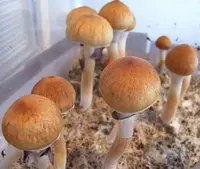
penis envy mushroom
Psilocybe cubensis
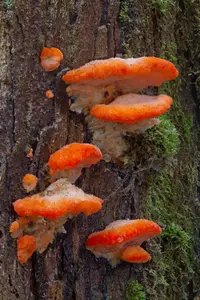
Strawberry Bracket
Aurantiporus pulcherrimus
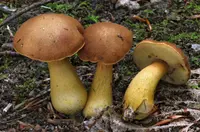
Roxane's bolete
Aureoboletus roxanae
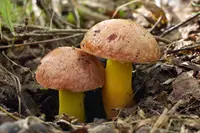
Gilded Bolete
Aureoboletus gentilis
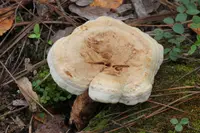
Drab Tooth
Bankera fuligineoalba
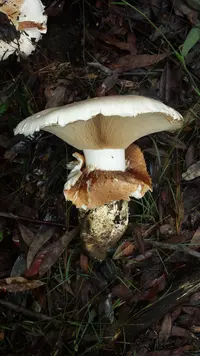
skirt webcap
Austrocortinarius australiensis
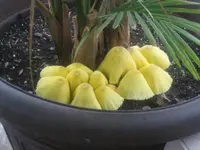
flowerpot parasol
Leucocoprinus birnbaumii
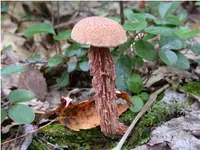
Russell's Bolete
Aureoboletus russellii