


Use Still Air
Run a still-air box or work in a draft-free room during inoculation and substrate handling to reduce airborne contaminants landing on grain or bulk substrate.

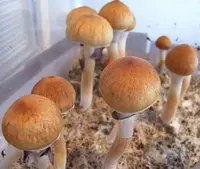
Penis envy mushroom is a distinctive cultivated form of the psychoactive fungus Psilocybe cubensis, not a true plant but often discussed in plant care contexts. It forms thick, sturdy stems with relatively small, pale to caramel caps and usually grows in clusters on nutrient-rich organic substrates.
In nature, related P. cubensis strains occur in warm, humid regions, often on decomposing manure or pasture soils. This variety is considered slower and more demanding to grow than many other cubensis types, so beginners may find it challenging.
Stable warmth, high humidity, clean conditions, and low to moderate light are typically preferred. Learning how to care for penis envy mushroom requires attention to contamination control and consistent environmental conditions.

Care Difficulty
Hard Care

Light Preference
Bright Indirect Light

Water Requirements
Keep Soil Moist

Temperature Preference
Tropical / Frost Sensitive

Hardiness Zone
Unknown

Soil Texture
Organic-rich, Peaty, Loamy

Soil pH
Acidic (5.5–6.5)

Soil Drainage
Moist but well-drained

Fertilization
Minimal (feed rarely)
Scan your plant to receive care tips personalized for your specific plant
Available on iOS and Android
Psilocybe cubensis prefers low to moderate light rather than direct sun exposure.
Psilocybe cubensis requires consistently moist, never waterlogged, growing substrate.
This species needs stable, mild temperatures for reliable fruiting.
This species needs consistently high humidity to form healthy mushrooms.
Psilocybe cubensis grows on nutrient-rich substrates rather than traditional garden soil.
This species is suitable for container-style cultivation using trays or tubs rather than plant pots.
Psilocybe cubensis is usually grown on nutrient-rich substrates, so additional fertilizer is rarely appropriate or necessary.
Psilocybe cubensis does not benefit from true pruning, but hygiene trimming helps maintain healthy flushes.
Substrate blocks for Psilocybe cubensis are not repotted like houseplants but can be moved or re-cased when production declines.
New Psilocybe cubensis cultures are produced through spores or cloned tissue, not by traditional plant propagation methods.
Outdoor Psilocybe cubensis beds in most US climates struggle in winter and need controlled indoor conditions for reliable culture.

Plant Health Check
Not sure what's wrong with your plant? Check your plant's health inside the app.
When the tissues are bruised or cut, this species often shows a characteristic blue staining caused by oxidation of psilocin and related indole compounds, a key field feature used by mycologists.
It commonly grows on nutrient-rich dung of grazing animals, especially cattle, where it helps decompose organic matter and recycle nitrogen and phosphorus in pasture ecosystems.
This fungus is naturally associated with warm, humid regions and is reported from tropical and subtropical zones across the Americas, parts of Asia, and Australia, reflecting its adaptation to consistently mild temperatures and high moisture.

Historical records indicate that closely related psilocybin-containing mushrooms were depicted in pre-Columbian Mesoamerican codices and sculptures, and many researchers consider P. cubensis one of the likely species involved in traditional ceremonial use once Spanish chronicles began describing "teonanácatl" (sacred mushrooms) in the 16th century.
Growth is relatively slow compared with many other cubensis varieties. From inoculation to first flush often takes 6–10 weeks, depending on spore quality, substrate, temperature stability, and contamination control. Subsequent flushes usually appear faster once the substrate is fully colonized.
Keep your plants happy and healthy with plant identification, disease detection, and easy care guidance.

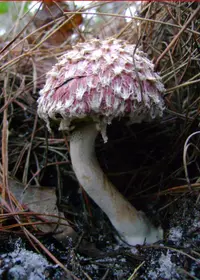
Pineapple Bolete
Boletellus ananas
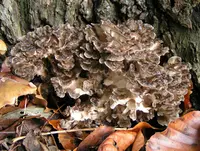
hen-of-the-woods
Grifola frondosa
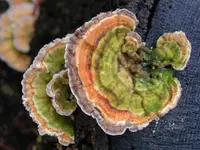
turkey tail mushroom
Trametes versicolor
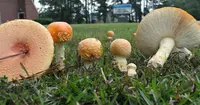
Peach-Colored Fly Agaric
Amanita persicina
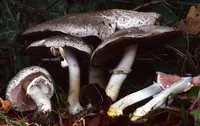
Inky Agaricus
Agaricus moelleri
Agrocybe acericola
Agrocybe acericola
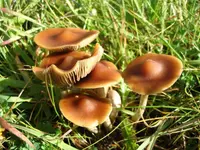
Psilocybe subaeruginosa
Psilocybe subaeruginosa
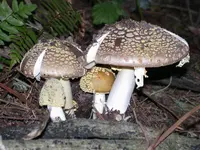
Western Yellow-veiled Amanita
Amanita augusta