


Use Fresh Hardwood
Establish new colonies on freshly cut, disease-free hardwood logs or stumps from oak, beech, or similar species, as older, decayed wood is quickly outcompeted by other fungi.

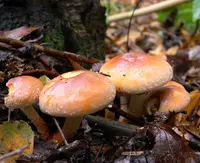
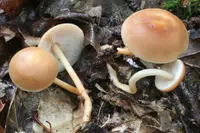
Brick cap, Hypholoma lateritium, is a wood-rotting mushroom rather than a leafy plant. It typically forms dense clusters of brick-red to orange-brown caps on dead or decaying hardwood stumps and logs. Stems are pale, and the gills turn greenish or grayish with age.
This species is widespread in temperate regions of North America, Europe, and Asia, especially in autumn. It is not a beginner-friendly edible mushroom, since it can be confused with toxic look-alikes and its own edibility is debated.
Those who want to learn how to care for Brick Cap mainly focus on providing cool, moist, shaded conditions and wood-based substrates, which mimic its natural forest habitat.

Care Difficulty
Hard Care

Light Preference
Partial Shade

Water Requirements
Keep Soil Moist

Temperature Preference
Cool Climate

Hardiness Zone
Unknown

Soil Texture
Loamy, Organic-rich

Soil pH
Acidic (5.5–6.5)

Soil Drainage
Moist but well-drained

Fertilization
Minimal (feed rarely)
Scan your plant to receive care tips personalized for your specific plant
Available on iOS and Android
This wood-rotting mushroom prefers cool, shaded forest conditions rather than direct sun.
Hypholoma lateritium needs consistently moist, not waterlogged, substrate to fruit well.
This species fruits best in cool, temperate outdoor conditions.
This wood-decaying fungus does best in consistently moist, cool air typical of forest environments.
This fungus grows on decaying wood but can be cultivated in a wood-rich substrate that mimics that habitat.
This species can be grown in containers if those containers effectively mimic a ventilated, moisture-retentive log or stump environment.
This wild saprotrophic fungus generally needs no fertilizer when grown on suitable woody debris or nutrient-rich substrates.
Hypholoma lateritium does not require structured pruning, only simple cleanup of spent fruiting bodies.
Transplanting focuses on moving colonized substrate rather than individual fruiting bodies, which are short-lived.
Propagation of this mushroom relies on spores and mycelium rather than vegetative plant methods, so it is more technical for home growers.
Outdoor colonies are generally cold hardy and need minimal winter care once established.

Plant Health Check
Not sure what's wrong with your plant? Check your plant's health inside the app.
The cap is typically brick-red to orange-brown in the center with paler, sometimes yellowish margins, a color pattern that helps distinguish it from several toxic Hypholoma relatives that have more uniformly sulfur-yellow caps.
This species is a saprotrophic fungus, meaning it feeds on dead organic matter, and it commonly fruits in dense clusters on decaying stumps and logs of broadleaf trees such as oak and beech, accelerating wood decomposition in temperate forests.
It produces a dark purple-brown spore print, and its gills shift from pale to grayish and finally dark brown with age as spores mature, a key feature used by mycologists to separate it from similar-looking woodland mushrooms.

In parts of East Asia and Eastern Europe, this species has a long history of local use as an edible mushroom when thoroughly cooked, but mycologists emphasize that it is easily confused with dangerously toxic look-alikes, so many modern field guides classify it as a species for experienced foragers only.
Identification is difficult and this species closely resembles several seriously poisonous look-alikes. For safety, it is generally treated as inedible. Only experienced mycologists should consider consumption, and even then caution is strongly recommended.
Keep your plants happy and healthy with plant identification, disease detection, and easy care guidance.

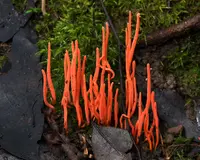
Clavulinopsis corallinorosacea
Clavulinopsis corallinorosacea
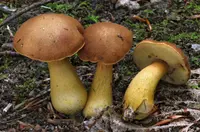
Roxane's bolete
Aureoboletus roxanae
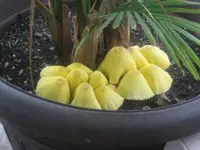
flowerpot parasol
Leucocoprinus birnbaumii
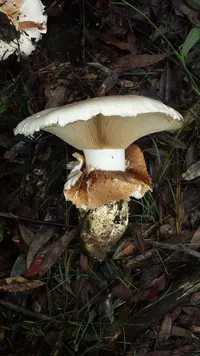
skirt webcap
Austrocortinarius australiensis
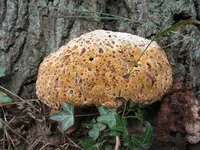
oak bracket
Pseudoinonotus dryadeus
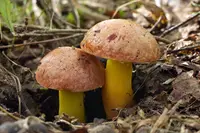
Gilded Bolete
Aureoboletus gentilis
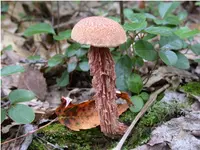
Russell's Bolete
Aureoboletus russellii
Oak-loving Gymnopus
Gymnopus dryophilus