Log inoculation timing
Inoculate freshly cut oak logs within 1–4 weeks of felling, while the wood is still moist and bark intact, to give the mycelium a strong competitive advantage over wild fungi.

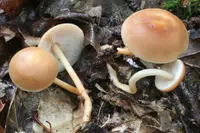
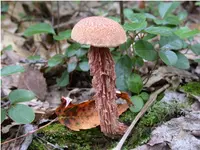
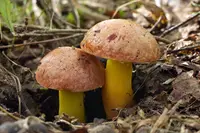
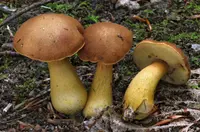
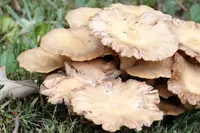
Oak-loving Gymnopus (Gymnopus dryophilus) is a common woodland mushroom, not a typical houseplant. It forms small to medium, tan to brown caps with slender, flexible stems. The caps often appear in loose clusters on leaf litter.
This fungus naturally occurs in temperate forests across North America and Europe, especially in oak and mixed deciduous woods. It plays a saprophytic role, breaking down fallen leaves and improving soil structure.
Gardeners sometimes encounter it in mulched beds or woodland-style plantings. It is generally not cultivated on purpose, so learning how to care for Oak-loving Gymnopus is mostly about understanding its habitat needs: consistent leaf litter, moderate moisture, and shade to partial shade.

Care Difficulty
Moderate Care

Light Preference
Shade

Water Requirements
Keep Soil Moist

Temperature Preference
Cool Climate

Hardiness Zone
Unknown

Soil Texture
Loamy, Organic-rich

Soil pH
Acidic (5.5–6.5), Slightly acidic (6.5–7.0)

Soil Drainage
Moist but well-drained

Fertilization
Minimal (feed rarely)
Scan your plant to receive care tips personalized for your specific plant
Available on iOS and Android
This woodland mushroom favors dappled forest light rather than open sun.
This fungus depends on consistently moist, not waterlogged, forest litter to fruit well.
This species prefers cool to mild woodland temperatures with moderate seasonal shifts.
This woodland fungus prefers consistently moist, humid conditions close to the forest floor microclimate.
This species fruits best in loose, organic-rich substrates that imitate decomposing forest litter.
This fungus is moderately suitable for container culture when the substrate depth and moisture are carefully controlled.
This woodland fungus typically needs no fertilization when grown in natural, humus-rich soil under oaks.
Pruning Gymnopus dryophilus is generally unnecessary, as fruiting bodies are short-lived and decay naturally.
Transplanting is rarely required because this fungus is best maintained in stable, undisturbed woodland or leaf-litter beds.
Propagation of this species in garden settings is challenging and not commonly carried out.
Outdoor colonies are naturally cold hardy in much of their range and usually require no dedicated winter care.

Plant Health Check
Not sure what's wrong with your plant? Check your plant's health inside the app.
This fungus is especially common in deciduous woods dominated by oaks, where it fruits in large numbers on leaf litter rather than on solid wood, helping break down tough oak leaves into simpler organic matter.
It shows striking variation in cap color and size depending on age, moisture, and light conditions, which historically led to frequent misidentification and multiple synonyms in older mushroom field guides.
In temperate regions it often fruits from late spring through autumn and sometimes into mild early winter, making it one of the more regularly encountered leaf-litter decomposers on woodland walks.

Molecular studies using DNA sequencing have shown that collections once thought to be several different species across Europe and North America actually belong to a single, genetically cohesive species, which led to a major taxonomic reshuffle and the current placement of this mushroom in the genus Gymnopus.
This species is technically edible but considered poor quality. It has thin flesh, limited flavor, and can be confused with toxic look-alikes. Most foragers avoid it and choose more distinctive, better-documented edible mushrooms instead.
Keep your plants happy and healthy with plant identification, disease detection, and easy care guidance.