ringless honey fungus Care (Desarmillaria tabescens)

ringless honey fungus

About ringless honey fungus

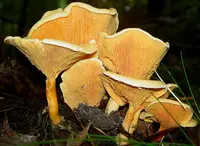
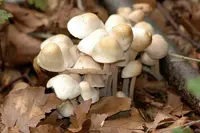
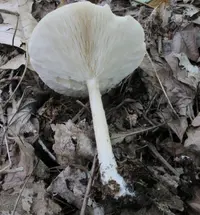
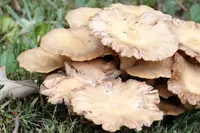
Ringless honey fungus, Desarmillaria tabescens, is a wood-decaying mushroom rather than a typical houseplant. It forms dense clusters of tan to honey-colored caps on or near dead or weakened hardwood trees. The stems lack a ring, which is a key feature for identification.

This species occurs naturally in eastern North America and parts of Europe and Asia, usually in forests, parks, and old landscapes. It behaves as both a decomposer and a plant pathogen, which affects how predictable it is to grow.

Gardeners who care for ringless honey fungus should know it prefers moist, organic-rich substrates and shaded to semi-shaded conditions outdoors. Its dependence on woody material and specific hosts makes deliberate cultivation challenging for many home growers.

Main Plant Requirements

Care Difficulty

Moderate Care

Light Preference

Partial Shade

Water Requirements

Regular Water

Temperature Preference

Cool Climate

Hardiness Zone

5–9

Soil Texture

Loamy, Clay, Organic-rich

Soil pH

Acidic (5.5–6.5), Slightly acidic (6.5–7.0)

Soil Drainage

Moist but well-drained

Fertilization

Minimal (feed rarely)

Get Personalized Care Plan

Scan your plant to receive care tips personalized for your specific plant

Available on iOS and Android

How to Care for the ringless honey fungus

This wood-decaying fungus prefers bright woodland conditions with protection from harsh midday sun.

  • Provide 3–5 hours of gentle morning sun with dappled or filtered light for the rest of the day, similar to open forest edges.
  • Allow partial shade, especially under deciduous trees where ringless honey fungus benefits from increased light in spring and autumn before full leaf-out.
  • Avoid intense, all-day summer sun that dries the substrate; too little light reduces fruiting, while strong midday exposure can overheat and desiccate logs or stumps.

This species needs consistently moist but not waterlogged substrate to fruit well outdoors.

  • Check the top 2–5 cm of soil, wood, or mulch; it should feel evenly moist but not soggy before rewetting nearby areas, especially during dry spells.
  • In warm, dry weather, increase moisture by deep soaking the surrounding soil 1–2 times per week, then allowing excess water to drain away fully.
  • Reduce additional watering during cool, wet seasons to prevent standing water, which encourages foul odor, anaerobic conditions, and rotting of host wood beyond what Desarmillaria tabescens naturally decomposes.

This fungus fruits best in mild to cool conditions typical of temperate woodlands.

  • Aim for active growth and fruiting in the 55–70°F (13–21°C) range, which supports steady mycelium activity and reliable cluster formation.
  • Tolerates cool conditions down to about 28–30°F (-2– -1°C) for short periods, but repeated hard freezes can damage fruiting bodies, though underground mycelium usually survives.
  • In hot spells above 80–85°F (27–29°C), shade and mulch help keep the substrate cooler, as sustained heat and drying sharply reduce fruiting and may stall growth.

This wood-decaying fungus tolerates a fairly wide humidity range but fruits best in moderately moist air.

  • Aim for 60–80% humidity around developing clusters of ringless honey fungus to support consistent fruiting body formation.
  • Tolerates brief dips to 40–50%, but repeated very dry air causes cracked caps, slow growth, and premature drying of primordia.
  • Increase humidity locally with a perforated plastic tent or humidity dome and damp (not wet) substrate, while keeping fresh air exchange to prevent bacterial or mold issues.

Desarmillaria tabescens prefers organically rich, well-aerated substrate that drains freely yet holds steady moisture.

  • Use a loose mix based on hardwood chips, sawdust, and well-aged composted wood, avoiding fine peat-heavy blends that compact easily.
  • Maintain a slightly acidic to neutral pH around 5.5–7.0, which supports enzyme activity and nutrient availability for mycelial growth.
  • Improve drainage and aeration by mixing in coarse wood chips or 10–20% perlite so the substrate stays porous and oxygen reaches the mycelium.
  • Avoid waterlogged or anaerobic conditions, especially in dense garden soil or sealed containers, which favor competing fungi and bacterial rot.

This species can be grown in containers outdoors using deep, stable vessels that can hold decaying wood substrate.

  • Choose a heavy, wide container that resists tipping as lateral mycelial spread and fruiting clusters can shift weight to one side.
  • Drill extra side and bottom holes in plastic buckets or tubs to improve drainage and gas exchange through the wood-based substrate.
  • Use a container at least 30–40 cm deep so layered logs or wood blocks fit fully inside while allowing space for moisture-retaining cover material.

Desarmillaria tabescens typically grows on woody hosts and needs minimal direct fertilization in managed settings.

  • If grown in a controlled bed, incorporate a light layer of well-rotted compost into the substrate in early spring.
  • Use a mild, balanced NPK fertilizer at 1⁄4–1⁄2 strength only if growth or fruiting declines noticeably.
  • Apply nutrients just once during the main growing season, avoiding repeated feeding that can disrupt the fungal–root balance.
  • Do not feed during winter or host dormancy, as extra nutrients are unnecessary and may encourage competing organisms.

Pruning Desarmillaria tabescens focuses on hygiene and managing fruiting bodies rather than shaping the organism.

  • Cut away spent, decaying, or damaged fruiting clusters with clean, sharp knives or pruning shears whenever they appear.
  • Remove crowded or overlapping clusters if better air flow or easier harvest is desired.
  • Disinfect tools before and after use to limit spread of fungal diseases between host plants.
  • Pruning fruiting bodies does not remove the main fungus in the wood or soil but can slightly reduce spore spread.

This species is rarely grown in pots; management usually involves relocating colonized wood or substrate rather than classic repotting.

  • Transplant when colonized logs or substrate pieces are fully run with white mycelium and fruiting declines at the original site.
  • Best timing is late fall or early spring, when temperatures are cool and moisture is reliable.
  • Move colonized wood gently to a new shaded, moist site with similar host material to limit mycelium stress.
  • Minimize drying by transferring material quickly, firming soil around it, and watering the new site to settle air gaps.

Propagation of Desarmillaria tabescens is typically done by moving colonized wood or substrate rather than by home-scale spores.

  • Use vigorous, fully colonized logs or stump sections showing healthy white mycelium as starter material.
  • Transplant in cool, moist weather in spring or fall to encourage rapid establishment.
  • Place inoculated wood in firm contact with fresh host stumps, buried roots, or hardwood pieces to allow mycelium to bridge.
  • Maintain consistent soil moisture and shade so the developing network does not dry out before stabilizing.

This fungus is generally cold hardy across much of its range and needs little specific winter care outdoors.

  • In colder regions, a 5–8 cm mulch layer over the host root zone helps buffer freeze–thaw cycles.
  • Container experiments with ringless honey fungus should be overwintered in a cold, frost-free but unheated space.
  • Avoid waterlogged conditions around host roots in winter, which can damage roots and alter fungal balance.

Care Tips

Choose log species

Use freshly cut, disease-free hardwood logs such as oak or beech rather than softwoods, since denser wood supports more reliable and longer fruiting for ringless honey fungus.

Control log moisture

Keep inoculated logs evenly moist by stacking them in shady, wind-sheltered spots and covering with breathable material (like burlap or loose straw) so the wood does not dry out before colonization is complete.

Drill pattern planning

Drill inoculation holes in offset rows around the log, spaced about 10–15 cm apart, to allow the mycelium to spread quickly and evenly through the wood.

Site quarantine practice

Keep production logs and woodchip beds physically separated from living trees and shrubs, and avoid using colonized material as mulch around ornamentals to reduce the risk of unwanted root infection.

Harvest timing checks

Harvest clusters when caps are still firm and just starting to flatten, checking daily in cool, wet weather so fruiting bodies are collected before they overmature and begin to rot, which helps maintain hygiene while growing ringless honey fungus.

Common Pests and Diseases

Armillaria root disease

This disease reflects the natural pathogenic behavior of ringless honey fungus on nearby woody plants, where it colonizes and decays living roots and lower stems. Symptoms include progressive decline, yellowing foliage, dieback, and white fan-shaped fungal mats under the bark of affected hosts.

Solution

Limit planting of susceptible trees and shrubs close to established ringless honey fungus beds, remove and destroy severely infected woody plants and major roots when practical, and avoid burying fresh woody debris that can act as a food base. For those growing ringless honey fungus, keep it confined to a defined bed or container area and maintain physical separation from ornamental or orchard trees to reduce spread.

Wood decay in substrates

This condition occurs when the fungus aggressively decomposes structural or landscape wood that is used as a substrate, leading to excessive breakdown and instability of logs, stumps, or timber edging. Symptoms include rapid softening, cracking, and fragmentation of wood with dense clusters of mushrooms at fruiting times.

Solution

Use only non-structural, designated logs or wood chips as a growing substrate and keep them away from fences, raised bed frames, or wooden foundations. Replace highly decayed logs on a cycle, and if unwanted colonization occurs on landscape timbers, remove and dispose of the most affected sections and switch to stone, metal, or plastic edging in that area.

Fungus gnat infestation

These insects are attracted to the moist, organic-rich substrate used for cultivating ringless honey fungus and lay eggs in it. This pest can cause nuisance swarms, and the larvae may interfere with mycelial growth by tunneling through the substrate surface.

Solution

Allow the top 1–2 cm of substrate to dry slightly between waterings, improve airflow, and remove any standing water near the culture area. Use fine-mesh covers over ventilation openings, deploy yellow sticky traps near the substrate to reduce adult populations, and if needed drench the top layer with a biological control containing Bacillus thuringiensis israelensis, following label directions for mushroom production.

Mite contamination

These pests feed on fungal mycelium, spores, or developing mushroom tissue, leading to uneven pinning, deformed caps, and reduced yields in cultivation setups. This pest is often introduced with unpasteurized straw, wood chips, or contaminated tools.

Solution

Source clean substrate and, where cultivation allows, pasteurize or heat-treat wood-based materials before inoculation. Keep the growing area tidy, remove heavily infested blocks or trays, and use physical barriers such as fine mesh and clean plastic sheeting; in commercial-style setups, introduce predatory mites compatible with mushroom production as a targeted biological control.

Interesting Facts

Ringless honey clusters

This species forms dense clusters of honey-brown mushrooms that lack the ring, or annulus, on the stem that many related honey fungus species have, which is a key identification feature used by mycologists.

Late-summer fruiting

It typically fruits in late summer to autumn in warm temperate regions, often appearing after periods of rain on or around stumps, buried roots, or the bases of weakened hardwood trees.

White spore print

The mushrooms produce a white spore print, which, together with the clustered growth, lack of stem ring, and growth on wood, helps distinguish it from many similar-looking gilled mushrooms.

Botan icon

Did you know?

This species was historically placed in the genus Armillaria but was moved to the separate genus Desarmillaria after molecular phylogenetic studies showed that the ringless honey fungi form a distinct evolutionary lineage within the honey fungus group.

FAQs about ringless honey fungus

This species is considered edible by many foragers when well-cooked, but identification is difficult and confusion with toxic look-alikes is possible. Only highly experienced mycologists should harvest it for food.

Grow Healthy Plants with Botan Care

Keep your plants happy and healthy with plant identification, disease detection, and easy care guidance.

Botan plant care app — identify plants on mobile

Explore More Plants