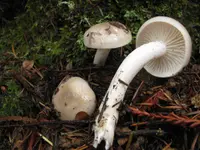
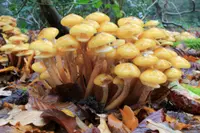
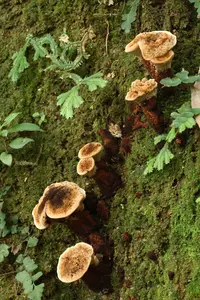
False Chanterelle Care (Hygrophoropsis aurantiaca)

False Chanterelle

About False Chanterelle

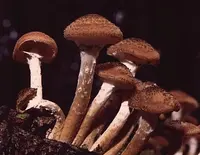
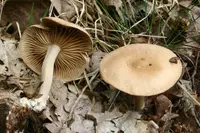
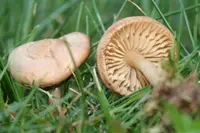
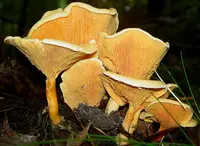
False chanterelle, Hygrophoropsis aurantiaca, is a woodland mushroom, not a true plant, often mistaken for the edible chanterelle due to its orange color. It forms funnel-shaped caps with crowded, forked gill-like folds and a slender stem, usually appearing in clusters.

This fungus typically grows on decaying conifer wood, forest litter, and acidic soils across Europe, North America, and other temperate regions. It tends to fruit in late summer to autumn in moist, shaded habitats.

Because it relies on rotting wood and specific forest conditions, it is not simple to cultivate at home. For those who care for False Chanterelle in a managed woodland or garden setting, stable moisture, shade, and undisturbed organic matter are important.

Main Plant Requirements

Care Difficulty

Hard Care

Light Preference

Partial Shade

Water Requirements

Keep Soil Moist

Temperature Preference

Cool Climate

Hardiness Zone

Unknown

Soil Texture

Sandy, Loamy, Organic-rich

Soil pH

Strongly acidic (4.5–5.5), Acidic (5.5–6.5)

Soil Drainage

Moist but well-drained

Fertilization

Minimal (feed rarely)

Get Personalized Care Plan

Scan your plant to receive care tips personalized for your specific plant

Available on iOS and Android

How to Care for the False Chanterelle

This forest fungus prefers soft, filtered light rather than direct, intense sun.

  • Site False Chanterelle in dappled woodland shade with brief morning sun and no harsh afternoon sun.
  • Aim for 2–4 hours of indirect or filtered light; it also fruits in bright shade under conifers and mixed woodland.
  • Excessive direct sun dries the substrate and caps quickly, while deep, continuous shade can reduce fruiting bodies and slow development.

This species grows best in consistently moist, not waterlogged, woodland substrates.

  • Maintain evenly moist leaf litter or humus, letting only the top 1–2 cm start to dry between natural rainfall or supplemental watering.
  • In dry spells, water the surrounding substrate deeply but infrequently, allowing good drainage through loose, organic-rich soil to prevent standing water and rot.
  • Signs of overwatering include sour, anaerobic-smelling soil and collapsing caps; dry, brittle caps and shrinking stems point to underwatering.

This fungus favors cool to mild conditions typical of temperate woodlands.

  • Optimal fruiting occurs around 50–65°F (10–18°C), often in late summer to fall when nights are cool and days are mild.
  • Mycelium can persist down to about 32°F (0°C), but repeated hard freezes below this can reduce fruiting intensity and damage young primordia.
  • Sustained heat above 80°F (27°C) with low humidity stresses the organism, so shaded, moist sites buffer temperature swings and extend the fruiting period.

This fungus prefers consistently moist air but does not require tightly controlled humidity.

  • Target ambient humidity around 60–80% in cultivation spaces, avoiding prolonged exposure below 40%.
  • Dry air leads to smaller, cracked, or quickly shriveling fruiting bodies and slower mycelial spread.
  • Increase humidity with fine-mist spraying around, not on, fruiting bodies, or by using humidifiers and damp perlite trays nearby.

Hygrophoropsis aurantiaca requires a loose, organic, wood-rich substrate rather than typical garden soil.

  • Use a mix based on well-rotted conifer sawdust or fine bark, blended with leaf litter, composted wood chips, and a small amount of sharp sand for structure.
  • Keep the substrate loose and crumbly so air can move through it; compacted, clay-heavy, or peat-only mixes restrict mycelial growth.
  • Aim for slightly acidic conditions, roughly pH 4.5–6.0, which mirror its natural conifer forest habitat.
  • Avoid manure-heavy, lime-enriched, or waterlogged substrates, which favor competing fungi and increase the risk of anaerobic (oxygen-poor) zones.

This species is generally unsuitable for long-term container growing outside specialized mushroom-cultivation setups.

Hygrophoropsis aurantiaca (false chanterelle) is a wild, mycorrhiza-associated fungus that does not benefit from direct fertilization.

Hygrophoropsis aurantiaca is not a garden shrub or houseplant and does not require pruning in the horticultural sense.

This fungus is not suited to standard container culture, so repotting is not a typical or effective practice.

  • If attempting experimental cultivation, focus on maintaining a suitable woody or needle-rich substrate rather than changing containers.
  • Transplanting wild fruiting bodies does not establish new colonies because the main organism is the hidden mycelium in the soil or litter.
  • Any move of colonized substrate risks damaging fragile mycelial threads, which often leads to failure of future fruiting.

Propagation of Hygrophoropsis aurantiaca under home conditions is rarely successful and generally not recommended for beginners.

No specific winter care is needed, as this is a wild fungus adapted to natural seasonal cycles in its native habitats.

Care Tips

Substrate wood choice

Use well-rotted softwood chips or a mix of conifer and hardwood sawdust rather than fresh wood, as partially decomposed material better mimics the natural habitat and supports stable fruiting.

Shallow bed layering

Spread the colonized substrate in a shallow layer 3–5 cm deep rather than a thick mound, since this fungus fruits more reliably where the mycelium can access both air and moisture near the surface.

Moisture shielding

Cover outdoor beds with a loose layer of pine needles or coarse mulch to limit evaporation and splash, then lift or thin the cover slightly when primordia (tiny pin-sized mushrooms) start to appear.

Gentle harvest technique

Twist and lift fruiting bodies at the base instead of cutting high on the stem, and avoid disturbing the substrate so the underlying mycelium can produce additional flushes.

Rotation and rest

After 2–3 fruiting seasons on the same bed, add a new layer of partially decomposed chips or start a fresh bed nearby, allowing the old area to rest and decompose fully for more predictable results when growing False Chanterelle.

Everything About False Chanterelle

Common Pests and Diseases

Mycophagous springtails

These insects feed on fungal tissue and can nibble at false chanterelle fruiting bodies, leaving pitted or scarred surfaces and slowing cap expansion.

Solution

Limit constantly wet conditions in cultivation trays, keep ventilation steady, and remove heavily grazed fruiting bodies to reduce food sources; if populations are very high, allow the substrate surface to dry slightly between mistings and use fine mesh or well‑fitting lids to reduce new colonization while maintaining fresh air exchange for growing Hygrophoropsis aurantiaca.

Fungus gnat larvae

This pest develops in moist substrate and the larvae chew on mycelium and young primordia, which can cause aborted or misshapen fruiting bodies.

Solution

Reduce excessive moisture by allowing the top layer of substrate to become just barely dry between misting, use sticky traps to catch adult gnats, and cover air inlets with fine mesh; for persistent problems in cultivation setups, drench the substrate surface with a biological control such as Bacillus thuringiensis israelensis according to label directions, which targets larvae without damaging the fungus.

Green Trichoderma mold

This disease appears as fast‑spreading white mycelium that quickly turns bright green and powdery, overpowering false chanterelle mycelium and preventing normal fruiting.

Solution

Promptly remove and discard any contaminated substrate, tools, or containers, increase airflow, and avoid overwatering; in future cycles, pasteurize or sterilize substrates, keep handling areas clean, and separate suspect batches to protect healthy trays and improve overall Hygrophoropsis aurantiaca care.

Penicillium blue mold

This disease forms blue‑green powdery patches on substrate or aging fruiting bodies, leading to soft, waterlogged, and off‑colored tissues.

Solution

Discard infected mushrooms and any heavily colonized substrate, reduce condensation by adjusting temperature and fresh air exchange, and avoid overcrowding fruiting containers; thorough cleaning and drying of equipment and surfaces between production runs helps prevent reinfection while you continue growing False Chanterelle.

Interesting Facts

Often mistaken for chanterelles

This species closely resembles the true chanterelles (Cantharellus spp.) in color and general shape, but can be distinguished by its thin, forked, blade-like gills and usually thinner, more fragile flesh. These gills are true lamellae, unlike the blunt, wrinkle-like ridges of real chanterelles.

Thrives on conifer debris

Hygrophoropsis aurantiaca is a saprotrophic fungus that specializes in decomposing conifer litter and woody debris, especially pine needles and rotting conifer wood. By breaking down this material, it helps recycle nutrients in nutrient-poor, acidic forest soils.

Orange pigmentation chemistry

The vivid orange coloration comes from carotenoid pigments, a group of fat-soluble compounds also found in many plants and algae. These pigments may provide protection against light-induced oxidative stress in the fruiting body.

Botan icon

Did you know?

Molecular studies have shown that this species, once placed with boletes and then with true chanterelles, is not closely related to either group and instead belongs in the family Hygrophoropsidaceae, illustrating how DNA data reshaped its taxonomic position.

FAQs about False Chanterelle

This fungus is technically edible but strongly discouraged as food. It can cause digestive upset and is easily confused with true chanterelles. Foraging guides consistently advise against eating it, especially for beginners or unsupervised collectors.

Grow Healthy Plants with Botan Care

Keep your plants happy and healthy with plant identification, disease detection, and easy care guidance.

Botan plant care app — identify plants on mobile

Explore More Plants