BotaN logo

fairy ring marasmius Care (Marasmius oreades)

Also known as: scotch bonnet, fairy ring mushroom, Fairy Ring Champignon
fairy ring marasmius

About fairy ring marasmius

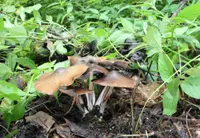
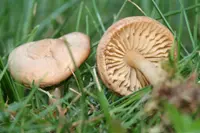
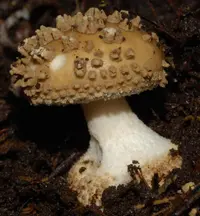
Fairy ring marasmius (Marasmius oreades) is a small lawn-dwelling mushroom, not a leafy plant. It is best known for forming circular clusters, called fairy rings, in turf and grassy areas. Caps are usually pale tan, with a tough, flexible texture and widely spaced gills. This species commonly appears in temperate lawns, pastures, and park grass in North America and Europe. It prefers short grass, well-drained soils, and consistent moisture, often fruiting repeatedly from the same underground mycelium. Many growers who want to care for fairy ring marasmius focus on stable moisture and avoiding heavy soil compaction.

Main Plant Requirements

Care Difficulty

Moderate Care

Light Preference

Partial Sun

Water Requirements

Regular Water

Temperature Preference

Cool Climate

Hardiness Zone

4–9

Soil Texture

Loamy, Sandy, Organic-rich

Soil pH

Slightly acidic (6.5–7.0), Neutral (7.0)

Soil Drainage

Moist but well-drained

Fertilization

Minimal (feed rarely)

Get Personalized Care Plan

Scan your plant to receive care tips personalized for your specific plant

Available on iOS and Android

How to Care for the fairy ring marasmius

This grassland mushroom prefers consistent, moderate light rather than deep shade or intense heat.

  • Provide 4–6 hours of direct morning sun with light shade or filtered light in hot afternoons to reduce drying of the turf or lawn substrate.
  • Tolerates bright, open conditions but prolonged, harsh afternoon sun in summer can overheat and desiccate the soil, reducing fairy ring marasmius fruiting.
  • In cooler seasons, slightly more direct sun supports mushroom production; in mid-summer, rely more on partial shade from nearby grasses or low plants.

This species needs evenly moist but never waterlogged soil for reliable fruiting.

  • Water when the top 2–4 cm of soil or turf feels dry, aiming for deep soaking rather than frequent light sprinkling that only wets the surface.
  • Ensure soil drains freely; puddling, foul smell, or slimy thatch indicate overwatering, while pale, brittle grass and cracked soil suggest the Marasmius oreades mycelium is too dry.
  • During hot, windy periods increase watering frequency, but in cool or rainy seasons reduce irrigation to avoid prolonged saturation around the fungal mycelium.

This lawn-dwelling fungus performs best in cool to mild conditions rather than temperature extremes.

  • Optimal fruiting occurs around 55–70°F (13–21°C), often in spring and fall when nights are cool and days are moderate.
  • The mycelium in soil can survive brief drops near 25–30°F (-4– -1°C), but hard, prolonged freezes reduce activity until temperatures rise again.
  • Sustained heat above 80–85°F (27–29°C) slows growth and fruiting; during hot summers, adequate moisture and some shade help moderate soil temperature.

This fungus tolerates a broad humidity range but fruits best in moderately moist air.

  • Target 50–70% humidity around the substrate to support reliable fruiting bodies.
  • It copes with short dry spells, but prolonged air below 40% can slow or halt fairy ring marasmius mushroom formation.
  • Dry, brittle caps and quickly cracking caps indicate low humidity; use a clear humidity tent or place trays above, not in, a shallow water reservoir to raise moisture.

This species prefers moist, well-aerated, organic-rich ground that mimics short turf or meadow conditions.

  • Use a loose mix such as 50% fine compost, 30% pasteurized lawn soil, and 20% coarse sand to balance nutrients and structure for Marasmius oreades.
  • Ensure rapid drainage; water should pass through within seconds and the surface should not stay waterlogged or smeared after irrigation.
  • Aim for slightly acidic to neutral pH, around 6.0–7.5, avoiding strongly acidic or strongly alkaline substrates that restrict mycelium spread.
  • Improve aeration by blending in fine pine bark or additional coarse sand, and avoid compacting the surface by pressing or walking on it.

This species can be grown in shallow containers, mainly for observation or small harvests rather than heavy production.

  • Choose a wide, shallow tray at least 8–10 cm deep to allow lateral mycelium spread instead of focusing on depth.
  • Drill extra side drainage holes near the base so excess water escapes quickly while the upper layer remains evenly moist, not soggy.
  • Select a rigid plastic or glazed ceramic tray that retains moisture evenly but is light enough to rotate for uniform light and air exposure outdoors.

This lawn-dwelling fungus usually needs no fertilizer when growing in reasonably fertile turf or soil.

  • In nutrient-poor lawns, apply a light top-dressing of fine compost over the ring in spring to support fruiting.
  • Avoid high-nitrogen lawn fertilizers directly on fairy ring marasmius, as excessive nitrogen can disrupt natural fruiting patterns.
  • If using synthetic products, choose a balanced NPK lawn fertilizer at half strength, applied broadly, not concentrated on the ring.
  • Do not feed during winter dormancy; allow the mycelium to rest without added nutrients.

Marasmius oreades does not require conventional pruning, but limited fruiting-body removal can be useful in lawns.

  • Best timing is during active fruiting; remove mushrooms once caps open if spore spread or pet safety is a concern.
  • Pinch or cut fruiting bodies at the base using clean scissors to minimize turf disturbance.
  • Removing mushrooms slightly reduces visual impact but does not remove the underground mycelium or stop ring expansion.
  • Leave healthy mushrooms in place if encouraging natural sporulation and continued population spread.

This species is normally established in open ground rather than containers, so management focuses on lawn or soil conditions instead of true repotting.

  • Transplant only when moving infested turf or soil; there are no classic signs like root binding because this is a fungus, not a rooted plant.
  • Best season for moving sod sections with Marasmius oreades present is cool, moist spring or early fall.
  • Lift turf with a sharp spade, keeping a generous plug of soil so the mycelium network remains intact and less stressed.
  • Reinstall the plug at the same depth, water gently, and maintain consistent moisture until the area re-establishes.

Spread of Marasmius oreades occurs mainly via mycelial growth in soil and by spores rather than standard plant-style propagation.

  • For controlled establishment, move small turf or soil plugs containing active mycelium in early fall or spring.
  • Keep the new site with short, managed grass and moderate moisture to encourage mycelial expansion and future fruiting.
  • Spore-based methods involve allowing caps to mature and release spores onto suitable, low-competition turf or sandy loam.
  • Maintain low to moderate fertility and good drainage; these conditions favor ring formation over time.

This lawn fungus is naturally cold hardy across temperate climates and usually requires no special winter care.

  • Mycelium survives frost and snow in the soil without added insulation in most garden situations.
  • Container-grown turf or sod with the fungus, if used for study, can be overwintered outdoors unless in extremely exposed, freezing-wind sites.
  • Avoid heavy soil compaction and waterlogging during winter, which can stress the turf and indirectly affect the fungus.

Care Tips

Use host grasses

Establish or maintain a dense, low-mown lawn of fine grasses such as fescues or bentgrass, since this fungus naturally colonizes turf and forms more stable rings when its preferred grass hosts are healthy and not heavily compacted.

Manage soil compaction

Aerate the turf with a hollow-tine aerator and top-dress lightly with sifted compost or sandy loam once or twice a year to relieve compaction and improve gas exchange around the fungal mycelium, which helps rings expand more evenly.

Moisture banding

When rainfall is scarce, water in a wide band just ahead of the existing ring rather than directly on the mushrooms, encouraging the underground mycelium to expand into the moist zone and keeping fruiting bodies more predictable in location.

Careful mowing practices

Use a mower with a grass catcher and mow before caps fully flatten, so spores are reduced in unwanted areas while still allowing the established ring to persist, and clean mower decks afterward to avoid unintentionally spreading fragments to new lawns.

Separate harvest tools

Dedicate a knife and small basket or container only for harvesting this species, label them clearly, and avoid mixing with tools used for other wild mushrooms to reduce cross-contamination and support safe identification when growing fairy ring marasmius.

Common Pests and Diseases

Parasitic fungi

This disease involves other fungi colonizing fairy ring fruiting bodies, leading to distorted, discolored, or prematurely collapsing caps. Symptoms include patchy white, gray, or dark mold-like growth on caps and stems.

Solution

Remove and discard affected mushrooms promptly and mow or rake the ring area to improve air movement. Avoid overwatering the lawn, reduce thatch, and if needed spot-treat with a lawn-safe fungicide labeled for turf fungal issues, following label directions carefully.

Fungus gnats

These insects are small, dark, mosquito-like flies that are attracted to moist, organic-rich soil where fairy rings form. This pest can be a nuisance around outdoor seating areas and may indicate overly wet conditions that favor dense ring development.

Solution

Allow the turf or soil surface to dry slightly between waterings and improve drainage in compacted areas. Use yellow sticky traps at ground level to monitor and reduce adult populations, and if populations are high, apply a biological control such as Bacillus thuringiensis israelensis (Bti) to the soil according to product directions.

Slugs and snails

This pest group feeds on tender mushroom caps, leaving ragged holes, slime trails, and partially eaten fruiting bodies along the ring. Damage is mainly cosmetic but can reduce the number of harvestable mushrooms when trying to grow Marasmius oreades.

Solution

Hand-pick slugs and snails during the evening or early morning and remove nearby hiding spots such as boards, dense debris, and heavy mulch. Where pressure is high, place iron phosphate slug bait in pet-safe formulations around, not on, the ring area according to label instructions.

Interesting Facts

Natural lawn engineer

This species can maintain its fairy ring for many years by decomposing thatch and organic matter in turf, often improving soil structure and nutrient availability in a narrow advancing band as it grows outward.

Heat and drought resilience

Unlike many grassland fungi, it tolerates relatively dry, sun-exposed lawns and meadows, surviving periods of drought by entering a resting state and resuming growth when moisture returns.

Distinctive gill behavior

The gills of this mushroom are tough and widely spaced and, unlike many common mushrooms, do not darken significantly with age, which helps distinguish it from several toxic look-alikes with crowded or changing gills.

Botan icon

Did you know?

This fungus helped inspire the folkloric idea of fairy rings as dancing circles of supernatural beings, because its long-lived, slowly expanding rings can be so regular and persistent in old European pasturelands that they were historically used as landmarks.

FAQs about fairy ring marasmius

This species is considered an edible mushroom when correctly identified and cooked, with a mild flavor. However, it can be confused with toxic look-alikes, so only experienced foragers or mycologists should harvest and eat it.

Grow Healthy Plants with Botan Care

Keep your plants happy and healthy with plant identification, disease detection, and easy care guidance.

Botan plant care app — identify plants on mobile

Explore More Plants