honey mushroom Care (Armillaria ostoyae)

Also known as: Dark Honey Fungus
honey mushroom

About honey mushroom

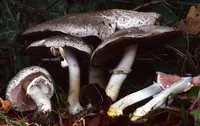
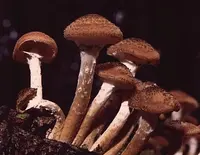
Honey mushroom, Armillaria ostoyae, is a wood-decaying fungus rather than a typical houseplant. It forms clusters of tan to honey-colored caps with ringed stems and white spores. Underground, it spreads through dark, root-like structures called rhizomorphs that can extend over large areas.

This species occurs mainly in forests of North America and Europe, where it colonizes and slowly kills weakened trees. Its aggressive, parasitic habit makes it unsuitable for most home gardens and very difficult to manage in landscapes.

Gardeners who want to learn how to care for honey mushroom usually focus on understanding its life cycle and preventing it from spreading, rather than actively cultivating it.

Main Plant Requirements

Care Difficulty

Hard Care

Light Preference

Partial Shade

Water Requirements

Keep Soil Moist

Temperature Preference

Cool Climate

Hardiness Zone

3–8

Soil Texture

Loamy, Clay, Organic-rich

Soil pH

Strongly acidic (4.5–5.5), Acidic (5.5–6.5)

Soil Drainage

Moist but well-drained

Fertilization

Minimal (feed rarely)

Get Personalized Care Plan

Scan your plant to receive care tips personalized for your specific plant

Available on iOS and Android

How to Care for the honey mushroom

This wood-decaying fungus prefers cool, shaded forest conditions rather than direct open sun.

  • Provide bright to medium shade under trees, shrubs, or forest canopy, with only 1–3 hours of weak morning sun if any direct light reaches the site.
  • Aim for dappled or filtered light; sustained full sun dries the substrate, slows mycelial spread, and can reduce honey mushroom fruiting.
  • In summer, protect from hot afternoon sun, while in cooler seasons slightly increased light exposure is tolerated without stressing the mycelium.

This fungus develops best in consistently moist, not waterlogged, woody or soil substrates.

  • Maintain evenly moist conditions in colonized wood or soil; allow only the top 2–3 cm to begin drying before rewetting if managing a cultivation bed.
  • Ensure excellent drainage so water can move through the soil profile; stagnant water promotes anaerobic conditions that damage mycelial networks.
  • During hot, dry periods, increase monitoring for shrinking, cracked soil or brittle wood, and reduce added moisture if you see foul odor or slimy surfaces, signs of excess water.

This species thrives in cool to mild climates and slows markedly in high heat or hard frost.

  • Target an active growth range of about 50–68°F (10–20°C), where mycelium spreads reliably through host roots and woody material.
  • Armillaria ostoyae tolerates brief drops near 23°F (-5°C) when established, but repeated deep freezes can damage exposed rhizomorphs and delay fruiting.
  • Sustained temperatures above 77–82°F (25–28°C) reduce activity; in warm summers, shaded, mulched soil helps buffer temperature swings through the season.

This wood-decaying fungus prefers consistently moist, cool environments with high ambient humidity.

  • Aim for 70–90% humidity by maintaining damp, not waterlogged, substrate around colonized wood.
  • It tolerates brief drier air if the substrate stays moist, but extended low humidity slows fruiting and shrivels caps.
  • Watch for cracked, dry caps or stalled mycelial growth as humidity stress, and increase humidity with misting, plastic tenting, or a humidifier when caring for honey mushroom.

This fungus does not use soil in a typical way but benefits from a carefully prepared woody, well-aerated substrate.

  • Use a mix of hardwood chips, sawdust, and coarse bark to mimic decaying wood rather than mineral soil.
  • Keep the substrate loose and chunky so air can reach the mycelium; avoid compacted, heavy textures that stay soggy.
  • Slightly acidic to neutral conditions (around pH 5.5–7) support stable growth and reduce nutrient-lock issues.
  • If mixing with any soil, keep it under 30% of the volume and balance it with coarse bark or perlite to maintain drainage.

This species is only moderately suitable for container growing, mainly for experimental or controlled cultivation.

  • Choose a deep, rigid container that can hold substantial wood-based substrate and resist warping as the mycelium spreads.
  • Drill extra side holes near the base to improve gas exchange through the woody substrate without letting water pool.
  • Place the container on bricks or a stand outdoors to prevent heat buildup and to keep the base from staying constantly wet.

Armillaria ostoyae growing in natural soil or on wood typically needs no deliberate fertilization.

Pruning Armillaria ostoyae is generally not part of intentional cultivation and is rarely recommended.

Transplanting this wood-decaying fungus is usually discouraged due to its role as a serious tree pathogen.

  • Avoid moving infected wood, stumps, or soil from sites where Armillaria ostoyae is present to prevent spread.
  • If removal is needed, excavate and dispose of infected roots and stumps off-site under local plant-health guidelines.
  • Do not attempt container culture or repotting, as growing honey mushroom this way is impractical and ecologically risky.
  • When replanting trees into affected soil, consult local extension services for resistant species and sanitation steps.

Propagation of this fungus is a specialized, high-risk task and is not advised for home growers due to its pathogenic nature.

Outdoor colonies are naturally cold hardy and do not need deliberate winter care or protection.

Care Tips

Use log sections

In managed culture, cut hardwood logs into short sections (30–60 cm) and stack them loosely to allow airflow, which helps contain the fungus to a defined area and makes harvest easier.

Limit host stress

Avoid planting susceptible trees or shrubs into known infested soil and keep existing woody plants well watered and mulched so they are less likely to succumb and become heavy sources of inoculum.

Isolate culture beds

Create a physical separation trench (30–50 cm deep) around intentional Armillaria beds to slow the spread of rhizomorphs into nearby trees and ornamental plantings.

Sanitize woody tools

Disinfect saws, splitters, and other tools after cutting infected wood using 70% isopropyl alcohol or a 10% bleach solution to reduce the chance of moving the pathogen to healthy trees while growing honey mushroom.

Remove infected stumps

Where practical, grind out or excavate stumps and large roots of killed trees, then remove or deeply bury the debris to lower the long-term inoculum load in high-value landscape areas.

Common Pests and Diseases

Truffle beetles

These insects sometimes feed on honey mushroom fruiting bodies in forests and cultivated setups. Symptoms include small feeding pits, tunnels, or surface scarring on caps and stems.

Solution

Remove affected mushrooms promptly and discard them away from the growing area, then keep the substrate surface clean of decaying debris that attracts beetles. In outdoor or semi-enclosed setups, use fine mesh barriers and harvest caps as soon as they mature to reduce exposure time to beetle activity.

Sciarid fungus gnats

These insects are attracted to moist, organic substrates and their larvae can tunnel through honey mushroom mycelium and young fruiting bodies. This pest often appears where substrate stays constantly wet and poorly ventilated.

Solution

Allow the surface of the substrate to dry slightly between misting while maintaining internal moisture, and improve airflow to discourage gnats. Use yellow sticky traps to monitor and reduce adult populations, and cover substrate with a breathable but fine mesh or filter layer to block egg-laying on the surface when practicing honey mushroom indoor care.

Mucor mold contamination

This disease is caused by fast-growing Mucor species that can overrun honey mushroom mycelium in cultivation. Symptoms include fluffy, gray to white, cottony growth that rapidly covers substrate patches or trays.

Solution

Promptly remove heavily contaminated substrate and dispose of it outside the growing space, then disinfect work surfaces and tools. For future batches, use properly pasteurized or sterilized substrate, work in as clean a space as possible, and avoid over-wetting or compacting the substrate so that Armillaria can colonize quickly.

Trichoderma green mold

This disease is caused by Trichoderma fungi that compete aggressively with honey mushroom mycelium. Symptoms include dense white mold that soon forms bright to dark green powdery spores on the substrate or container walls.

Solution

Carefully bag and discard any substrate with visible green sporulation to prevent spores spreading, and clean containers and surrounding surfaces with a suitable disinfectant. Reduce contamination risk in new batches by using clean spawn, avoiding unfiltered outdoor air during inoculation, and maintaining moderate humidity with good fresh air exchange so the desired mycelium can establish strongly.

Bacterial blotch

This disease develops under overly wet, stagnant conditions and causes slimy, discolored spots on mushroom caps. Symptoms include yellow-brown water-soaked lesions and a greasy or slippery feel on the affected tissue.

Solution

Increase air circulation and slightly reduce misting so moisture dries from cap surfaces within a few hours after watering. Remove and discard blotched mushrooms, then keep irrigation water clean, avoid overhead spraying directly on caps when possible, and maintain humidity through indirect methods such as humidifiers or moist perlite rather than constant surface wetting.

Interesting Facts

Gigantic clonal colonies

Armillaria ostoyae is known for forming enormous underground clonal networks, where many mushrooms visible at the surface are genetically identical parts of a single individual connected by rhizomorphs, which are cord-like bundles of fungal threads.

Aggressive forest pathogen

This species is a major root rot pathogen of conifers and some broadleaf trees in temperate forests, killing hosts by invading their roots and lower stems, then decomposing the wood as a saprobe after the tree dies.

Bioluminescent underground structures

The mycelium and rhizomorphs of this species can emit a faint greenish light, a form of bioluminescence thought to be linked to oxidative reactions in its metabolism, although the ecological function of this glow is still not fully understood.

Botan icon

Did you know?

One of the largest known living organisms on Earth is an Armillaria ostoyae individual in Oregon’s Malheur National Forest, estimated to cover several square kilometers underground and to be thousands of years old, making it a classic example of a so-called "humongous fungus" in scientific and popular literature.

FAQs about honey mushroom

This fungus can expand through soil via underground rhizomorphs several feet per year under favorable conditions. Visible mushrooms appear seasonally, often in autumn, emerging rapidly over a few days once temperature and moisture align.

Grow Healthy Plants with Botan Care

Keep your plants happy and healthy with plant identification, disease detection, and easy care guidance.

Botan plant care app — identify plants on mobile

Explore More Plants