Substrate refresh cycles
Replace the woody substrate every 1–2 fruiting cycles, removing spent, fully decomposed pieces and adding fresh, clean hardwood chips or twigs to maintain nutrients and physical structure for growing clustered toughshank.

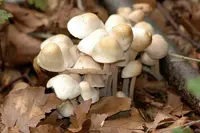
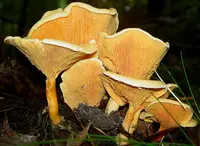
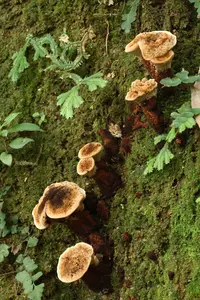
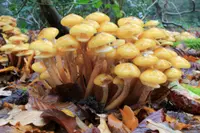
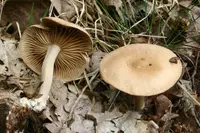
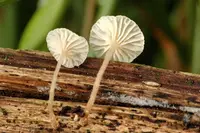
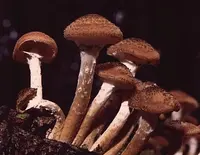
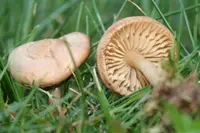
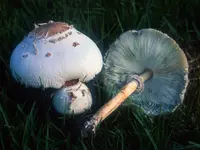
Clustered toughshank, Collybiopsis confluens, is a small saprophytic mushroom that grows on dead wood and leaf litter, not a traditional houseplant. It forms dense clusters of slender stems topped with pale to tan caps, often carpeting decaying logs or stumps in damp woodlands. This fungus is native to temperate regions of the Northern Hemisphere and is commonly found in mixed and coniferous forests. It relies on consistently moist, shaded habitats with abundant rotting organic matter, which makes it challenging to maintain indoors or in dry gardens. Anyone wanting to care for clustered toughshank must first recreate cool, humid, and shaded forest-floor conditions.

Care Difficulty
Moderate Care

Light Preference
Shade

Water Requirements
Keep Soil Moist

Temperature Preference
Cool Climate

Hardiness Zone
Unknown

Soil Texture
Loamy, Peaty, Organic-rich

Soil pH
Strongly acidic (4.5–5.5), Acidic (5.5–6.5)

Soil Drainage
Moist but well-drained

Fertilization
Minimal (feed rarely)
Scan your plant to receive care tips personalized for your specific plant
Available on iOS and Android
This wood-decaying fungus thrives in shaded woodlands with low direct sun exposure.
This species depends on consistently moist but not waterlogged wood rather than direct surface watering.
This fungus prefers cool to mild conditions typical of shaded, temperate woodlands.
Humidity is not a key factor for Collybiopsis confluens, which naturally fruits in variable outdoor conditions.
Collybiopsis confluens fruits best on consistently moist, well-aerated, organic-rich substrate rather than typical garden soil.
This fungus is not naturally suited to ornamental container culture, but controlled substrate containers can be used for experimental cultivation.
This wood-decaying fungus typically gains all needed nutrients from its substrate, so clustered toughshank grown on appropriate woody material does not benefit from added fertilizer.
Pruning Collybiopsis confluens is generally limited to tidying rather than shaping, since it is a short-lived fruiting fungus.
Collybiopsis confluens is rarely container-grown; management focuses on moving colonized wood or substrates when relocation is necessary.
Propagation of Collybiopsis confluens is usually done by spreading mycelium on suitable woody material rather than by standard garden techniques.
This saprophytic fungus is naturally cold hardy in temperate climates and usually needs no special winter care.

Plant Health Check
Not sure what's wrong with your plant? Check your plant's health inside the app.
This fungus commonly produces dense, fused clusters of small caps that share joined stems, especially on fallen hardwood twigs and well-decayed wood.
It often appears in late summer to autumn on well-rotted leaf litter and small woody debris, playing a role in breaking down advanced stages of forest litter.
The stems are typically tough, thin, and often slightly darkening toward the base, a feature that helps distinguish it from more fragile, similar-looking litter-decomposing fungi.
This fungus is considered inedible or of very poor culinary value due to its small size, tough texture, and insubstantial flesh. It is not known to be dangerously toxic, but it is not recommended for consumption.
Keep your plants happy and healthy with plant identification, disease detection, and easy care guidance.