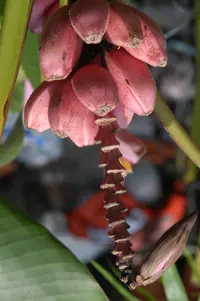
wild apricot Care (Ancylobothrys capensis)

wild apricot

About wild apricot

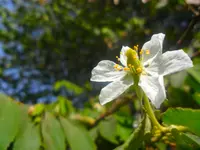
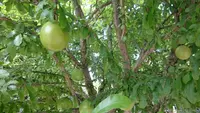
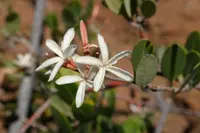
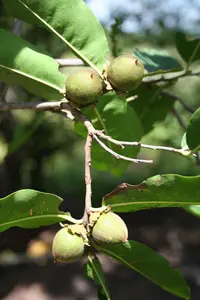
Wild apricot, Ancylobothrys capensis, is an evergreen climbing shrub native to rocky slopes and woodland margins in southern Africa. It produces glossy green leaves and fragrant, white, star-shaped flowers followed by decorative, round yellow-orange fruits.

In cultivation it is usually grown as a scrambling shrub or trained on a trellis or fence, forming a dense, somewhat woody framework over time. Growth is moderately fast where conditions are warm and frost is light.

This species prefers bright light, good air movement, and well-drained, sandy or loamy soil with regular but not excessive moisture. With shelter from hard frost and occasional pruning, it is relatively straightforward to care for wild apricot.

Main Plant Requirements

Care Difficulty

Moderate Care

Light Preference

Full Sun

Water Requirements

Moderate Water

Temperature Preference

Warm Climate

Hardiness Zone

10–11

Soil Texture

Sandy, Loamy, Rocky

Soil pH

Slightly acidic (6.5–7.0), Neutral (7.0)

Soil Drainage

Well-drained

Fertilization

Minimal (feed rarely)

Get Personalized Care Plan

Scan your plant to receive care tips personalized for your specific plant

Available on iOS and Android

How to Care for the wild apricot

This sun-loving African climber grows best with strong, direct light in open positions.

  • Provide 6–8 hours of direct sun daily; morning and early afternoon sun are ideal for flowering and fruiting on wild apricot.
  • It tolerates light afternoon shade, especially in hotter regions, but dense shade leads to weak growth and sparse blooms.
  • In very hot summers, protect from harsh late-afternoon sun to prevent leaf scorch, using light tree shade or a south-facing wall.

This drought-tolerant shrub prefers deep, infrequent watering once established.

  • Outdoors in well-drained soil, water only when the top 5–8 cm feel dry and leaves begin to lose slight gloss, then soak the root zone thoroughly.
  • Reduce watering in cool seasons, allowing the soil to dry more between soakings; avoid long periods of saturation around the crown.
  • Signs of overwatering include yellowing, soft leaves and dieback from the base, while crisp leaf edges and leaf drop indicate underwatering.

This species prefers warm, frost-free conditions similar to its native southern African climate.

  • Aim for 65–85°F (18–29°C) for active growth, with best flowering in consistently warm, bright sites.
  • It tolerates short spikes to 95°F (35°C) if roots are mulched and soil does not dry out completely during heatwaves.
  • Protect from frost; foliage is usually damaged below 30°F (−1°C), and repeated freezes can kill young wood or entire plants.

This species is fairly tolerant of dry air but grows best with moderately dry to moderate humidity.

  • Aim for 30–50% humidity, similar to many indoor living spaces in temperate climates.
  • Leaves curling at the edges or browning tips indicate humidity stress, often combined with underwatering or strong heat.
  • Increase local humidity with a pebble tray or by grouping plants, but avoid misting leaves persistently to reduce fungal risk for wild apricot.

Ancylobothrys capensis prefers lean, fast-draining, slightly acidic to neutral soil that mimics rocky savanna conditions.

  • Use a sandy, gritty mix such as 50–60% coarse sand or fine gravel with 40–50% loam or cactus mix for structure.
  • Maintain pH around 6.0–7.0 to support nutrient uptake without encouraging excess leaf growth over flowering.
  • Add perlite or pumice to improve aeration and prevent compaction, especially in containers or heavier native soils.
  • Avoid dense clay, waterlogged spots, or mixes high in peat that stay wet for long periods, which promote root rot.

This species can adapt to container growing if given a stable, deep pot that respects its woody root system.

  • Choose a heavy terracotta or ceramic pot to improve stability and slightly increase evaporation from the root zone.
  • Select a container that is deeper than it is wide to accommodate the strong, penetrating roots and reduce circling.
  • Raise the pot on feet or bricks so drainage holes never sit in collected runoff, limiting chronic moisture around the base.

Ancylobothrys capensis grows well in lean soils but benefits from light feeding in containers or poor ground.

  • Use a balanced NPK fertilizer at half strength or a light topdress of compost at the start of spring growth.
  • Feed every 4–6 weeks during the active growing season if growth appears weak or foliage pale.
  • Reduce or stop feeding in late fall and winter when growth slows or the plant is semi-dormant.
  • Always water before and after applying soluble fertilizer to limit root burn and salt buildup.

Ancylobothrys capensis responds well to light, timely pruning that maintains structure and flowering wood.

  • Carry out structural pruning in late winter or very early spring before new growth starts.
  • Remove dead, diseased, crossing, or inward-growing stems with clean, sharp bypass pruners or loppers.
  • Thin congested interior growth to improve air circulation and light penetration, which supports healthier foliage and blooms.
  • Shorten overly long shoots to guide shape, but avoid cutting back all current-season flowering wood at once.

This species is more often grown in the ground than in pots, so focus on careful transplanting when plants outgrow their space.

  • Plan transplanting for late winter or early spring, once frost risk is low and before strong new growth begins.
  • Look for roots circling the planting hole or container, stunted growth, or quick drying soil as signs it needs more space.
  • Lift with as much rootball intact as possible, shade roots from sun and wind, and replant at the same depth in well-drained soil.
  • Water deeply after transplanting, apply a 5–8 cm mulch ring, and keep soil evenly moist while new roots establish.

New plants are most often raised from seed, with semi-ripe cuttings used where controlled conditions are available.

  • Sow fresh seed in late spring in a free-draining, sandy mix and keep at 70–75°F with steady, light moisture.
  • Provide bright, indirect light and good air movement to reduce damping-off, a fungal disease that kills seedlings at soil level.
  • Take semi-ripe cuttings in midsummer, treat bases with rooting hormone, and place in a warm, humid propagator.
  • Use a coarse, well-aerated medium, and avoid waterlogging so developing roots receive enough oxygen.

Mature plants have moderate frost tolerance in mild climates but benefit from simple winter care, especially when young or potted.

  • In regions colder than USDA zone 9, grow Ancylobothrys capensis in containers and move to a bright, frost-free space in winter.
  • Apply a 5–8 cm layer of organic mulch around the root zone, keeping it slightly away from the main stem.
  • Avoid heavy winter watering; keep soil barely moist to prevent root rot in cool conditions.

Care Tips

Early framework training

Install a sturdy trellis or wires when the plant is still young and loosely tie new shoots horizontally to encourage a dense, easily managed framework rather than a tall, bare base.

Flowering wood management

After flowering, selectively thin out a few of the oldest, tangled stems at the base to stimulate new flowering shoots while keeping the plant open to light and air.

Root zone mulching

Apply a 3–5 cm layer of coarse organic mulch around, but not touching, the main stem to keep roots cool, reduce moisture fluctuations, and limit weed competition.

Frost event protection

In regions with occasional light frost, wrap the lower stems with breathable frost cloth and add an extra mulch layer over the root zone a day before a predicted cold snap, then remove the cover once temperatures stabilize.

Pest scouting routine

During warm months, inspect the undersides of leaves and young shoots every 1–2 weeks for scale and aphids, and wash off early infestations with a firm water spray to simplify caring for wild apricot long term.

Common Pests and Diseases

White peach scale

This pest forms dense, white crust-like colonies on older stems and branches, causing bark cracking and dieback if populations build up. This pest is documented on wild apricot and other Apocynaceae shrubs in warm, dry regions.

Solution

Prune out and destroy heavily encrusted twigs, then scrub remaining stems gently with a soft brush and soapy water to remove scales. For persistent infestations, use a lightweight horticultural oil spray during the crawler stage, ensuring full coverage of stems while avoiding applications during extreme heat.

Mealybugs

These insects appear as white, cottony clusters in leaf axils, on young shoots, and sometimes on roots, leading to leaf yellowing and sticky honeydew on nearby surfaces. Symptoms include stunted growth when plants are stressed or grown in containers.

Solution

Wipe visible insects off stems and leaves with cotton swabs dipped in 70% isopropyl alcohol and rinse the plant with a firm stream of water. For larger populations, apply a systemic insecticide labeled for ornamental shrubs or repeat horticultural soap sprays every 7–10 days until no new mealybugs appear.

Leaf spot fungus

This disease causes small, irregular brown to dark purple spots on leaves, which may merge and lead to premature leaf drop during humid or rainy periods. Symptoms include more severe spotting on shaded, poorly ventilated plants.

Solution

Remove and discard affected leaves from the plant and soil surface to reduce spore spread, and improve air circulation by thinning crowded branches. If spotting continues, apply a copper-based or broad-spectrum fungicide labeled for ornamental shrubs at the first sign of new lesions, avoiding spraying during high heat or strong sun.

Spider mites

These pests are tiny sap-sucking arachnids that create fine webbing on undersides of leaves, especially in hot, dry conditions. Symptoms include pale, speckled foliage that can bronze and drop if the infestation is heavy.

Solution

Increase humidity around the plant and hose down foliage thoroughly, paying attention to the undersides of leaves to dislodge mites. When populations are high, use insecticidal soap or a miticide labeled for ornamental shrubs, repeating applications every 5–7 days until new damage stops.

Powdery mildew

This disease produces a white, powdery coating on young leaves and shoots, particularly when warm days combine with cool, humid nights. Symptoms include distorted new growth and reduced vigor if large portions of the canopy are covered.

Solution

Improve sunlight exposure and air movement around the shrub by pruning overcrowded stems and avoiding overhead watering in the evening. At early onset, treat with a sulfur, potassium bicarbonate, or horticultural oil product labeled for powdery mildew, and repeat according to label directions to protect new growth as part of broader Ancylobothrys capensis care.

Interesting Facts

Rocky bushveld climber

In its native range of southern Africa, this species often grows as a scrambling shrub or liana over rocks and other vegetation in dry bushveld, using nearby plants and boulders for physical support rather than producing strong self-supporting trunks.

Fragrant funnel flowers

The plant bears white, funnel-shaped flowers with a noticeable fragrance, which open widely and are visited by insects that can navigate the narrow floral tube to reach the nectar.

Latex-bearing family trait

Like many members of the dogbane family Apocynaceae, it produces a white, milky latex in its stems and leaves, which is thought to deter herbivores due to its sticky texture and potential toxicity.

Botan icon

Did you know?

The edible, orange-yellow fruits of this species have a thick rind and sweet-sour pulp that is commonly eaten fresh by people and wildlife in parts of southern Africa, and the seeds are dispersed when animals consume and later excrete the pulp.

FAQs about wild apricot

This species is a scrambling, climbing shrub with long, flexible stems that lean on nearby plants, rocks, or structures. It does not twine tightly like some vines but benefits from support to stay upright and show its flowers well.

Grow Healthy Plants with Botan Care

Keep your plants happy and healthy with plant identification, disease detection, and easy care guidance.

Botan plant care app — identify plants on mobile

Explore More Plants