Flowering Banana Care (Musa ornata)

Flowering Banana

About Flowering Banana

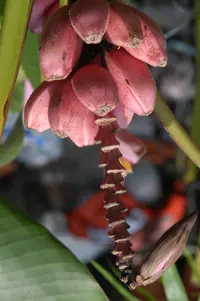
Flowering banana, Musa ornata, is a compact ornamental banana grown mainly for its colorful bracts and tropical foliage rather than for edible fruit. It forms clumping stems with large, paddle-shaped leaves and showy pink to purple inflorescences held above the foliage.

This species originates from Southeast Asia and is often used in warm-climate gardens or large containers to create a lush, architectural look. Its fast growth and tolerance of heat and humidity make it relatively straightforward to care for Flowering Banana when given bright light, regular moisture, and well-drained, fertile soil.

Main Plant Requirements

Care Difficulty

Moderate Care

Light Preference

Partial Sun

Water Requirements

Keep Soil Moist

Temperature Preference

Tropical / Frost Sensitive

Hardiness Zone

9–11

Soil Texture

Loamy, Sandy, Organic-rich

Soil pH

Acidic (5.5–6.5), Slightly acidic (6.5–7.0)

Soil Drainage

Moist but well-drained

Fertilization

Moderate (every 2–4 weeks)

Get Personalized Care Plan

Scan your plant to receive care tips personalized for your specific plant

Available on iOS and Android

How to Care for the Flowering Banana

This species thrives in bright, warm conditions that mimic its tropical origin.

  • Provide 4–6 hours of morning sun with bright, filtered light or light shade the rest of the day for balanced growth.
  • Allow partial shade, especially in hot climates, since intense afternoon sun can scorch leaves and fade Flowering Banana bracts.
  • In summer, maximize indirect light outdoors; in cooler seasons, avoid deep shade, since too little light causes weak, elongated stems and poor flowering.

This banana prefers consistently moist but not waterlogged soil.

  • Water when the top 3–5 cm of soil feels dry, aiming for evenly moist soil around the root zone without standing water.
  • Use rich, well-draining soil so excess water can escape; yellowing, limp leaves suggest overwatering, while crisp edges and curling indicate underwatering.
  • In warm growing seasons, check moisture every 1–2 days; in cooler months, extend intervals as growth slows but do not let Musa ornata dry out completely.

Stable warmth is important for strong growth and flowering.

  • Aim for 70–85°F (21–29°C) during active growth, which supports fast leaf production and healthy roots.
  • Protect plants whenever temperatures drop near 40°F (4°C), since foliage is damaged by cold and the plant is not frost tolerant.
  • Short exposures up to 95°F (35°C) are tolerated if soil moisture is maintained, but prolonged heat or sudden cold snaps can stress and stunt the plant.

This banana prefers consistently high humidity for strongest growth.

  • Aim for 60–80% humidity, as Flowering Banana comes from humid tropical habitats.
  • It tolerates brief dips to 40–50%, but prolonged dry air leads to crisp leaf edges and brown tips.
  • Increase humidity by grouping plants, using a humidifier, or placing the pot on a pebble tray with water below the pot base.

This species prefers a deep, loose, organic-rich substrate that drains freely yet holds steady moisture.

  • Use a loamy mix of roughly 50% peat or coco coir, 30% compost, and 20% perlite or coarse bark for Musa ornata.
  • Ensure fast drainage so water exits the pot within seconds, preventing waterlogging and root rot.
  • Keep pH slightly acidic to neutral, around 6.0–7.0, which supports nutrient uptake and leaf production.
  • Avoid heavy clay, compacted mixes, or pure sand; add perlite or bark to improve aeration if the mix feels dense.

This species is well suited to container growing when the pot supports its fast, top-heavy growth.

  • Choose a wide, heavy container to counterbalance tall pseudostems and reduce tipping in wind or on balconies.
  • Select a pot depth that allows a broad root zone rather than extreme depth, as roots spread laterally more than vertically.
  • Use containers with multiple side and base drainage holes so excess water exits quickly and the lower root zone does not stay saturated.

Musa ornata benefits from consistent, moderate feeding during active growth for strong foliage and flowering.

  • Use a balanced liquid fertilizer (such as 10-10-10 or 20-20-20) at 1/2 strength every 2–4 weeks in spring and summer.
  • Alternatively, apply a slow-release granular fertilizer or a thin layer of well-rotted compost at the start of the growing season.
  • Water before and after feeding to prevent root burn and help nutrients move evenly through the soil.
  • Stop or reduce feeding to once every 6–8 weeks at very weak strength in fall and winter when growth slows.

Pruning Musa ornata focuses on removing old growth to keep the clump tidy and support vigorous new stems.

  • Cut dead, yellowing, or torn leaves at the base year-round using clean, sharp pruners to limit disease entry.
  • After flowering, remove spent flower stalks to encourage the plant to direct energy into new suckers and foliage.
  • Thin out weak, crowded, or poorly placed suckers, keeping the strongest 3–5 stems to shape a balanced clump.
  • Disinfect tools with alcohol before and after use to reduce transmission of fungal and bacterial problems.

Flowering Banana in containers or beds needs occasional transplanting to give its vigorous root system more space.

  • Check for roots circling the pot, pushing through drainage holes, or noticeably slowed growth as signals to repot.
  • Plan repotting or transplanting for late spring to early summer once nights are consistently above 60°F.
  • Move plants every 2–3 years into a container 5–8 cm wider, using a rich, well-draining mix with added compost.
  • Water thoroughly after moving, keep in bright but sheltered conditions for 5–7 days, and maintain even moisture to limit transplant shock.

New Musa ornata plants are most reliably produced by dividing suckers from established clumps.

  • Carry out division in late spring or early summer when growth is active and temperatures are warm.
  • Select suckers 30–60 cm tall with their own roots, then separate from the mother plant using a clean, sharp spade or knife.
  • Plant divisions into moist, well-draining soil, keeping the original soil level, and water thoroughly to settle roots.
  • Maintain high humidity, bright indirect light, and consistently warm temperatures around 70–80°F to support rapid rooting.

In cool climates, Musa ornata needs protection from freezing conditions to keep roots and stems alive.

  • This species is frost-sensitive and can suffer leaf damage near 32°F and stem death below about 28°F.
  • In the ground, cut back damaged leaves, then mulch the root zone with 10–20 cm of straw, leaves, or bark.
  • For containers, move plants indoors to a bright, cool room before frost and reduce watering to keep soil just slightly moist.

Care Tips

Sucker Management

Select 1–2 strong pups near the base to keep as future stems and remove the rest at soil level, which helps maintain a tidy clump and directs energy into fewer, stronger flowering canes when growing Flowering Banana.

Wind Protection

Install a simple windbreak such as a slatted screen or shrub hedge on the prevailing-wind side to reduce leaf shredding and pseudostem breakage, especially in exposed gardens or balconies.

Staking Tall Stems

For tall, top-heavy plants, drive a sturdy stake 10–15 cm from the pseudostem and loosely tie the stem with soft ties in a figure-eight pattern to prevent bending or snapping during storms.

Mulch for Root Health

Apply a 5–8 cm layer of organic mulch around, but not touching, the pseudostems to moderate soil temperature, conserve moisture, and protect the shallow roots from mechanical damage.

Cold-Season Handling

In cooler regions, cut back damaged foliage after the first light frost, then insulate the base with thick mulch or fleece, or lift and pot a division for overwintering in a bright, frost-free space.

Common Pests and Diseases

Banana aphids

This pest feeds on young leaves and flower stalks, causing curling, yellowing, and sticky honeydew that can lead to sooty mold. These insects often cluster on the undersides of leaves and around new growth and inflorescences.

Solution

Prune off heavily infested flower stalks or leaf bases, then wash remaining colonies off with a strong but controlled stream of water. For ongoing Musa ornata care, use insecticidal soap or neem oil on leaf undersides every 7–10 days until new growth appears clean, and reduce excess nitrogen fertilization that encourages soft, aphid-prone tissue.

Banana weevil

This pest bores into the pseudostem and corm, weakening the plant, causing wilting, stunting, and in severe cases toppling of stems. Symptoms include small entry holes at the base and dark, tunneling damage inside when stems are cut open.

Solution

Remove and destroy any heavily infested pseudostems and old corm pieces, and keep the plant area free of decaying banana material that shelters adults and larvae. In outdoor or large-container settings, use pheromone or bait traps placed near but not touching the plants and avoid mechanical injury to the pseudostem, which attracts more weevils.

Banana leaf spot (Mycosphaerella)

This disease causes elongated brown or black leaf lesions, often with yellow halos, that merge and reduce green leaf area. Symptoms include premature leaf death, weaker flowering, and a generally stressed plant, especially in warm, humid conditions with poor air circulation.

Solution

Remove and discard affected leaves as soon as spotting expands, cutting back to healthy tissue and keeping tools clean between cuts. Improve spacing and airflow, avoid wetting the foliage when watering, and in persistent humid climates use a labeled copper or chlorothalonil fungicide on a 10–14 day schedule until new leaves emerge clean.

Panama disease (Fusarium wilt)

This disease invades the vascular system, leading to progressive yellowing of lower leaves, one-sided leaf wilting, and internal brown streaks in the pseudostem when cut. Symptoms include plants that fail to recover after watering and gradually collapse despite otherwise adequate care.

Solution

Remove and destroy the entire plant, including as much of the root system and surrounding soil as practical, and do not replant bananas in the same spot. Use only clean, disease-free planting material, sanitize tools and pots with a 10% bleach solution, and grow Musa ornata in fresh, well-drained potting mix if kept in containers.

Spider mites

These insects feed on the undersides of leaves, causing fine yellow stippling, dull leaf color, and in heavy infestations delicate webbing between leaf ribs. This pest is favored by warm, dry indoor air or sheltered outdoor spots with little air movement.

Solution

Rinse foliage thoroughly with lukewarm water, especially leaf undersides, repeating every few days to break the life cycle. Increase humidity around the plant, improve airflow, and apply horticultural oil or insecticidal soap to both sides of the leaves on a 7–10 day schedule until stippling stops and new leaves appear evenly green.

Interesting Facts

Ornamental bracts dominate

This species is grown primarily for its long-lasting pink to lavender bracts that surround the small true flowers, making the inflorescence appear decorative for many weeks even after individual flowers fade.

Sterile or low-fertility fruits

Many cultivated forms produce small, upright, inedible fruits with few or no viable seeds, which reflects its selection as an ornamental rather than a fruit crop.

Hybrid ancestry suspected

Botanists consider Musa ornata part of a complex of closely related wild bananas and hybrids, and its exact natural origin is unclear, with probable roots in the eastern Himalayas and surrounding regions.

Botan icon

Did you know?

In warm climates this banana can flower when quite small for a Musa, sometimes producing its characteristic pink inflorescences on plants less than 1.5–2 m tall, which has made it a parent in breeding compact ornamental bananas.

FAQs about Flowering Banana

Lack of blooms usually comes from insufficient light, cool temperatures, or a plant that is still immature. Crowded roots, nutrient-poor soil, or stress from irregular watering can also delay flowering. Stable warmth and time are essential.

Grow Healthy Plants with Botan Care

Keep your plants happy and healthy with plant identification, disease detection, and easy care guidance.


Botan plant care app — identify plants on mobile

Explore More Plants