Wind acclimation
Gradually expose young plants to stronger wind over several weeks by moving containers from a sheltered spot to a breezier area, which encourages sturdier trunks and reduces the risk of frond breakage in storms.

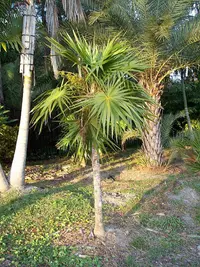
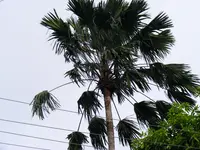
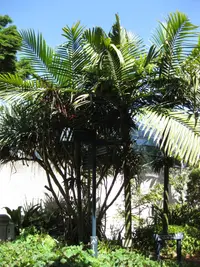
Florida thatch palm, Thrinax radiata, is a small to medium fan palm native to coastal areas of Florida, the Caribbean, and parts of Central America. It usually develops a slender gray trunk topped with a rounded crown of stiff, light green fan-shaped leaves.
This species is naturally adapted to sandy, salty, and windy shorelines, which makes it relatively tough and forgiving in cultivation. It grows slowly and stays manageable in size for many years, which suits small gardens and containers.
Understanding how to care for Florida thatch palm is easier when you know it prefers bright light, warm temperatures, and well-drained soil with moderate moisture.

Care Difficulty
Moderate Care

Light Preference
Full Sun

Water Requirements
Moderate Water

Temperature Preference
Tropical / Frost Sensitive

Hardiness Zone
10–11

Soil Texture
Sandy, Loamy, Rocky

Soil pH
Slightly acidic (6.5–7.0), Neutral (7.0)

Soil Drainage
Well-drained

Fertilization
Minimal (feed rarely)
Scan your plant to receive care tips personalized for your specific plant
Available on iOS and Android
This coastal palm thrives in high light but benefits from some protection from harsh afternoon sun.
This palm prefers evenly moist, well-drained soil and is naturally drought tolerant once established.
This species is a warm-climate palm that prefers stable, frost-free conditions for best growth.
This palm handles a wide humidity range but grows best with moderate ambient moisture.
Thrinax radiata prefers fast-draining, sandy soil that mimics its coastal habitat.
This species can adapt well to container growing when given stable, well-drained conditions.
This palm grows slowly and needs only light, thoughtful feeding to stay healthy.
Thrinax radiata needs minimal pruning, mainly to remove dead material and maintain a clean appearance.
This palm is slow growing and is more often transplanted outdoors than repotted frequently in containers.
New Thrinax radiata plants are almost always raised from seeds, which require patience and warm, stable conditions.
This tropical palm is frost sensitive and needs thoughtful winter care outside frost-free climates.

Plant Health Check
Not sure what's wrong with your plant? Check your plant's health inside the app.
This species naturally anchors itself on exposed shorelines and coral rock in southern Florida, the Caribbean, and parts of Central America, where its flexible trunk and fibrous root system help it withstand tropical storms and salt-laden winds.
Florida thatch palm foliage tolerates regular salt spray and saline soils, which allows it to grow close to the high-tide line where many other tree species cannot survive.
Its small white drupes are eaten by birds and other wildlife, which then disperse the seeds across islands and coastal habitats, supporting natural regeneration and gene flow between populations.

Native populations of this palm in Florida have declined due to coastal development and habitat loss, so it is now much more commonly seen in designed landscapes and restoration plantings than in undisturbed natural hammocks and dunes.
Yellowing usually starts on the oldest fronds and often indicates natural aging, nutrient deficiency (especially magnesium or potassium), or root stress. Check fertilizer routine, drainage, and root health before removing only completely brown, dead fronds.
Keep your plants happy and healthy with plant identification, disease detection, and easy care guidance.