Burretiokentia hapala Care

Burretiokentia hapala

About Burretiokentia hapala

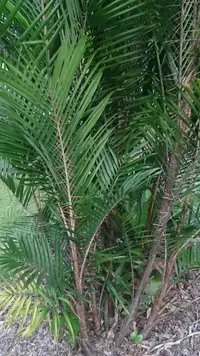
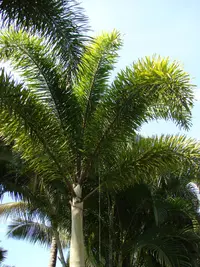
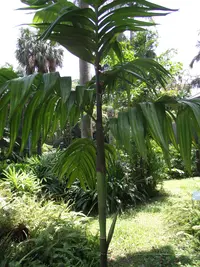
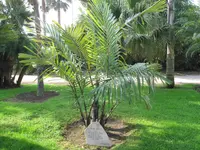
Burretiokentia hapala is a feather-leaved palm from New Caledonia, valued for its elegant, arching fronds and slim, ringed trunk. It has a naturally upright habit and forms a single, clean stem, which makes it visually tidy in both landscapes and large indoor spaces.

In its native habitat it grows in warm, humid forests, often in filtered light. It is considered moderately challenging, mainly because it dislikes cold, very dry air, and prolonged drought.

Those conditions make timing and consistency of watering important when you care for Burretiokentia hapala. It generally prefers bright, indirect light, evenly moist but well-drained soil, and shelter from strong wind and direct midday sun.

Main Plant Requirements

Care Difficulty

Moderate Care

Light Preference

Partial Shade

Water Requirements

Keep Soil Moist

Temperature Preference

Tropical / Frost Sensitive

Hardiness Zone

11–12

Soil Texture

Loamy, Sandy, Organic-rich

Soil pH

Acidic (5.5–6.5), Slightly acidic (6.5–7.0)

Soil Drainage

Moist but well-drained

Fertilization

Light (every 4–6 weeks)

Get Personalized Care Plan

Scan your plant to receive care tips personalized for your specific plant

Available on iOS and Android

How to Care for the Burretiokentia hapala

This palm prefers bright, gentle light that mimics filtered tropical sun.

  • Provide 4–6 hours of bright, filtered light per day, such as dappled shade under taller trees or shade cloth reducing direct sun by 40–60%.
  • Allow only soft morning sun; avoid harsh midday and afternoon sun, which can scorch leaflets and cause pale, dry patches on Burretiokentia hapala fronds.
  • In hotter months, shift the plant to deeper shade; in cooler seasons, move slightly closer to brighter exposure to maintain compact, healthy growth.

This species prefers evenly moist, never waterlogged, soil conditions.

  • Water when the top 3–5 cm of soil feels dry, letting water soak through the root zone, then drain fully so no water stands around the roots.
  • Use a deep, well-drained soil with added coarse sand or fine bark; yellowing, limp fronds suggest chronic overwatering, while crisp brown leaflet tips indicate underwatering.
  • In warm growing seasons, expect to water more often; during cooler months, extend intervals but still prevent the root zone from drying out completely.

This palm thrives in warm, frost-free climates with stable temperatures.

  • Aim for 70–85°F (21–29°C) during active growth, which supports steady leaf production and root activity.
  • Protect the plant from temperatures below 50°F (10°C), as light chilling slows growth and brief exposure near 40°F (4°C) can damage fronds.
  • In hotter periods above 90°F (32°C), increase shade and air movement, and avoid heat-reflective surfaces that can overheat the crown and roots.

This palm prefers steadily moist air and reacts quickly to dry indoor conditions.

  • Aim for 60–80% humidity for healthy fronds and steady growth.
  • In drier rooms, tips brown and leaf edges crisp, signaling humidity stress rather than underwatering.
  • Increase humidity with a nearby humidifier, grouping plants, or placing the pot above (not in) a water-filled pebble tray.

Use a loose, airy mix that holds moisture yet drains freely to prevent root rot.

  • Choose a slightly acidic to neutral mix, pH 6.0–7.0, built on loamy substrate rich in organic matter.
  • Combine roughly 50% peat or coco coir, 25% compost, and 25% perlite or pumice for structure and drainage.
  • Add medium orchid bark or chunky coconut husk chips to increase aeration around the roots and reduce compaction over time.
  • Avoid heavy clay-based mixes or unamended garden soil that stay wet, suffocate roots, and promote fungal problems in Burretiokentia hapala.

This species adapts well to container culture when given a deep, stable pot with careful water management.

  • Choose a tall, heavy container that resists tipping as the crown becomes larger and more wind-sensitive outdoors.
  • Select a pot with multiple unobstructed drainage holes so water exits quickly instead of pooling at the base.
  • Use a slightly wider-than-rootball pot to limit excess wet substrate that would stay saturated and chill the root zone.

This palm benefits from light, consistent nutrition rather than heavy feeding.

  • Use a balanced, slow-release palm or general fertilizer (around 10-10-10) during the warm growing season.
  • Apply every 8–10 weeks in spring and summer, following label rates at 50–75% strength for container plants.
  • Avoid fertilizing in late fall and winter when growth slows, especially outdoors in cooler regions.
  • Supplement with a thin layer of compost over the root zone once a year for gentle nutrient support.

Burretiokentia hapala needs only minimal structural pruning focused on plant health.

  • Best time for any pruning is late spring or early summer, once active growth is visible.
  • Remove only dead, diseased, or badly damaged fronds or stems using clean, sharp pruners or loppers.
  • Cut brown fronds back to their base without injuring the trunk or emerging growth point.
  • Avoid thinning green, healthy fronds, as this can slow growth and weaken the palm’s overall structure.

This slow-growing palm prefers stable conditions, so repotting or transplanting should be infrequent and careful.

  • Check for roots circling the pot, pushing through drainage holes, or noticeably slowed growth as signs it needs more space.
  • Plan repotting or transplanting in late spring to early summer, when temperatures are warm and growth is active.
  • Move to a container only 1–2 in wider, using a free-draining palm mix and keeping the root ball at the same depth.
  • Handle roots gently, water thoroughly after planting, and shade from strong sun for 1–2 weeks to limit transplant shock.

Propagation of Burretiokentia hapala is specialized and usually handled by nurseries from seed.

This palm is frost sensitive and needs thoughtful winter management in most temperate climates.

  • Keep outdoor plants only in mild, frost-free areas; move container plants indoors or to a heated greenhouse before temperatures drop below 40°F.
  • Maintain indoor temperatures around 60–75°F with bright, filtered light and slightly reduced watering in winter.
  • Mulch the root zone of in-ground specimens with 5–8 cm of organic material in late fall to buffer soil temperature.

Care Tips

Early trunk support

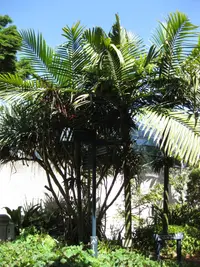
Stake the young palm with 2–3 soft ties to a sturdy bamboo or fiberglass pole for the first 2–3 years to keep the slender trunk upright and prevent wind rock that can damage new roots.

Mulch for root comfort

Apply a 5–8 cm layer of fine bark or composted mulch around, but not touching, the trunk to keep the root zone cooler, maintain even moisture, and reduce competition from weeds.

Protected wind exposure

Plant or place the palm where taller shrubs or a fence break strong prevailing winds, which helps prevent frond tearing and reduces water loss through excessive transpiration.

Gradual container upsizing

Repot only when roots circle the pot, moving up 1–2 in in diameter at a time to avoid waterlogged soil pockets and to keep the root system dense and stable.

Seasonal cleaning routine

Wipe indoor fronds with a damp, soft cloth every 4–6 weeks to remove dust, improve light capture, and allow early detection of scale or mites when caring for Burretiokentia hapala.

Common Pests and Diseases

Red palm mite

This pest feeds on the undersides of leaflets, causing fine yellow stippling that can progress to bronzing and premature leaflet drop, especially on stressed or sun-exposed palms.

Solution

Rinse leaf undersides thoroughly with a strong but controlled stream of water, then apply a horticultural oil or insecticidal soap labeled for mites every 7–10 days until new growth appears clean. Increase ambient humidity, reduce heat stress, and avoid placing the plant in very dry, hot air, as these conditions favor mite outbreaks when growing Burretiokentia hapala.

Palm aphids

These insects cluster along leaf stalks and young fronds, sucking sap and excreting sticky honeydew that can lead to sooty mold growth and reduced vigor.

Solution

Physically remove colonies by spraying with lukewarm water or wiping with a soft cloth, then treat remaining aphids with insecticidal soap or a light horticultural oil, ensuring coverage of leaf bases and undersides. Improve plant vigor with proper watering and balanced fertilizer so new fronds can outgrow previous damage, and monitor regularly for reinfestation on fresh growth.

Pink disease

This disease, caused by the fungus Erythricium salmonicolor, leads to dieback of leaf bases and stems, with pink to salmon crusts or pustules forming on affected tissue in humid, shaded conditions.

Solution

Prune out all visibly infected fronds and stem sections well below the diseased area, sterilizing tools between cuts, and dispose of debris away from other palms. Improve air movement, avoid prolonged leaf wetness from overhead watering, and if the problem persists, apply a suitable systemic fungicide according to label directions, focusing on moist, shaded parts of the canopy.

Ganoderma butt rot

This disease affects the lower trunk and root collar, causing internal decay, canopy thinning, and eventual plant death, often accompanied by hard, shelf-like conks at the base of the palm.

Solution

There is no effective curative treatment; remove and destroy affected palms promptly, including as much of the stump and roots as possible, to reduce inoculum in the soil. Avoid trunk wounding, maintain good drainage, and do not replant susceptible palms in the same exact spot where an infected palm was removed.

Leaf spot

This disease produces small brown to black lesions on leaflets that may develop yellow halos and merge into larger necrotic areas under persistently wet or crowded conditions.

Solution

Remove and dispose of heavily spotted fronds to reduce fungal spores, and water at the soil level to keep foliage dry, especially in cooler weather. Increase spacing and airflow around the plant, and in severe or recurrent cases use a palm-safe fungicide labeled for leaf spot, applying it to both upper and lower leaf surfaces according to label intervals.

Interesting Facts

Endemic New Caledonian palm

This species is native only to the rainforests of New Caledonia, where it grows in humid, shaded to semi-shaded valley forests rather than on exposed ridges or coasts.

Slender crownshaft form

It develops a smooth, green crownshaft, which is a tubular structure formed by the tightly wrapped leaf bases that give the trunk a clean, ringed appearance similar to some Dypsis and Archontophoenix palms.

Cooler-tolerant rainforest species

Unlike many tropical understory palms, it can tolerate cooler subtropical conditions and occasional light chills, which is one reason collectors in mild climates try growing Burretiokentia hapala outdoors in sheltered spots.

Botan icon

Did you know?

In its native range in New Caledonia, this palm often grows in ultramafic or other mineral-rich soils that can be challenging for many plant species, indicating a degree of adaptation to unusual geological substrates.

FAQs about Burretiokentia hapala

This palm has a moderate growth rate. In warm, frost-free climates, it usually adds 15–30 cm of trunk per year once established. Cooler temperatures, poor nutrition, root disturbance, or low moisture can slow development significantly.

Grow Healthy Plants with Botan Care

Keep your plants happy and healthy with plant identification, disease detection, and easy care guidance.

Botan plant care app — identify plants on mobile

Explore More Plants