Armored-handling gear
Use thick leather gloves and long sleeves whenever you repot or clean around the plant, and position it where people and pets will not brush against the spines during routine movement.

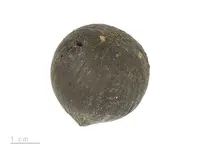
Astrocaryum sciophilum is a small to medium understory palm native to shaded, humid forests of northern South America. It usually forms a solitary trunk with elegant, arching fronds. The leaves often have spines along the petioles, so handling requires care and planning of placement. Growth is generally slow, especially in low light or cool conditions. This makes it more suited to experienced growers or collectors who understand how to care for Astrocaryum sciophilum over the long term. It prefers consistently warm temperatures, high humidity, filtered light, and a well-drained but moisture-retentive soil mix.

Care Difficulty
Hard Care

Light Preference
Partial Shade

Water Requirements
Regular Water

Temperature Preference
Tropical / Frost Sensitive

Hardiness Zone
11–12

Soil Texture
Loamy, Sandy, Organic-rich

Soil pH
Acidic (5.5–6.5), Slightly acidic (6.5–7.0)

Soil Drainage
Moist but well-drained

Fertilization
Minimal (feed rarely)
Scan your plant to receive care tips personalized for your specific plant
Available on iOS and Android
This understory palm prefers soft, filtered light that mimics bright forest shade.
This species prefers evenly moist, well‑drained soil without long periods of drought or standing water.
This tropical palm thrives in warm, stable conditions and does poorly with cold or frost.
This shade-loving palm needs consistently humid air to grow well in cultivation.
Astrocaryum sciophilum requires a deep, loose, well-drained medium that still retains steady moisture.
This palm can be grown in large containers, but it remains a demanding and eventually space-limiting choice.
This slow-growing understory palm benefits from light feeding in cultivation but is not a heavy feeder.
This species needs minimal pruning, mainly for health and safety rather than shaping.
This palm is usually grown in the ground, and transplanting should be infrequent and carefully planned to limit root disturbance.
Reproduction of this palm is almost always by seed and is considered slow and technically demanding for most home growers.
This strictly tropical palm is frost sensitive and needs strong protection or a warm indoor location in regions with cool winters.

Plant Health Check
Not sure what's wrong with your plant? Check your plant's health inside the app.
This species naturally grows in the shaded understory of Amazonian and Guianan rainforests and is adapted to low light, with leaves structured to capture diffuse sunlight efficiently under a closed canopy.
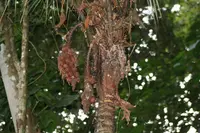
The slender stem and leaf bases are covered in dense, sharp black spines, an effective defense against herbivores that might otherwise damage the palm in the forest understory.
Its orange to yellowish fruits have a fibrous, oily pulp that is eaten by various mammals and birds in its native range, contributing to seed dispersal across the forest floor.
In parts of northern South America, the hard, spiny stems and leaf bases of this palm have traditionally been used as a natural barrier material, forming living fences that discourage both human and animal passage due to the dense covering of rigid spines.
Growth is slow to very slow. Seedlings often take several years to form a noticeable trunk, and overall height increases only a few centimeters per year, even in ideal warmth, moisture, and shaded rainforest-like conditions.
Keep your plants happy and healthy with plant identification, disease detection, and easy care guidance.