Thorn-aware handling
Use thick gloves and long sleeves when repotting or shaping the shrub, and rotate the container using the pot rather than grabbing stems to avoid damage to the bark and your hands.

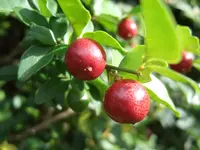
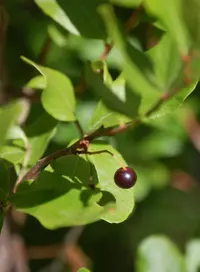
Limeberry, Triphasia trifolia, is a small evergreen shrub in the citrus family, valued for its glossy foliage and tiny, edible red fruits. It often forms a compact, bushy mound with fine thorns, making it useful as a low hedge or container specimen. Native to Southeast Asia and surrounding regions, it is now grown in many warm climates as a minor fruit and ornamental plant.
This species prefers bright light, well-drained soil, and steady moisture without waterlogging. Once established, it is moderately resilient but can be sensitive to cold and poor drainage, which guides how to care for limeberry.

Care Difficulty
Moderate Care

Light Preference
Full Sun

Water Requirements
Moderate Water

Temperature Preference
Tropical / Frost Sensitive

Hardiness Zone
10–11

Soil Texture
Sandy, Loamy, Organic-rich

Soil pH
Acidic (5.5–6.5), Slightly acidic (6.5–7.0)

Soil Drainage
Well-drained

Fertilization
Light (every 4–6 weeks)
Scan your plant to receive care tips personalized for your specific plant
Available on iOS and Android
Triphasia trifolia needs bright, indirect light for compact growth and good flowering.
Triphasia trifolia prefers evenly moist, well-drained soil rather than constant wetness or long dry spells.
This shrub thrives in warm, frost-free conditions and reacts poorly to prolonged cold.
This species prefers moderate humidity and usually handles typical indoor levels without difficulty.
Triphasia trifolia grows best in airy, fast-draining, slightly acidic to neutral soil that still holds some moisture.
This shrub is well suited to container growing when the pot and substrate are chosen to prevent waterlogging and crowding.
Triphasia trifolia responds well to modest, consistent feeding during the warm growing season.
Triphasia trifolia benefits from light, structured pruning to maintain a compact, well-lit canopy.
This shrub handles container life but prefers infrequent, careful repotting or transplanting to limit root stress.
Triphasia trifolia is commonly propagated by semi-hardwood cuttings or seeds under warm, humid conditions.
This subtropical shrub is frost sensitive and needs protection in climates with cold winters.

Plant Health Check
Not sure what's wrong with your plant? Check your plant's health inside the app.
The small red fruits typically contain exactly three hard seeds, which is reflected in the species name trifolia and is a distinctive feature among close citrus relatives.
This species belongs to the Rutaceae family and is closely allied to true citrus, sharing aromatic oil glands in the leaves and stems and similar white, fragrant flowers.
It naturally forms a dense, low, very spiny shrub, and in some Pacific and tropical coastal areas it has become locally invasive by forming impenetrable thickets that outcompete native vegetation.

In some regions, this species has been experimentally used as a rootstock and protective hedge for other citrus relatives, taking advantage of its dense spines, tolerance of pruning, and close genetic relationship to cultivated citrus.
This shrub grows at a moderate rate. In warm climates with good light and regular feeding, new shoots extend several centimeters per season. Growth slows in cool conditions, poor soil, or if roots are confined in a small container.
Keep your plants happy and healthy with plant identification, disease detection, and easy care guidance.