Dalby myall Care (Acacia stenophylla)

Also known as: shoestring acacia
Dalby myall

About Dalby myall

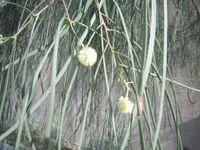
Dalby myall, Acacia stenophylla, is an Australian riverine tree known for its long, narrow, drooping leaves and graceful weeping form. It can grow into a medium to large tree, forming a light, filtered shade canopy rather than dense foliage.

In nature it occurs along inland watercourses and floodplains in arid and semi-arid regions of eastern Australia. This background makes it drought tolerant once established and generally low maintenance. For those looking to care for Dalby myall, it usually prefers full sun, well-drained soil, and only occasional supplemental water after establishment.

Main Plant Requirements

Care Difficulty

Easy Care

Light Preference

Full Sun

Water Requirements

Low Water

Temperature Preference

Warm Climate

Hardiness Zone

8–11

Soil Texture

Sandy, Loamy, Clay

Soil pH

Slightly acidic (6.5–7.0), Slightly alkaline (7.0–7.5)

Soil Drainage

Well-drained

Fertilization

Minimal (feed rarely)

Get Personalized Care Plan

Scan your plant to receive care tips personalized for your specific plant

Available on iOS and Android

How to Care for the Dalby myall

Acacia stenophylla thrives in strong light typical of open, arid landscapes.

  • Provide full sun for 6–8 hours per day; Dalby myall develops denser growth and better flowering in open, unshaded positions.
  • It tolerates light or dappled shade, especially in the hottest climates, but prolonged shade causes sparse, leggy branches and reduced vigor.
  • In very hot inland areas, protect young plants from intense late-afternoon sun with temporary shade cloth during their first 1–2 summers.

This species is adapted to dry conditions and prefers infrequent, deep watering once established.

  • Allow the top 5–8 cm of soil to dry before watering; soil should feel dry and loose rather than cool and sticky to the touch.
  • Use free-draining, sandy or loamy soil so water runs through within a few seconds; persistent puddling or sour smell indicates poor drainage and potential root rot.
  • In summer, watch for dull, folding leaves as a sign to water; in cooler seasons, extend intervals and avoid watering if the soil is already slightly moist.

This arid-zone tree handles heat well but needs protection from hard frost, especially when young.

  • Optimal growth occurs around 70–90°F (21–32°C), which matches warm, dry climates with hot summers and mild winters.
  • Mature plants can tolerate brief drops to about 24–26°F (-4 to -3°C), but repeated freezes damage young shoots and may kill young trees.
  • Tolerates extreme heat above 100°F (38°C) if soil is not waterlogged; in frost-prone areas, site in a warm microclimate and avoid low, cold air pockets.

This species tolerates a wide humidity range and rarely needs special humidity management indoors.

  • Target 30–50% humidity, similar to most heated homes, as Dalby myall is naturally adapted to dry riverbank climates.
  • Brown, crisp leaf tips with otherwise dry soil usually reflect underwatering or excess heat rather than low humidity.
  • If air is extremely dry from heating, place the pot away from direct hot air vents to reduce rapid moisture loss from foliage.

Acacia stenophylla prefers lean, fast-draining mineral soils that do not stay wet for long.

  • Use a sandy or sandy-loam mix, such as 50–60% coarse sand or fine gravel with 40–50% general potting mix to keep structure open.
  • Ensure rapid drainage; water should pass through in seconds, leaving the mix moist but never waterlogged to protect oxygen around the roots.
  • Keep pH slightly acidic to neutral (pH 6.0–7.5); avoid strongly acidic mixes rich in peat without added sand or grit.
  • Improve aeration for container-grown Acacia stenophylla by blending in perlite or pumice and avoiding heavy clay-based garden soil.

This species can be grown in containers for some years when root space and stability are carefully managed.

  • Choose a tall, deep container to accommodate the developing taproot and reduce the risk of circling, constricted roots.
  • Use a heavy or weighty pot material, such as thick terracotta or ceramic, to counter the narrow, upright canopy that can catch wind.
  • Position the container where it cannot tip, for example braced against a wall or railing, since the plant becomes top-heavy as it gains height.

This drought-adapted Australian tree needs modest feeding, especially when young in containers.

  • Use a balanced, low-phosphorus slow-release fertilizer or well-rotted compost in spring to support healthy growth when caring for Dalby myall.
  • Feed every 8–10 weeks during the growing season, avoiding high-phosphorus lawn products that can harm roots.
  • Apply at half the label rate or use diluted liquid feed at 1/2 strength for container plants.
  • Stop fertilizing in late summer so growth hardens before winter and to reduce cold damage risk.

Pruning Acacia stenophylla is mainly aimed at structure, safety, and clearance rather than heavy shaping.

  • Carry out main pruning in late winter to early spring before active growth begins.
  • Remove dead, damaged, crossing, or crowded branches to improve airflow and reduce disease risk.
  • Shorten or remove low limbs to raise the canopy and maintain a clear trunk line if needed.
  • Use clean, sharp bypass pruners or a handsaw, making smooth cuts just outside the branch collar.

This tree is usually grown in the ground, with transplanting more relevant than long-term container culture.

  • Transplant in late winter to early spring when growth is slow and conditions are mild.
  • Look for circling roots, roots protruding from drainage holes, or stalled growth in nursery containers as signals to move up a size.
  • Shift into a slightly larger container or ground hole with well-drained soil, keeping the root flare at soil level.
  • Water deeply after transplanting, then keep soil just moist for several weeks to limit stress and encourage new root growth.

Acacia stenophylla is most commonly propagated from seed, with some pre-treatment needed for good germination.

  • Collect mature, dry pods and remove seeds at the end of the growing season.
  • Scarify seeds by nicking the coat or pouring just-boiled water over them, then soaking until they swell.
  • Sow in a free-draining, sandy mix, keeping temperatures around 68–77°F and soil lightly moist, not wet.
  • Provide bright light and good airflow, then transplant seedlings once they develop several true leaves.

This species is moderately frost tolerant in warm-temperate climates and usually needs limited winter care once established.

  • In regions below about 20°F, young trees benefit from a 5–8 cm mulch layer around the root zone, kept away from the trunk.
  • Shelter newly planted trees from cold winds using temporary windbreaks or strategic site placement.
  • For container specimens in marginal climates, move pots to an unheated but frost-free spot with good light.

Care Tips

Wind hardening

In the first 1–2 years, expose young trees to steady, moderate wind or gently rock the trunk by hand a few times a week to encourage a shorter, stronger root flare and sturdier wood structure.

Selective limb training

From year 2–3, choose a single straight leader and remove or shorten steep, competing branches while they are still under 1 cm thick to build a stable, open canopy that resists storm damage.

Mulch for root cooling

Apply a 5–8 cm ring of coarse, woody mulch starting 10–15 cm away from the trunk to keep the root zone cooler, reduce soil evaporation, and limit weed competition in hot, inland sites.

Salinity monitoring

In areas with hard or slightly saline irrigation water, leach the root zone every few months by giving a deep, slow watering that drains freely, then check for leaf tip burn as an early sign of salt build‑up.

Floodplain establishment

When planting in low-lying or periodic flood areas, raise the root collar 2–3 cm above the final soil grade on a low mound so that temporary inundation does not suffocate new roots while still allowing the tree to adapt to seasonal wetting, which is useful when growing Dalby myall in its preferred conditions.

Common Pests and Diseases

Acacia psyllids

These insects are tiny sap-sucking bugs that cause leaf yellowing, cupping, and fine honeydew deposits that can lead to sooty mold on Dalby myall foliage.

Solution

Prune and dispose of heavily infested shoots, then hose down the canopy to remove nymphs and honeydew; if needed, apply a targeted systemic insecticide or horticultural oil labeled for psyllids during active growth, focusing on young shoots and the underside of leaves.

Gall rust

This disease produces swollen, woody galls on stems and branches, which can distort growth and weaken affected limbs over time.

Solution

Cut out galled stems well below the swollen tissue and dispose of them away from other acacias; maintain good spacing and airflow and avoid overhead irrigation to limit spore spread, and remove nearby volunteer acacias that may act as reservoirs.

Armillaria root disease

This disease, caused by Armillaria fungi in the soil, leads to gradual decline, sparse foliage, branch dieback, and possible white fungal sheets under the bark near the base of the trunk.

Solution

Improve drainage and avoid planting in sites with a history of Armillaria on woody plants, remove severely affected trees including as much root material as possible, and avoid overwatering or deep mulching against the trunk which favor fungal activity.

Scale insects

These pests appear as small, immobile bumps on stems and leaves, excreting honeydew that attracts ants and supports black sooty mold growth.

Solution

Physically scrape or wipe off accessible scales, encourage natural predators by limiting broad-spectrum insecticides, control ants, and when infestations are heavier use horticultural oil or an appropriate systemic product applied according to label directions.

Interesting Facts

Ribbon-like leaf phyllodes

Instead of true leaves, this species has long, narrow phyllodes that can reach 15–40 cm and hang in a ribbon-like way, reducing water loss while still allowing efficient photosynthesis in hot, dry climates.

Riverbank and floodplain specialist

Acacia stenophylla naturally occurs along inland rivers and floodplains in arid and semi-arid Australia, tolerating periodic flooding as well as extended dry periods by developing deep roots that access groundwater.

Nitrogen-fixing desert tree

Like many legumes, this species forms root nodules with symbiotic bacteria that fix atmospheric nitrogen into forms the plant can use, improving soil fertility in nutrient-poor inland environments.

Botan icon

Did you know?

Acacia stenophylla is one of the few inland Australian acacias that combines high tolerance to both salinity and seasonal waterlogging, allowing it to form stable woodland and riparian belts in some of the country’s harshest, salt-affected floodplain systems.

FAQs about Dalby myall

This species is generally fast-growing, often adding 60–100 cm of height per year in favorable conditions. Growth slows in poor soil, with drought stress, or if planted in very cold or waterlogged sites.

Grow Healthy Plants with Botan Care

Keep your plants happy and healthy with plant identification, disease detection, and easy care guidance.

Botan plant care app — identify plants on mobile

Explore More Plants