Inga umbellifera Care

Inga umbellifera

About Inga umbellifera

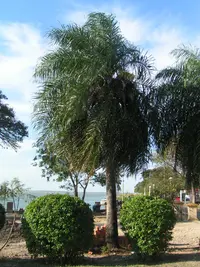
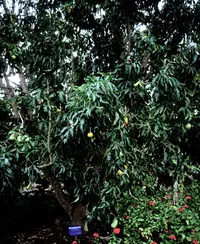
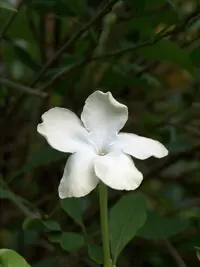
Inga umbellifera is a fast-growing tropical tree in the legume family, known for its umbrella-like clusters of creamy white flowers and elongated seed pods. It often forms a broad, spreading canopy with dense, glossy foliage, making it useful as a shade or agroforestry tree in humid lowland tropics.

This species naturally occurs in Central and South American rainforests, usually along rivers and in other moist habitats. It fixes nitrogen in the soil, which generally makes it vigorous and relatively easy to establish under warm, frost-free conditions.

Inga umbellifera prefers consistently moist, well-drained soil and high light with some protection from harsh, dry wind. Understanding these basic needs helps explain how to care for Inga umbellifera successfully in suitable climates.

Main Plant Requirements

Care Difficulty

Moderate Care

Light Preference

Full Sun

Water Requirements

Regular Water

Temperature Preference

Tropical / Frost Sensitive

Hardiness Zone

10–12

Soil Texture

Loamy, Sandy, Organic-rich

Soil pH

Acidic (5.5–6.5), Slightly acidic (6.5–7.0)

Soil Drainage

Moist but well-drained

Fertilization

Minimal (feed rarely)

Get Personalized Care Plan

Scan your plant to receive care tips personalized for your specific plant

Available on iOS and Android

How to Care for the Inga umbellifera

This tropical tree prefers bright, indirect light with some gentle direct sun each day.

  • Provide 4–6 hours of morning sun with light afternoon shade; dappled light under taller trees suits Inga umbellifera well.
  • In hot climates, protect from intense midday sun to avoid leaf scorch; use shade cloth or plant on the east or north side of structures.
  • In cooler regions, choose the sunniest frost-free spot and prune surrounding plants if needed so the canopy still gets strong, filtered light in winter.

This species prefers consistently moist but not waterlogged soil.

  • Water when the top 3–5 cm of soil feel slightly dry, aiming to moisten the full root zone rather than giving frequent shallow drinks.
  • Use deep, slow watering and well-drained soil; puddling around the base, musty smell, or yellowing leaves can indicate overwatering or poor drainage.
  • In the first 2–3 years, monitor closely during hot, dry periods; wilting, dull foliage, or dry cracking soil signal the need for a thorough soak.

This lowland tropical tree thrives in warm, frost-free conditions year-round.

  • Optimal growth occurs around 70–86°F (21–30°C), with steady warmth supporting faster canopy and root development.
  • The tree is very sensitive to cold; growth slows below 60°F (16°C) and damage often appears if exposed to 40–45°F (4–7°C).
  • Frost can kill young shoots and small trees, so protect from any drop near 32°F (0°C); in intense heat above 95°F (35°C), ensure extra water and some afternoon shade to limit stress.

This species prefers moderately humid air but tolerates short dry spells.

  • Aim for 50–70% humidity, especially for young Inga umbellifera plants or in active growth.
  • Dry indoor air causes brown leaf tips, edge crisping, and slower growth over time.
  • Increase humidity with grouped plants, a nearby humidifier, or a wide pebble tray under outdoor pots in hot, dry weather.

This tree prefers deep, moisture-retentive yet free-draining, organically enriched soil.

  • Use a loamy mix with high organic matter, such as garden loam blended with compost and aged manure.
  • Ensure rapid drainage by incorporating coarse sand or fine gravel so water does not pool around the root zone.
  • Target a slightly acidic to neutral pH of about 6.0–7.0 for reliable nutrient availability.
  • Avoid compacted, heavy clay or waterlogged conditions; improve aeration by adding chunky organic material like fine bark chips.

This species can be grown in large containers when vigorous size is managed.

  • Choose a deep, heavy pot to anchor the tall, leafy canopy and reduce tipping in wind.
  • Select a container material that limits overheating, such as thick plastic or glazed ceramic, to protect surface roots.
  • Use an extra-deep saucer that allows fast runoff without letting the base sit in standing water.

This tropical nitrogen-fixing tree usually needs modest feeding, especially on fertile ground.

  • Use a light application of balanced slow-release fertilizer (around 10-10-10) or well-rotted compost at the start of the warm growing season.
  • Feed Inga umbellifera no more than 1–2 times per growing season, focusing on younger or container-grown plants.
  • Apply at half the label strength for container plants to avoid salt buildup and root burn.
  • Stop feeding in late fall and withhold fertilizer during cool or dormant periods.

Targeted pruning helps manage size and structure without stressing this fast-growing tree.

  • Carry out main pruning in late winter or early dry season before strong new growth starts.
  • Remove dead, diseased, crossing, or storm-damaged branches first, using clean, sharp bypass pruners or a pruning saw.
  • Shorten or thin crowded interior branches to improve light penetration and airflow through the canopy.
  • Shape young trees by tipping back overly long shoots to encourage a balanced, low, spreading framework.

This species is usually grown in the ground, so focus on careful transplanting from nursery containers.

  • Transplant in late spring or early summer when soil is warm and plants establish roots quickly.
  • Look for circling roots at the drain holes or slow growth as signs a container plant is ready to go into the ground.
  • Choose a hole 2–3× wider than the root ball, plant at the same depth, and backfill with native soil, not heavy fertilizer blends.
  • Water thoroughly after planting, then keep the root zone evenly moist and shaded for 1–2 weeks to limit transplant shock.

Propagation is most practical from fresh seed, though semi-hardwood cuttings are sometimes used.

  • Sow fresh seeds of Inga umbellifera soon after harvest in late spring or early summer, as viability declines quickly.
  • Use a loose, well-drained mix, keep it evenly moist, and maintain warm temperatures around 75–85°F for reliable germination.
  • For semi-hardwood cuttings, take 10–15 cm pieces with 2–3 nodes, remove lower leaves, and dip bases in rooting hormone.
  • Place cuttings in high humidity and bright, indirect light until rooted, then gradually acclimate to lower humidity.

This tropical tree is frost-sensitive and needs protection in regions with cool winters.

  • Avoid planting outdoors where temperatures commonly fall below 30°F, as repeated frosts can damage young growth.
  • Mulch the root zone with 5–8 cm of organic material to buffer soil temperature and conserve moisture.
  • In colder areas, grow Inga umbellifera in large containers and move indoors or to a heated greenhouse before the first frost.
  • Shelter young trees from cold winds, which increase desiccation and can intensify freeze damage to foliage and twigs.

Care Tips

Early canopy training

In the first 2–3 years, select 3–4 well-spaced scaffold branches and remove very low or crossing shoots to build a strong, open canopy that can safely support heavy pod crops later.

Wind and weight support

In exposed sites, install a sturdy stake or short tripod frame on the windward side and secure the trunk with soft ties so developing pods and rapid top growth do not cause leaning or breakage.

Pod load management

During heavy flowering and fruit set, thin overcrowded pods along a branch so remaining fruit can size up well and branches are less likely to snap under the combined weight of pods and foliage.

Mulch for root stability

Maintain a 5–8 cm layer of coarse organic mulch over the root zone, kept a few cm away from the trunk, to buffer soil temperature, limit surface root damage, and reduce compaction from foot traffic or mowing.

Nitrogen-fixing root care

Avoid deep, aggressive cultivation within the drip line so the fine roots and nitrogen-fixing nodules remain intact, which supports long-term vigor when growing Inga umbellifera in one spot for many years.

Common Pests and Diseases

Leaf miners

This pest creates pale, winding tunnels inside young leaflets, which can cause distorted growth and reduce photosynthesis in tender Inga foliage.

Solution

Prune and destroy heavily mined leaves to remove larvae, and encourage beneficial insects by avoiding broad-spectrum insecticides; for valuable young trees, a systemic insecticide labeled for leaf miners can be applied to the soil at the start of new flushes of growth as part of broader Inga umbellifera care instructions.

Scale insects

These insects appear as small, fixed bumps along stems and leaf midribs, feeding on sap and sometimes leading to sooty mold due to honeydew production.

Solution

Wipe or gently scrub infested stems with a cloth dipped in mild soapy water, then rinse; on larger trees, target outbreaks with horticultural oil during mild weather, making sure spray thoroughly coats the insects without applying in strong sun or high heat.

Shoot borers

This pest tunnels into young shoots and branches, causing dieback of tender tips and sometimes leading to stunted, uneven canopy growth in humid, lowland plantings.

Solution

Prune and destroy affected shoots several inches below visible damage, then monitor for fresh frass or entry holes; reduce plant stress with consistent watering and balanced fertilization, and where pressure is high, use pheromone or light traps recommended for local borer species alongside sanitation.

Anthracnose

This disease causes irregular dark lesions on young leaves and pods, sometimes leading to tip blight and premature leaf or pod drop in warm, wet conditions.

Solution

Remove and dispose of infected leaves and pods from the tree and ground, increase airflow by selective pruning, and avoid overhead irrigation; in areas with recurrent problems, apply a copper- or chlorothalonil-based fungicide at the start of rainy periods, following label directions carefully.

Powdery mildew

Symptoms include white, powdery fungal growth on leaf surfaces, especially on shaded or densely foliated branches, which can lead to yellowing and reduced vigor in young trees.

Solution

Thin dense canopy areas to improve light penetration and airflow, and avoid excess nitrogen that encourages very soft, mildew-prone growth; if needed, treat with a labeled sulfur or potassium bicarbonate product, coating both upper and lower leaf surfaces and repeating at intervals during humid periods.

Interesting Facts

Shade-tolerant rainforest tree

This species naturally occurs in the understory and lower canopy of lowland tropical rainforests in northern South America and parts of Central America, where it grows in warm, humid, shaded conditions rather than fully open sun.

Conspicuous umbel flowers

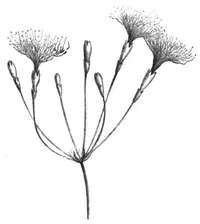
Its flowers are arranged in umbrella-like clusters (umbels) on short stalks, which is reflected in the species name umbellifera and helps distinguish it from several other Inga species with different inflorescence structures.

Nitrogen-fixing legume

As a member of the legume family, it forms symbioses with nitrogen-fixing bacteria in its root nodules, allowing the tree to enrich poor tropical soils and support surrounding vegetation in mixed forest systems.

Botan icon

Did you know?

Inga umbellifera is part of a diverse genus widely used in multi-strata agroforestry in the tropics, where its relatively fast growth, dense foliage, and ability to improve soil fertility make it a valuable shade and companion tree for crops such as cacao and coffee, illustrating the practical value of Inga umbellifera care instructions in sustainable agriculture.

FAQs about Inga umbellifera

The sweet, pulpy arils around the seeds are edible and often eaten fresh or used in desserts. Seeds must be cooked before consumption and are usually roasted or boiled. Avoid eating raw seeds in large quantities.

Grow Healthy Plants with Botan Care

Keep your plants happy and healthy with plant identification, disease detection, and easy care guidance.


Botan plant care app — identify plants on mobile

Explore More Plants