myrobalan Care (Terminalia bellirica)

Also known as: Bibhitaki
myrobalan

About myrobalan

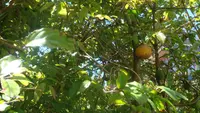
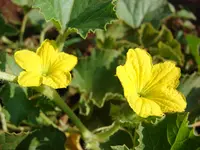
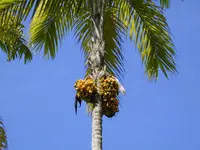
Myrobalan, Terminalia bellirica, is a large, long-lived tropical tree valued for its fruits, shade, and traditional uses. It develops a broad crown with dense foliage and smooth gray bark. Leaves are simple, often clustered at the tips of branches, giving the canopy a full, rounded look.

This species is native to South and Southeast Asia, where it grows in warm, humid lowland forests and along plains. In cultivation it can be challenging for beginners because it prefers stable warmth, good light, and space to develop its deep root system.

Those exploring how to care for myrobalan should know it favors well-drained soil with consistent moisture and benefits from bright light in frost-free climates.

Main Plant Requirements

Care Difficulty

Moderate Care

Light Preference

Full Sun

Water Requirements

Moderate Water

Temperature Preference

Tropical / Frost Sensitive

Hardiness Zone

11–13

Soil Texture

Sandy, Loamy, Organic-rich

Soil pH

Slightly acidic (6.5–7.0), Neutral (7.0)

Soil Drainage

Well-drained

Fertilization

Minimal (feed rarely)

Get Personalized Care Plan

Scan your plant to receive care tips personalized for your specific plant

Available on iOS and Android

How to Care for the myrobalan

Terminalia bellirica grows best in strong, consistent light typical of tropical and subtropical climates.

  • Provide 6–8 hours of direct sun daily, ideally with morning sun and light afternoon shade to protect young trees from leaf scorch.
  • Tolerates light partial shade (around 3–4 hours direct sun) but growth and fruiting may slow, especially in dense stands or under taller trees.
  • In hot summers, use neighboring trees or structures for filtered afternoon light; in cooler or overcast seasons, prioritize open, unobstructed exposure for myrobalan.

This species prefers evenly moist, well-drained soil and develops better drought tolerance as it matures.

  • Allow the top 3–5 cm of soil to dry before deep watering, then soak the root zone thoroughly rather than giving frequent shallow drinks.
  • During hot, dry periods, monitor leaves for wilting, curling, or dull color as cues to water; in cooler or rainy seasons, extend intervals to prevent waterlogging.
  • Choose soil or a site with good drainage; persistent wetness, sour smell, or yellowing, soft leaves indicate overwatering, while crispy edges signal underwatering for Terminalia bellirica.

This tree thrives in warm, frost-free climates with relatively stable temperatures.

  • Ideal growth occurs around 70–90°F (21–32°C), with vigorous shoot and root development in consistently warm conditions.
  • It tolerates short spikes up to about 100°F (38°C) if soil moisture is maintained, but prolonged heat with dry soil can stress leaves and young shoots.
  • Minimum safe temperatures are about 40–45°F (4–7°C); it is highly sensitive to frost, so protect young plants from cold snaps and avoid planting in known frost pockets.

This species prefers moderately humid air but tolerates typical indoor levels if not kept too warm.

  • Aim for 40–60% humidity, especially for young or container-grown myrobalan kept in heated rooms.
  • Brown, crisp leaf edges and slow new growth indicate air is too dry or heat is excessive.
  • Increase humidity with a pebble tray under the pot, grouping plants, or a small humidifier rather than frequent misting.

Terminalia bellirica prefers deep, well-aerated mineral soils that drain freely yet retain some moisture.

  • Use a mix of 50–60% loam, 20–30% coarse sand, and 10–20% compost to balance drainage and nutrient retention.
  • Ensure strong drainage; water should move through the profile quickly without leaving the root zone waterlogged.
  • Aim for slightly acidic to neutral pH around 6.0–7.0, avoiding highly alkaline or saline conditions that restrict nutrient uptake.
  • Improve aeration by incorporating coarse sand or fine bark chips and avoid heavy clays or compacted ground.

This species can be grown in large containers when kept as a juvenile tree or bonsai-style specimen.

  • Choose a tall, heavy container to stabilize the developing woody canopy and prevent tipping in wind or on balconies.
  • Select a potting mix that is more mineral than organic to limit excessive height while keeping roots healthy.
  • Use wide, unobstructed drainage holes so the substantial root system never sits in trapped water at the pot base.

Terminalia bellirica benefits from light, balanced feeding in active growth, but mature trees often manage in reasonably fertile soil.

  • Apply a balanced NPK fertilizer or well-rotted compost once every 4–6 weeks during the warm growing season for young trees or containers.
  • Use a diluted liquid feed at 1/2 strength for potted plants to avoid salt buildup and root burn.
  • Reduce or stop feeding in cooler months or during dormancy, especially where growth slows markedly.
  • For caring for myrobalan in poor soils, add a thin surface layer of compost or leaf mold annually to support steady growth.

Pruning Terminalia bellirica is mainly done to manage size, structure, and safety rather than to stimulate heavy flowering.

  • Carry out any shaping or structural pruning at the end of the dry or cool season, just before strong growth resumes.
  • Remove dead, diseased, crossing, or storm-damaged branches using sharp, clean loppers or a pruning saw.
  • Thin congested interior branches to improve light penetration and airflow through the canopy.
  • Maintain a single strong leader and balanced scaffold branches to develop a stable, wind-resistant tree form.

Terminalia bellirica is usually grown in the ground, so care focuses on transplanting young trees rather than frequent repotting.

  • Transplant at the start of the warm rainy season so roots establish quickly and drought stress is lower.
  • Move the tree when roots circle the container, growth slows, or the plant becomes top-heavy and hard to keep watered.
  • Dig a wide planting hole, retain as much of the root ball as possible, and set the tree at the same soil level as before.
  • Water deeply after planting, shade lightly for 1–2 weeks if sun is intense, and keep soil evenly moist until new growth appears.

Terminalia bellirica is most often propagated from seed, which requires warmth and patience to establish strong young trees.

  • Collect fully ripe fruits, clean the seeds, and optionally scarify or lightly nick the hard coat to improve water uptake.
  • Sow seeds in a free-draining, sandy mix; keep at 75–85°F with consistent, light moisture but no waterlogging.
  • Seed germination may be slow and uneven, sometimes taking several weeks to months before seedlings emerge.
  • Grow seedlings in deep containers to accommodate the taproot and transplant only once they are sturdy and well-rooted.

Terminalia bellirica is a tropical tree with low frost tolerance, so winter care is needed in regions with cool or freezing weather.

  • In ground, plant only in frost-free or very mild climates; trees can suffer damage near 32°F and below.
  • Apply a 5–8 cm mulch layer around the root zone in late fall, keeping it slightly away from the trunk.
  • For container plants, move pots indoors or into a heated greenhouse before the first frost and provide bright light.

Care Tips

Early structural training

In the first 3–5 years, select 3–5 well-spaced main branches and remove steep, crossing, or competing shoots to build a strong, open canopy that will resist wind and support long-term fruiting.


Wind and stake management

In exposed sites, use 2–3 low, flexible stakes tied with soft, wide ties below the lowest branches and remove them gradually over 12–18 months so the trunk strengthens without kinking or girdling.

Root zone protection

Keep a 60–120 cm radius around the trunk free of turf and cover it with 5–8 cm of coarse organic mulch, leaving a small mulch-free ring at the trunk to protect surface feeder roots and reduce soil compaction.

Targeted nutrient monitoring

If growth slows or leaf size reduces, use a simple soil test kit every 1–2 years and adjust only the specific nutrients that are low, which is more reliable than general fertilizer routines when growing myrobalan.

Seasonal pest scouting

From late spring through early autumn, inspect new flushes and leaf undersides every 2–3 weeks for scale, aphids, and leaf miners, and prune out or spot-treat small infestations early before they spread through the canopy.

Common Pests and Diseases

Leaf gall psyllids

This pest forms blister-like galls on young leaves and shoots, causing distortion and reduced leaf area. Symptoms include thickened, curled, or swollen patches that may turn brown with time.

Solution

Prune and destroy heavily galled shoots before adults emerge, and collect fallen infested leaves to reduce the next generation. For young trees, use a strong water spray to dislodge nymphs, then apply a neem oil or horticultural soap spray targeting the undersides of tender leaves at 7–10 day intervals during new flushes of growth.

Bark-boring beetles

These insects tunnel under the bark and into the wood, producing small round exit holes, frass (wood dust), canopy thinning, and branch dieback. This problem occurs more often in stressed or drought-affected trees.

Solution

Cut out and destroy severely infested branches to remove larvae, and keep trees healthy with regular watering and mulching to reduce stress. In areas with repeated attacks, use trunk banding or sticky traps to monitor adult beetles, and consult a local arborist for targeted trunk or soil-applied systemic insecticides when damage is extensive.

Leaf spot

This disease causes small brown to dark olive spots on leaves that may merge into larger patches, sometimes with yellow halos and premature leaf drop. Symptoms include a generally thinned canopy and reduced vigor in humid, warm conditions.

Solution

Rake and dispose of fallen leaves, avoid overhead irrigation, and prune inner branches to improve airflow around the canopy. For valuable specimens, apply a copper-based or chlorothalonil fungicide at the start of the rainy period, repeating according to label directions until new leaves emerge clean.

Powdery mildew

This disease appears as a white to gray powdery coating on young leaves, shoots, and occasionally fruits, leading to curling, distortion, and reduced growth. Symptoms include reduced photosynthesis and general weakening of seedlings or young trees.

Solution

Increase light and airflow by thinning crowded branches and avoiding dense understory growth, and water at soil level instead of wetting foliage. Remove heavily infected shoots and apply sulfur or potassium bicarbonate sprays at early signs of infection, repeating every 7–14 days during humid periods as part of broader Terminalia bellirica plant care.

Interesting Facts

Key triphala component

The dried fruits are one of the three classical ingredients of the Ayurvedic preparation triphala, where they are used specifically for their high tannin and polyphenol content rather than for flavor.

High tannin fruits

Its fruits are unusually rich in hydrolysable tannins, including gallic and ellagic acid derivatives, which has led to their traditional use in leather tanning and as a natural dye source.

Dry forest specialist

This tree is naturally widespread across seasonally dry tropical forests from the Indian subcontinent to Southeast Asia, where it tolerates pronounced dry seasons that many other evergreen trees cannot handle.

Botan icon

Did you know?

Ancient Sanskrit texts such as the Charaka Samhita and Sushruta Samhita mention the fruits of this species, indicating that it has been systematically used and documented in South Asian medicinal and dietary practices for more than 1,500 years.

FAQs about myrobalan

This species is a moderately fast-growing tropical tree, often adding 50–100 cm of height per year in suitable climates. Under good conditions it can eventually reach 20–30 m tall with a broad, rounded canopy.

Grow Healthy Plants with Botan Care

Keep your plants happy and healthy with plant identification, disease detection, and easy care guidance.

Botan plant care app — identify plants on mobile

Explore More Plants