Root-zone mulching
Maintain a 5–8 cm layer of bark or leaf mold over the root zone, keeping it a few cm away from the trunk, to keep roots cool and evenly moist while reducing weed competition when growing Oyama Magnolia.

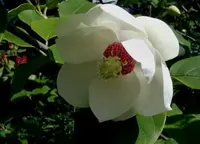
Oyama magnolia (Magnolia sieboldii) is a small, deciduous flowering tree or large shrub valued for its nodding white flowers with contrasting red-purple centers. It typically has a rounded, multi-stemmed habit and a graceful, informal structure that suits naturalistic gardens and woodland edges.
This species is native to East Asia, especially Korea, Japan, and parts of China, where it grows in cool, moist forest conditions. It is considered moderately easy to grow when planted in suitable climates, but dislikes drought, compacted soil, and extreme heat.
Gardeners who learn how to care for Oyama Magnolia usually focus on providing partial shade, consistent moisture, and humus-rich, well-drained soil to support healthy flowering and growth.

Care Difficulty
Moderate Care

Light Preference
Partial Shade

Water Requirements
Regular Water

Temperature Preference
Cold Hardy

Hardiness Zone
5–8

Soil Texture
Loamy, Silty, Organic-rich

Soil pH
Strongly acidic (4.5–5.5), Acidic (5.5–6.5)

Soil Drainage
Moist but well-drained

Fertilization
Minimal (feed rarely)
Scan your plant to receive care tips personalized for your specific plant
Available on iOS and Android
Magnolia sieboldii prefers bright, gentle light that mimics woodland edge conditions.
Magnolia sieboldii needs consistently moist but not waterlogged soil, especially during establishment.
This species is a cool-temperate shrub or small tree that handles cold winters but dislikes extreme heat and drought.
Magnolia sieboldii prefers moderately moist air but usually adapts well to typical outdoor humidity levels.
Magnolia sieboldii grows best in deep, moisture-retentive yet well-drained soil with high organic content.
This species can be grown in containers for several years, though it ultimately prefers in-ground planting for long-term development.
This species grows well in reasonably fertile soil, so Oyama Magnolia usually benefits from only light, targeted feeding.
Magnolia sieboldii needs minimal pruning, mainly to maintain structure and remove problem wood.
This magnolia is most often grown in the ground, so focus on careful transplanting rather than frequent repotting.
Magnolia sieboldii is usually propagated by seeds or semi-ripe cuttings, but both methods require patience and controlled conditions.
This species is fairly cold hardy in much of its range but benefits from some winter root-zone protection, especially when young.

Plant Health Check
Not sure what's wrong with your plant? Check your plant's health inside the app.
The creamy white flowers of this species often open in the evening and emit a stronger fragrance at night, which helps attract nocturnal pollinators such as moths.
Unlike many magnolias with upright blossoms, its flowers hang downward on slender stalks, so the crimson stamens are best seen from below, an adaptation thought to favor certain insect visitors.
This species is naturally distributed in cooler, montane forests of Korea, China, and Japan, which explains its higher cold tolerance compared with many other magnolias and makes Magnolia sieboldii care suitable for temperate gardens.

In its native range, this species has been used as a regional symbol of ornamental beauty and is sometimes planted near temples and traditional gardens, reflecting its long association with quiet, shaded woodland landscapes.
Sparse or absent flowering often comes from too much shade, dry roots, heavy pruning at the wrong time, or a young plant not yet mature. Consistent moisture, balanced fertilizer, and minimal pruning usually improve blooming over several seasons.
Keep your plants happy and healthy with plant identification, disease detection, and easy care guidance.