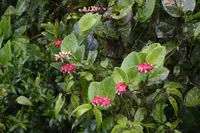
Cowberry Care (Vaccinium vitis-idaea)

Also known as: Lingonberry, Mountain cranberry, Lowbush Cranberry, Redberry, Partridge-berry
Cowberry

About Cowberry

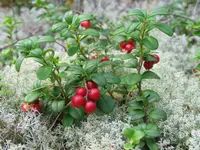
Cowberry, Vaccinium vitis-idaea, is a low, evergreen shrub from boreal and subarctic regions of Europe, Asia, and North America. It forms dense mats with small, leathery leaves and bright red berries.

This species naturally grows in cool, acidic, often sandy or rocky soils, typically in coniferous forests and moorlands. It prefers bright light and consistent moisture but dislikes waterlogged ground.

The plant is generally slow-growing and long-lived, with good cold tolerance but some sensitivity to heat and alkaline soil. Once its soil and climate needs are understood, it is relatively straightforward to care for Cowberry.

Main Plant Requirements

Care Difficulty

Moderate Care

Light Preference

Full Sun

Water Requirements

Regular Water

Temperature Preference

Cold Hardy

Hardiness Zone

2–7

Soil Texture

Sandy, Loamy, Peaty

Soil pH

Strongly acidic (4.5–5.5)

Soil Drainage

Moist but well-drained

Fertilization

Minimal (feed rarely)

Get Personalized Care Plan

Scan your plant to receive care tips personalized for your specific plant

Available on iOS and Android

How to Care for the Cowberry

This low shrub prefers cool, bright conditions that mimic open woodland edges.

  • Provide 4–6 hours of direct morning sun with light afternoon shade; in hotter regions, use dappled shade after 12–2 pm to prevent leaf scorch.
  • Tolerates partial shade (around 3–4 hours sun) but flowering and fruiting of Cowberry decline if light drops much below this level.
  • In winter, full sun is beneficial in most climates, while in summer high-altitude or northern sites can tolerate nearly full-day sun without damage.

This species prefers consistently moist but not saturated soil around its shallow roots.

  • Water when the top 2–3 cm of soil feels dry, aiming for evenly moist soil that never stays soggy for more than a few hours.
  • Reduce watering frequency in cool, wet seasons, and increase slightly during hot, dry periods, always checking soil by hand instead of following a strict schedule.
  • Watch for dull, drooping leaves and dry, brittle shoots as signs of underwatering, and yellowing leaves or blackened stem bases as common indicators of overwatering.

This cold-hardy shrub thrives in cool climates but struggles with extended heat.

  • Optimal growing temperatures are about 55–70°F (13–21°C), supporting steady vegetative growth and good fruit set.
  • Vaccinium vitis-idaea tolerates cold down to around -30°F (-34°C) under snow cover, but young plants benefit from mulch to buffer rapid freeze–thaw cycles.
  • Heat above 80–85°F (27–29°C) stresses plants; provide afternoon shade and maintain soil moisture during hot spells, especially in low-elevation or urban sites.

This species prefers relatively cool, moderately humid air but usually copes with typical indoor and outdoor conditions.

  • Aim for 40–60% humidity to limit leaf edge browning and fruit shrivel in Cowberry.
  • In very dry air, watch for curling, dull, or crisply browned leaf tips as signs of humidity stress.
  • Increase humidity outdoors with mulch over the root zone; indoors, group plants or use a nearby pebble tray rather than misting foliage.

Vaccinium vitis-idaea needs consistently moist, acidic, sharply drained soil with high organic content.

  • Use a mix of roughly 50–70% peat or coco coir with pine bark fines and 20–30% coarse sand or perlite for structure and drainage.
  • Keep pH at 4.0–5.5; avoid adding lime, wood ash, or tap water with high bicarbonates that push pH upward.
  • Maintain a loose, airy texture by avoiding compaction; do not step on planting areas and mix in bark or pine needle mulch to preserve pores.
  • Never plant in heavy clay or waterlogged sites, since prolonged saturation suffocates roots and encourages root rot.

This small, shallow-rooted shrub is well suited to container growing outdoors on patios or balconies.

  • Choose a wide, relatively shallow container so the spreading root system and stems can form an even mat without crowding the center.
  • Use a heavy or weighted pot if exposed to wind, since the dense top growth can make light plastic containers tip over.
  • Lift the pot slightly off the ground with feet or bricks to let drainage holes clear quickly after rain and prevent bottom stagnation.

Vaccinium vitis-idaea benefits from light, acid-forming feeding but is sensitive to excess nutrients.

  • Apply an organic, acid-friendly slow-release fertilizer or compost in early spring, once per year, for established plants.
  • Use a low to moderate NPK fertilizer (for example 10-5-5), at half the label strength to avoid root burn.
  • Feed container plants lightly every 6–8 weeks in the growing season, monitoring for pale, weak growth.
  • Stop feeding in late summer so shoots harden before winter, and do not fertilize during dormancy.

Pruning Vaccinium vitis-idaea is mainly about light maintenance to keep plants compact and productive.

  • Carry out pruning in late winter or very early spring, before new growth starts.
  • Remove dead, diseased, or damaged stems with clean, sharp hand pruners or scissors.
  • Thin out the oldest, most crowded stems at the base to improve light and air movement.
  • Trim overly long shoots lightly to maintain a low, bushy shape and support flowering and fruiting.

Cowberry is usually grown in the ground, so focus on careful transplanting or infrequent container repotting.

  • Transplant or repot in early spring or early fall, when temperatures are mild and soil is workable.
  • Look for roots circling the pot, slow growth, or media drying very fast as signs a container plant needs a larger pot.
  • Move to a slightly wider container with fresh, acidic, well-drained mix, keeping the root ball at the same soil depth.
  • Water thoroughly after moving, keep soil evenly moist, and shade lightly for 3–7 days to reduce transplant shock.

Vaccinium vitis-idaea is commonly propagated by semi-ripe cuttings, division, or layering rather than seed for true-to-type plants.

  • Take semi-ripe cuttings in late summer, using 5–8 cm non-flowering shoots with a clean diagonal cut.
  • Insert cuttings in acidic, well-drained medium, use rooting hormone, and keep humidity high with bright, indirect light.
  • Divide mature clumps or lift rooted runners in early spring, replanting sections with several shoots and healthy roots.
  • Use seeds only for breeding or trials, sowing in acidic mix, keeping cool, moist conditions, and expecting slow germination.

Vaccinium vitis-idaea is cold hardy in many temperate climates and usually needs only modest winter care.

  • Tolerates frost and snow once established, but young plants benefit from extra protection during the first 1–2 winters.
  • Apply a 5–8 cm layer of bark or pine-needle mulch around the root zone, keeping mulch off stems.
  • For containers, move pots into a sheltered, unheated spot or bury the pot to insulate roots from repeated freeze–thaw cycles.

Care Tips

Use Sulfur Chips

In neutral or slightly alkaline soils, incorporate pelletized elemental sulfur into the top 5–8 cm several months before planting to gradually lower pH into the acidic range this species needs.

Mulch With Pine

Apply a 3–5 cm layer of pine needles or partially decomposed pine bark around the root zone to conserve moisture, keep roots cool, and slowly maintain an acidic topsoil layer helpful for growing Cowberry.

Encourage Groundcover Spread

Pin down flexible stems with U-shaped wire pins where they touch the soil to promote rooting along the stems and create a denser, weed-suppressing mat over time.

Net Against Birds

Install lightweight bird netting over low frames just before fruits start to color to protect the berries while still allowing pollinators to access flowers earlier in the season.

Rotate Harvest Areas

When harvesting, leave some stems and berries untouched each year in different sections of the patch to avoid stressing the same plants repeatedly and to maintain long-term productivity.

Common Pests and Diseases

Crowberry rust

This disease causes orange to rust-brown pustules on leaves and sometimes on stems, leading to premature leaf drop and reduced vigor.

Solution

Remove and destroy affected leaves as soon as symptoms appear, avoid overhead watering, and ensure good air circulation; in areas with recurring problems, apply a labeled copper or sulfur-based fungicide at bud break and repeat as directed during wet periods.

Leaf spot

This disease produces small brown to purplish spots on leaves that can merge into larger blotches, reducing photosynthesis and plant vigor.

Solution

Prune out and discard heavily infected shoots, rake and remove fallen leaves, water at soil level, and if spotting continues in wet seasons use a registered fungicide for blueberries or other Vaccinium species according to label directions.

Fruit rot (mummy berry type)

Symptoms include young shoots wilting, blossoms blighting, and berries shriveling and turning pale or tan, often remaining on the plant as hard mummified fruits.

Solution

Collect and destroy mummified berries and blighted flowers, apply a mulch layer to bury infected debris, avoid overhead irrigation during bloom, and in regions with a history of this problem use a suitable fungicide timed to bud swell and early bloom following local extension guidance for Vaccinium vitis-idaea care.

Cranberry tipworm

This pest is a small fly whose larvae feed inside tender shoot tips, causing distorted, stunted growth and dieback of young stems.

Solution

Prune and discard infested shoot tips, encourage natural predators by maintaining plant diversity nearby, and if damage is persistent use a targeted insecticide labeled for tipworm on related Vaccinium crops, applied when new growth begins and adults are active.

Cranberry fruitworm

These insects are caterpillars that bore into developing berries, leaving webbing, frass, and prematurely reddened or dropped fruit.

Solution

Hand-remove and destroy infested berries, use fine mesh netting if practical to reduce adult moth access, and in outdoor plantings monitor for adult moths with pheromone traps and apply a biological insecticide such as Bacillus thuringiensis (Bt) to young larvae according to label directions.

Interesting Facts

Evergreen in the Arctic

Cowberry forms low, woody evergreen mats that survive in boreal forests and Arctic tundra, keeping functional leaves year-round despite long, freezing winters.

Dual flowering strategy

Many populations flower twice per season, producing an early summer crop and a second, often smaller, autumn crop of berries, which extends food availability for wildlife.

Soil fungus partnership

The roots form ericoid mycorrhizae, a close partnership with specialized fungi that helps the plant access nutrients in cold, acidic, nutrient-poor soils where many other species struggle to grow.
Botan icon

Did you know?

Cowberry can reproduce clonally through long-lived underground stems, so a single genetic individual can spread into a dense, carpet-like colony that may persist in the same site for many decades.

FAQs about Cowberry

Yes, the berries are edible and commonly used in jams, sauces, juices, and preserves. They taste tart rather than sweet and are rich in antioxidants. Only harvest from pesticide‑free plants and avoid eating spoiled or moldy fruit.

Grow Healthy Plants with Botan Care

Keep your plants happy and healthy with plant identification, disease detection, and easy care guidance.

Botan plant care app — identify plants on mobile

Explore More Plants