creeping snowberry Care (Gaultheria hispidula)

Also known as: Hairy false-wintergreen
creeping snowberry

About creeping snowberry

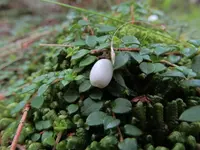
Creeping snowberry (Gaultheria hispidula) is a low, mat-forming evergreen groundcover from cool, moist forests and bogs of northern North America. It hugs the soil surface with fine stems and tiny, glossy leaves.

In summer it produces small white bell-shaped flowers, followed by translucent white berries that often persist into winter. The plant spreads slowly and stays delicate in size, which suits rock gardens, shaded borders, or naturalistic woodland plantings.

It prefers consistently cool, moist, acidic soil and protection from hot sun or drying winds. These specific needs make it moderately challenging for beginners who want to learn how to care for creeping snowberry in typical garden conditions.

Main Plant Requirements

Care Difficulty

Hard Care

Light Preference

Partial Shade

Water Requirements

Keep Soil Moist

Temperature Preference

Cold Hardy

Hardiness Zone

2–6

Soil Texture

Loamy, Peaty, Organic-rich

Soil pH

Strongly acidic (4.5–5.5), Acidic (5.5–6.5)

Soil Drainage

Moist but well-drained

Fertilization

Minimal (feed rarely)

Get Personalized Care Plan

Scan your plant to receive care tips personalized for your specific plant

Available on iOS and Android

How to Care for the creeping snowberry

This low shrub prefers cool, dappled woodland light rather than strong, direct sun.

  • Provide bright dappled shade or high filtered light with brief morning sun; 2–4 hours of gentle sun is usually enough for creeping snowberry.
  • Avoid strong midday and afternoon sun, which can scorch foliage and dry the shallow roots; leaf bronzing or crisp edges signal excess light.
  • In summer, give more shade under trees or shrubs; in cooler months, slightly more open light is acceptable as long as soil does not dry out quickly.

This species prefers consistently moist, cool soil but is sensitive to waterlogging.

  • Water when the top 2–3 cm of soil feels just barely dry, aiming to keep the root zone evenly damp rather than wet.
  • Use humus-rich, well-drained, slightly acidic soil so excess water can drain away; yellowing, soft leaves suggest overwatering or poor drainage.
  • Increase monitoring during hot, dry periods, when wilting or dull, limp foliage indicates the need for a thorough soak, then let excess water run off.

This boreal groundcover thrives in cool climates and tolerates substantial cold.

  • Optimal growth occurs around 55–70°F (13–21°C), especially in shaded, moist woodland conditions.
  • Plants are hardy and can usually tolerate winter lows down to about -30°F (-34°C) when rooted in the ground with insulating mulch or natural leaf litter.
  • Heat above 80°F (27°C) combined with full sun stresses Gaultheria hispidula; provide shade, maintain soil moisture, and use mulch to keep roots cool in hot spells.

This species prefers consistently moist, cool air but tolerates only brief periods of dryness indoors or out.

  • Target 50–70% humidity, similar to a cool woodland floor, especially for creeping snowberry grown in sheltered garden spots.
  • Dry air causes browning leaf tips, shriveling berries, and slower new growth along the trailing stems.
  • Increase humidity by grouping plants, placing pots over pebble trays with water below the base, or growing near consistently damp ground rather than exposed, windy sites.

This plant favors cool, moist, acidic soil that mimics a shaded forest floor.

  • Use a loose mix of 50–60% fine pine bark or leaf mold, 20–30% peat or coco coir, and 10–20% perlite or sand for structure and drainage.
  • Aim for pH 4.5–5.5; incorporate acidic materials like peat, conifer needles, or sulfur-amended compost if soil tests more alkaline.
  • Maintain even moisture but avoid waterlogging by ensuring excess water drains freely and never allowing the mix to stay soggy for more than 24 hours.
  • Avoid heavy clay, compacted areas, and alkaline substrates such as lime-rich gravel, as these restrict roots and cause chlorosis, or yellowing leaves.

This low, creeping species can be grown in containers, especially for cool patios and shaded outdoor displays.

  • Choose a wide, shallow container so the shallow, spreading roots can colonize the top layer of mix without sitting in deep, wet soil.
  • Use a heavier ceramic or clay pot outdoors to keep the spreading mat stable and prevent wind from tipping the container.
  • Raise the container slightly on feet or bricks so drainage holes stay clear and excess water escapes quickly after rain or watering.

Gaultheria hispidula is a low-nutrient woodland plant that needs only light feeding in containers or very poor soils.

  • Use a dilute balanced NPK liquid fertilizer (for example 10-10-10 at 1/4–1/2 strength) every 4–6 weeks in spring–mid summer for creeping snowberry.
  • In outdoor beds, work a thin layer of compost into the topsoil once in spring instead of frequent feeding.
  • Stop fertilizing in late summer so new growth can harden before winter dormancy.
  • Always water before and after applying fertilizer to limit root burn in this shallow-rooted species.

Gaultheria hispidula needs minimal pruning, mainly to maintain a low, even carpet and plant health.

  • Best time is late winter to very early spring before new growth starts.
  • Use clean, sharp scissors or hand pruners to remove dead, diseased, or winter-burned stems at the base.
  • Lightly thin congested patches to improve air flow and reduce fungal problems while keeping the mat-like habit.
  • Trim only the stem tips if a neater edge is desired along paths or rock features.

This ground-cover species is more often transplanted in the landscape than repotted, and it dislikes frequent disturbance.

  • Look for slow growth, roots circling inside a pot, or the plant drying out quickly as signs a container specimen needs a larger pot.
  • Transplant or up-pot in early spring or early fall, avoiding hot, dry periods to limit transplant shock.
  • Move plants infrequently, roughly every 3–4 years, into acidic, moist, well-drained soil rich in organic matter.
  • Lift plants with a wide soil root ball, keep roots shaded and moist, and water thoroughly after replanting to reduce stress.

Gaultheria hispidula is commonly propagated on a small scale by division, layering, and sometimes semi-ripe cuttings.

  • In early spring or early fall, lift small sections with rooted runners and replant promptly into acidic, moist soil.
  • For layering, pin a flexible stem to the soil surface, cover the middle section lightly, and sever it once new roots form.
  • Take semi-ripe cuttings in late summer, use rooting hormone, and place in a cool, bright spot with consistently moist, well-drained medium.
  • Sow fresh seed in a cold frame, allowing natural winter chilling to improve germination the following spring.

This species is quite cold hardy in its native range and usually needs only modest winter care in the ground.

  • Tolerates freezing conditions when planted in well-drained, acidic soil with consistent moisture.
  • Apply a 3–5 cm layer of leaf mold or fine bark mulch in late fall to insulate the shallow root system.
  • In very exposed or snow-scarce sites, a light evergreen bough cover reduces desiccation of foliage.
  • For container plants, move pots into a sheltered, unheated but frost-free or minimally freezing area to protect roots.

Care Tips

Mimic Forest Duff

Top-dress the planting area each year with a thin layer of shredded pine needles or fine bark to mimic natural forest litter and keep roots cool and evenly moist.

Edge Containment

Install a shallow root barrier or edging strip 5–8 cm deep around beds to guide spreading runners and prevent the mat from invading adjacent lawn or planting areas.

Strategic Companion Planting

Combine it with low, open-canopy shrubs or deciduous ferns that provide light shade and leaf litter, which stabilizes soil moisture and supports healthier, denser groundcover.

Gentle Winter Insulation

In colder regions, leave a thin layer of fallen leaves over the mat in late fall as a natural mulch, then remove part of it in early spring to prevent smothering new growth.

Targeted Moss Management

Allow a light moss layer to coexist for moisture retention, but thin out thick patches by hand where stems are lifting or yellowing so air and light can reach the foliage when growing creeping snowberry.

Common Pests and Diseases

Leaf spot fungi

This disease causes small dark brown to black lesions on leaves that may merge into larger dead patches, especially in humid, shaded sites. Symptoms include premature yellowing and drop of the fine foliage mats.

Solution

Remove and discard affected leaves and any dense, decomposing ground litter around the plants to reduce fungal spore loads. Improve air movement by thinning surrounding vegetation slightly and avoid overhead watering; in severe, recurrent cases a targeted application of a copper-based fungicide during prolonged wet periods can help protect new growth.

Snow mold

This disease appears after snow melt as bleached, matted, or water-soaked patches in the creeping stems and leaves, sometimes with a grayish or pinkish mold on the foliage. Symptoms include slow recovery of the affected patches compared with healthy surrounding mats.

Solution

Gently rake and lift matted foliage after snow melt to increase air flow and dry the surface. Remove heavily blighted material, avoid excessive late-season nitrogen fertilization nearby, and keep the planting slightly less dense so that stems dry faster after snow and rain.

Scale insects

These insects attach along stems and leaf midribs as tiny tan, brown, or gray bumps that exude sticky honeydew, leading to sooty mold and general decline. This pest can weaken the delicate creeping stems over time, causing thinning of the groundcover.

Solution

Prune out and dispose of heavily infested stems, then wipe or gently scrub remaining stems with a soft brush dipped in mild soapy water. For persistent infestations, use horticultural oil during the plant’s dormant or cool period, ensuring full coverage of stems while avoiding application during temperature extremes.

Leaf tiers (caterpillars)

These insects web or fold the small leaves together and feed inside the shelter, leaving brown, chewed foliage and distorted stems. Symptoms include scattered browned tufts where leaves have been skeletonized or consumed.

Solution

Handpick and destroy webbed leaf clusters and visible caterpillars as soon as damage appears, inspecting the mat closely in spring and early summer. Encouraging ground-dwelling predators by maintaining diverse, pesticide-free surrounding vegetation helps keep caterpillar numbers low over time.

Phytophthora blight

This disease can develop in poorly drained, saturated soils, causing sudden wilting, blackening, and collapse of stems, often starting in low, wet pockets of the planting. Symptoms include dark, water-soaked stem bases and progressive dieback of entire patches.

Solution

Improve drainage by adjusting grading or adding coarse material to nearby soil, and avoid planting in standing water or compacted sites when planning how to take care of creeping snowberry. Remove and discard affected plant clumps with surrounding soil, and avoid moving contaminated soil or tools into healthy areas; in consistently wet locations, consider raising the planting on a slight mound to keep roots above saturated zones.

Interesting Facts

Boreal moss companion

This species often grows interwoven with sphagnum and feather mosses in cold, acidic conifer forests, forming very low, delicate mats that can be overlooked unless examined closely at ground level.

Minute evergreen leaves

The plant has tiny, 2–6 mm evergreen leaves with fine bristles (hispid hairs) on the underside and margins, a feature that helps distinguish it from many other small creeping ericaceous species.

Ant-associated seed dispersal

Its small white berries contain seeds that are moved short distances by ants, a dispersal strategy called myrmecochory, which helps the plant slowly colonize suitable mossy microhabitats on the forest floor.

Botan icon

Did you know?

In parts of northeastern North America, Indigenous peoples traditionally used the pleasantly aromatic leaves and berries of creeping snowberry as a subtle wintergreen-flavored trail nibble, even though the plant is so small and inconspicuous that it is easily missed underfoot.

FAQs about creeping snowberry

This species forms a low, creeping mat through shallow rhizomes and rooting stems but is typically slow to moderate in spread. In suitable cool, acidic sites it can gradually fill gaps without behaving aggressively or smothering neighboring plants.

Grow Healthy Plants with Botan Care

Keep your plants happy and healthy with plant identification, disease detection, and easy care guidance.

Botan plant care app — identify plants on mobile

Explore More Plants