Windbreak Planning
Site young plants where nearby structures or taller shrubs reduce prevailing winter winds, as this minimizes leaf scorch and desiccation on exposed tarajo holly hedges.

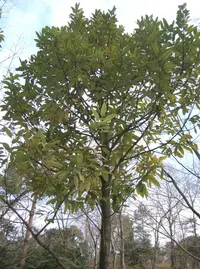
Tarajo holly, Ilex latifolia, is an evergreen broadleaf tree valued for its dense foliage and ornamental berries. It is often used as a screening or specimen plant in mild climates. The plant has large, leathery leaves and a strong upright habit that can form a tall, narrow canopy over time.
Ilex latifolia is native to East Asia, especially China and Japan, where it grows in forested and mountainous areas. It adapts best to temperate regions with mild winters and moderate humidity.
The species is generally robust and tolerant of pruning, which makes it manageable in gardens and landscapes. It prefers well-drained, slightly acidic soil and consistent moisture, which helps when learning how to care for tarajo holly.

Care Difficulty
Moderate Care

Light Preference
Partial Sun

Water Requirements
Moderate Water

Temperature Preference
Cold Hardy

Hardiness Zone
7–9

Soil Texture
Loamy, Clay, Organic-rich

Soil pH
Acidic (5.5–6.5), Slightly acidic (6.5–7.0)

Soil Drainage
Moist but well-drained

Fertilization
Minimal (feed rarely)
Scan your plant to receive care tips personalized for your specific plant
Available on iOS and Android
This evergreen prefers bright conditions and can handle a range of sun exposures when established.
This species prefers consistently moist but not saturated soil once established in the landscape.
This broadleaf evergreen is naturally adapted to mild, temperate climates with moderate seasonal variation.
This species tolerates a wide range of outdoor humidity but benefits from moderately moist air.
Ilex latifolia prefers evenly moist, well‑structured soil that drains freely but does not dry out too fast.
This species can be grown in large containers for patios or entryways if the pot is chosen to support its eventual size and weight.
Ilex latifolia benefits from modest feeding but grows acceptably in average garden soil.
Ilex latifolia responds well to light, targeted pruning that maintains a dense, healthy canopy.
This holly is usually grown in the ground, so focus on careful transplanting rather than frequent repotting.
Ilex latifolia is typically propagated from semi-hardwood cuttings or seeds, both of which can be slow but reliable with proper conditions.
This evergreen holly is fairly cold hardy but benefits from some winter preparation, especially when young or container grown.

Plant Health Check
Not sure what's wrong with your plant? Check your plant's health inside the app.
In parts of China and Japan, the leaves of this species are traditionally processed as a caffeine-free tea-like beverage, sometimes used as an alternative to Camellia sinensis tea.
This species has unusually large, broadly elliptic leaves for a holly, typically 8–20 cm long, which makes it stand out from many smaller-leaved Ilex species.
Its bright red winter berries are an important food source for birds in its native range, helping support frugivorous species when other fruits are scarce.

This evergreen tree can reach over 15–18 m in height in its native East Asian forests, making it one of the larger holly species and allowing it to form part of the upper canopy layer rather than remaining a typical understory shrub.
Yellowing leaves usually result from water stress, root problems, or nutrient imbalance. Check for poor drainage, compacted soil, or prolonged drought. Correct watering, improve soil structure, and apply a balanced, slow-release fertilizer if a deficiency is suspected.
Keep your plants happy and healthy with plant identification, disease detection, and easy care guidance.