


Use heavy containers
Plant in a wide, heavy pot or add a layer of coarse gravel at the bottom to reduce tipping as the column thickens and gains height.

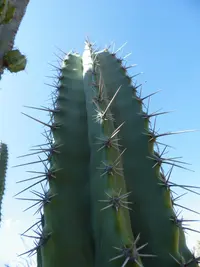
Stenocereus stellatus is a columnar cactus native to arid and semi-arid regions of central Mexico, where it forms multi-stemmed clumps over time. Its tall, ribbed stems are lined with short but sharp spines and can branch from the base, giving it a candelabra-like shape in maturity.
This species is drought-tolerant and slow-growing, which generally makes it low-maintenance for patient growers. It prefers strong light, very well-drained mineral soil, and infrequent watering, so understanding how to care for Stenocereus stellatus mainly involves avoiding overwatering and cold, wet conditions.

Care Difficulty
Moderate Care

Light Preference
Full Sun

Water Requirements
Low Water

Temperature Preference
Tropical / Frost Sensitive

Hardiness Zone
10–12

Soil Texture
Sandy, Loamy, Rocky

Soil pH
Slightly acidic (6.5–7.0), Neutral (7.0)

Soil Drainage
Well-drained

Fertilization
Minimal (feed rarely)
Scan your plant to receive care tips personalized for your specific plant
Available on iOS and Android
This cactus thrives in strong light that mimics its native arid habitat.
Watering should be sparse and guided by soil dryness rather than a fixed schedule.
Temperature management should reflect a warm, semi-desert climate with cool, dry winters.
This cactus prefers dry air and does not need extra humidity.
This desert cactus needs a very fast-draining, mineral-based growing medium.
This species is well suited to container culture when stability and drainage are prioritized.
This desert cactus benefits from light feeding during active growth but remains sensitive to excess nutrients.
Pruning needs for this columnar cactus are minimal and mainly corrective.
Container-grown plants appreciate occasional repotting, while in-ground specimens are usually left undisturbed.
New plants are usually produced from stem cuttings, with seeds used mainly for larger-scale growing.
This cactus is sensitive to hard frost and benefits from deliberate winter management in cold regions.

Plant Health Check
Not sure what's wrong with your plant? Check your plant's health inside the app.
In central Mexico, the sweet fruit of this species has been consciously selected and managed by local people for centuries, making it one of the few columnar cacti with documented semi-domestication for fruit traits such as size, pulp color, and flavor.
Field studies show that wild and managed populations in Puebla and Oaxaca maintain high genetic diversity, likely because humans move and plant seeds and cuttings across landscapes instead of relying only on natural dispersal.
Its large, tubular flowers open at night and produce abundant nectar that attracts nectar-feeding bats, which act as the main pollinators and help maintain gene flow between distant populations.

Ethnobotanical research has documented that Indigenous and rural communities distinguish and name multiple folk varieties of this species based on fruit traits such as color, taste, and spine characteristics, treating them similarly to traditional crop landraces in local agroforestry systems.
This species performs best outdoors in warm, arid or semi-arid climates with strong light and excellent drainage. Indoors it survives only in very bright, dry conditions and usually grows more slowly and with a narrower, less robust stem.
Keep your plants happy and healthy with plant identification, disease detection, and easy care guidance.

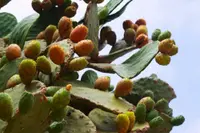
Stenocereus pruinosus
Stenocereus pruinosus
 POPULAR
Flaming Katy
Kalanchoe blossfeldiana
 POPULAR
Zebra-plant
Aphelandra squarrosa
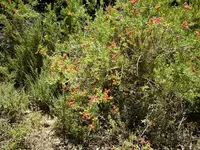
nitre bush
Nitraria billardierei
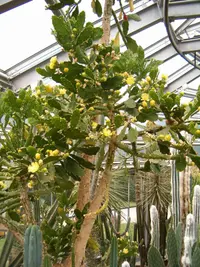
Brazilian Prickly Pear
Brasiliopuntia brasiliensis
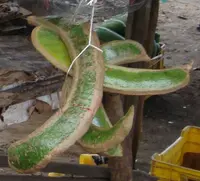
machete ice-cream-bean
Inga spectabilis
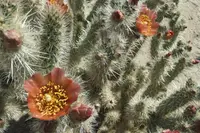
Wolf's opuntia
Cylindropuntia wolfii
Cypress Peperomia
Peperomia glabella