machete ice-cream-bean Care (Inga spectabilis)

machete ice-cream-bean

About machete ice-cream-bean

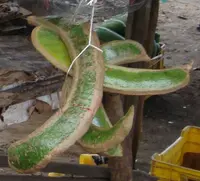
Machete ice-cream-bean, Inga spectabilis, is a fast-growing tropical tree from Central and South American rainforests, valued for its shade and edible pods. It typically forms a broad, spreading canopy with glossy, pinnate leaves and large, curved pods filled with sweet, cottony pulp.

In cultivation it is usually grown in warm climates or as a specialty orchard and agroforestry tree. It fixes nitrogen in the soil, which supports rapid growth but also means it needs space and pruning control.

This species prefers consistent warmth, high humidity, ample moisture, and well-drained, fertile soil. Understanding how to care for machete ice-cream-bean begins with providing a bright, sheltered, frost-free environment.

Main Plant Requirements

Care Difficulty

Moderate Care

Light Preference

Full Sun

Water Requirements

Regular Water

Temperature Preference

Tropical / Frost Sensitive

Hardiness Zone

10–12

Soil Texture

Loamy, Sandy, Organic-rich

Soil pH

Acidic (5.5–6.5), Slightly acidic (6.5–7.0)

Soil Drainage

Moist but well-drained

Fertilization

Minimal (feed rarely)

Get Personalized Care Plan

Scan your plant to receive care tips personalized for your specific plant

Available on iOS and Android

How to Care for the machete ice-cream-bean

This fast-growing tropical tree needs bright, stable light to support dense foliage and pod production.

  • Provide 4–6 hours of direct morning sun with light shade or filtered light in the intense afternoon, especially in hot, low-latitude climates.
  • Machete ice-cream-bean tolerates partial shade (around 3–4 hours of direct sun), but too much shade leads to lanky growth and fewer flowers and pods.
  • In dry, hot seasons protect young trees from harsh midday sun to prevent leaf scorch, while in cooler seasons allow more open exposure to maximize growth.

This species prefers consistently moist but not waterlogged soil, reflecting its rainforest-edge origins.

  • Water when the top 3–5 cm of soil feels dry, aiming for evenly moist soil down to at least 10–15 cm, especially during establishment and active growth.
  • Use deep, infrequent soakings rather than light splashes, and grow Inga spectabilis in well-draining soil to avoid standing water and root rot symptoms like yellowing, dropping leaves.
  • In cooler months or during prolonged rain, extend the interval between waterings and watch for pale, soft leaves (overwatering) or dull, curling leaves (underwatering).

This tropical tree grows best in warm, frost-free climates with only moderate temperature swings.

  • Aim for 70–86°F (21–30°C) for strong growth; temperatures near the upper end promote faster canopy development where water is sufficient.
  • The tree is very sensitive to cold; growth slows below about 60°F (16°C) and tissue damage can occur if exposed to 40°F (4°C) or lower, especially in young plants.
  • Avoid frost entirely, and in regions with occasional cold snaps or hot spells above 95°F (35°C), use windbreaks, mulch, and light shade to buffer temperature extremes.

This species prefers consistently moist, warm air similar to lowland tropical forests.

  • Aim for 60–80% humidity to support vigorous growth and flower and pod development in machete ice-cream-bean.
  • In extended periods below 40% humidity, expect curled leaf edges, browning tips, and slowed new growth.
  • Increase humidity outdoors with close grouping and wind protection; in sheltered setups, use trays of water and organic mulch to keep local air more humid.

Inga spectabilis prefers deep, loose, organically rich soil that stays evenly moist but not waterlogged.

  • Use a loamy mix of roughly 40% compost, 40% garden soil, and 20% coarse material such as perlite or sharp sand to maintain structure and drainage.
  • Keep pH slightly acidic to neutral (about 6.0–7.0); avoid strongly alkaline soils that may lock up iron and other micronutrients.
  • In heavy clay sites, create a raised mound or bed and blend in coarse sand or fine bark to improve aeration and root penetration.
  • Avoid compacted, poorly drained spots where water stands after rain, as prolonged saturation encourages root rot and shallow, weak rooting.

This species can be grown in large containers for a limited time, especially in warm climates.

  • Choose a deep, heavy container to anchor the tall, leafy canopy and prevent tipping in wind.
  • Use a chunky, aerated mix in pots, since container walls limit lateral root spread and increase the risk of soggy zones.
  • Position the container where runoff can drain freely so the large volume of water from irrigation does not pool around the base.

Inga spectabilis benefits from moderate, balanced nutrition but often grows acceptably in fertile ground without supplemental feeding.

  • Use a balanced NPK granular fertilizer or well‑matured compost at the start of the warm growing season.
  • Apply slow‑release fertilizer every 3–4 months during active growth in poor or sandy soils.
  • Reduce or stop feeding in cooler months when growth slows, especially in subtropical or marginal climates.
  • Use about half the label strength for young trees to avoid root burn and excessive soft growth.

Pruning Inga spectabilis helps manage size, encourage a strong framework, and maintain safe clearances around pathways or structures.

  • Time structural pruning for late winter or early spring before vigorous new growth starts.
  • Remove dead, diseased, crossing, or crowded branches using clean, sharp bypass pruners or a pruning saw.
  • Shorten long, leaning shoots to outward-facing buds to keep the canopy low, broad, and accessible.
  • Avoid heavy topping; instead thin selected branches to admit light and maintain natural form and flowering.

This species is usually grown in the ground, so focus on timely transplanting from nursery containers into a permanent, sunny site.

  • Transplant once roots circle the pot, growth slows, or the root ball dries out very quickly after watering.
  • Choose late spring or early summer, when soil is warm and the plant can establish before any cooler season.
  • Loosen circling roots gently, plant at the same depth as in the pot, and water deeply to settle soil around roots.
  • Mulch 5–8 cm around but not against the trunk, and keep soil evenly moist for several weeks to reduce transplant shock.

Inga spectabilis is most commonly propagated from fresh seed, with cuttings used less often for selected forms.

  • Sow fresh seeds in warm conditions around 75–85°F soon after harvest, since viability falls quickly.
  • Use a loose, well‑drained medium and keep it evenly moist but not waterlogged until germination.
  • Provide bright, indirect light and high humidity for seedlings, then gradually increase light as they harden.
  • For semi‑hardwood cuttings, use rooting hormone, bottom heat, and a covered propagator to improve strike rates.

This tropical tree is frost sensitive and needs thoughtful winter care in climates with cool or freezing conditions.

  • In mild, frost-free areas, established trees usually overwinter outdoors without major intervention.
  • In regions with light frosts, mulch 5–10 cm over the root zone and use breathable frost cloth for young plants.
  • Grow Inga spectabilis in large containers in colder climates and move indoors or into a heated greenhouse before nights drop near 40°F.
  • Water sparingly in winter, keeping soil slightly moist but never saturated, to limit root stress in cool conditions.

Care Tips

Wind-firm training

In the first 2–3 years, stake the young tree and gradually loosen ties as the trunk thickens so it develops a straight, wind-resistant leader and does not snap under storm gusts when growing machete ice-cream-bean.

Root-zone mulching

Maintain a 5–8 cm deep organic mulch ring out to at least the drip line, keeping it 5–8 cm away from the trunk, to stabilize soil moisture, suppress weeds, and protect shallow feeder roots from heat.

Pod load management

If branches are heavily laden with developing pods, thin some of the fruit or lightly prop branches with padded supports to prevent limb breakage and to direct more resources into fewer, better-quality pods.

Nitrogen-fixing support

Avoid disturbing roots and large surface nodules when digging or cultivating under the tree so its natural nitrogen-fixing bacteria remain active and continue improving soil fertility for companion plants.

Canopy light control

In agroforestry or mixed plantings, periodically shorten or remove select upper branches on the sunniest side to adjust shade levels for understory crops without overly stressing the tree.

Common Pests and Diseases

Miridae leaf bugs

These insects feed on young leaves and pods, causing speckled yellowing, small necrotic spots, and deformation of new growth.

Solution

Prune and destroy heavily affected shoots, avoid overhead irrigation that favors high mirid populations, and encourage natural predators by maintaining plant diversity nearby; if needed, use insecticidal soap or a targeted contact insecticide on young flushes, applied in the early morning when bugs are less active.

Pod borers

This pest tunnels into developing pods, leading to premature pod drop, malformed seeds, and frass (sawdust-like droppings) inside the pods.

Solution

Collect and destroy infested pods as soon as damage is noticed, remove pod debris from around the tree after harvest, and use fine mesh bags over selected pods in small plantings to prevent egg‑laying; in larger or orchard settings, pheromone or light traps can help monitor and reduce adult populations.

Scale insects

These insects attach to twigs and leaves, sucking sap and producing honeydew that encourages sooty mold on machete ice-cream-bean foliage.

Solution

Wipe or gently scrub small colonies from stems with a soft cloth dipped in water and a drop of mild soap, prune out heavily infested branches, and release or conserve natural enemies such as lady beetles; horticultural oil sprays can be used during cooler parts of the day to smother remaining scales.

Anthracnose

This disease causes dark, sunken lesions on young leaves, stems, and pods, sometimes leading to leaf blight and tip dieback in humid conditions.

Solution

Remove and discard infected leaves and pods, avoid dense shading that slows leaf drying, and improve air movement by selective pruning; in persistently wet climates, copper-based fungicides can be applied preventively to new flushes and young pods according to label directions.

Leaf spot complex

Symptoms include scattered brown or tan spots with defined margins on mature leaves, sometimes coalescing and causing partial defoliation during prolonged wet weather.

Solution

Rake and destroy fallen leaves to reduce fungal spore levels, maintain moderate spacing between trees, and irrigate at soil level rather than overhead; if disease pressure remains high, apply a broad-spectrum foliar fungicide labeled for ornamental or fruit trees during periods of frequent rain.

Interesting Facts

Machete-shaped pods

This species produces very long, flattened seed pods with a distinct curved, blade-like shape that inspired the common name machete ice-cream-bean. The pods can exceed 1 m in length and contain seeds embedded in a sweet, cottony pulp that is eaten locally.

Nectar-rich brush flowers

Its cream to yellowish flowers form dense, brush-like clusters made of many long stamens that produce abundant nectar. These floral structures are especially attractive to bats and insects that act as pollinators in its native lowland tropical forests.

Soil-improving nitrogen fixer

The roots form symbioses with nitrogen-fixing bacteria that convert atmospheric nitrogen into forms usable by plants. In agroforestry systems it is planted to enrich soil fertility, provide light shade, and support cacao, coffee, and other crops.

Botan icon

Did you know?

In parts of Central and South America, this species is used as a living fence and shade tree along roadsides and pastures, where its dense canopy, rapid growth, and showy pods create a distinctive visual marker in rural landscapes while also stabilizing soil and offering wildlife habitat.

FAQs about machete ice-cream-bean

The white, cottony pulp around the seeds is edible, sweet, and often eaten fresh. The large brown seeds themselves are not usually eaten raw and should be cooked if used. Avoid consuming pods with signs of mold or fermentation.

Grow Healthy Plants with Botan Care

Keep your plants happy and healthy with plant identification, disease detection, and easy care guidance.

Botan plant care app — identify plants on mobile

Explore More Plants