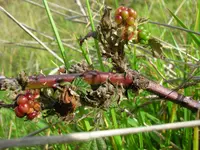
stemfruit Care (Englerophytum magalismontanum)

Also known as: Stamvrug, red milkwood, Transvaal milkplum, Milk Plum, Bushveld Milkplum, Stamvrug Milkplum, Stemfruit-Tree, Wild-Plum
stemfruit

About stemfruit

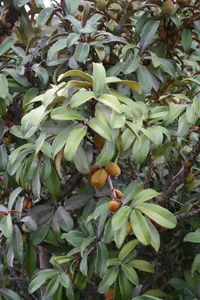
Englerophytum magalismontanum, commonly called stemfruit, is a small evergreen tree or large shrub from southern Africa. It grows with a rounded crown and simple, glossy leaves clustered near the tips of its branches. Plants produce small, sweet, edible fruits along the stems, which give the plant its common name. In nature, it occurs in rocky hillsides, woodland edges, and savanna habitats. This species is slow to moderate in growth and can be long-lived when its basic needs are met. For those who want to care for stemfruit, it generally prefers bright light, moderate moisture, and well-drained, slightly sandy soil.

Main Plant Requirements

Care Difficulty

Moderate Care

Light Preference

Full Sun

Water Requirements

Moderate Water

Temperature Preference

Warm Climate

Hardiness Zone

9–11

Soil Texture

Sandy, Loamy, Rocky

Soil pH

Slightly acidic (6.5–7.0), Neutral (7.0)

Soil Drainage

Well-drained

Fertilization

Minimal (feed rarely)

Get Personalized Care Plan

Scan your plant to receive care tips personalized for your specific plant

Available on iOS and Android

How to Care for the stemfruit

Englerophytum magalismontanum prefers bright conditions that mimic its native open woodland habitat.

  • Provide 4–6 hours of morning sun with light afternoon shade; strong western sun can scorch leaves, especially on young plants.
  • Plant in a position with dappled or filtered light under taller shrubs or trees if your site is very hot or exposed.
  • In cooler regions, give more direct sun in winter to support flowering and fruiting of stemfruit, while still protecting from harsh summer midday sun.

Englerophytum magalismontanum is drought-tolerant once established but benefits from thoughtful watering.

  • Allow the top 3–5 cm of soil to dry before watering again; soil should feel dry to the touch rather than just cool or damp.
  • Use well-drained, sandy or loamy soil; persistent puddling, sour smell, or soft, yellowing leaves indicate overwatering or poor drainage.
  • During hot, dry months, expect to water more often, while in cooler or rainy seasons reduce watering and rely more on natural rainfall, watching for leaf wilting as a sign to water.

This species thrives in warm, frost-free to light-frost climates with marked seasonal warmth.

  • Aim for active growth in 68–86°F (20–30°C); it tolerates brief peaks to about 95°F (35°C) if soil moisture is not extreme.
  • Protect from hard freezes; it may survive light frost down to 28–30°F (-2 to -1°C) but repeated or severe frost damages foliage and young shoots.
  • In cooler regions, choose a warm, sheltered microclimate such as a south-facing wall, and avoid planting in low frost pockets where cold air collects.

This species handles a wide humidity range but benefits from moderately humid air.

  • Aim for 40–60% humidity, similar to many indoor living spaces, for steady growth of stemfruit.
  • Tolerates short periods of drier air, but prolonged humidity below 30% can cause leaf edge browning and slight curling.
  • Increase humidity by grouping plants, placing pots on pebble trays with water below the pot base, or using a room humidifier in very dry homes.

Englerophytum magalismontanum prefers a well-aerated, slightly sandy mix that drains freely yet retains some moisture.

  • Use a base of sandy loam with added organic matter such as compost or fine bark to support root development.
  • Improve drainage and aeration by mixing in 20–30% perlite or coarse sand so water moves through the root zone quickly.
  • Aim for slightly acidic to neutral pH, around 6.0–7.0, avoiding strongly alkaline substrates that can limit nutrient uptake.
  • Avoid heavy clay, compacted mixes, or waterlogged conditions, which promote root rot and slow growth.

This species adapts well to container growing when moisture and stability are managed carefully.

  • Choose a deep, heavy pot that balances the woody root system and prevents the plant from tipping in strong winds.
  • Select a mineral-rich, gritty mix in containers to prevent the root zone from staying wet longer than it would in the ground.
  • Raise the pot slightly on feet or blocks outdoors so drainage holes stay clear and excess water leaves the container quickly.

Englerophytum magalismontanum responds to moderate feeding but can manage on poor soils once established.

  • Use a balanced slow-release fertilizer (for example 10-10-10) or well-rotted compost at the start of the growing season.
  • Apply fertilizer 1–2 times during spring–summer for container or young plants, skipping feeding for mature trees in rich ground.
  • Dilute liquid feeds to 1/2 strength and apply only to moist soil to limit root burn.
  • Reduce or stop feeding in late fall and winter when growth slows and caring for stemfruit focuses mainly on watering and light.

Englerophytum magalismontanum benefits from light structural pruning to maintain a healthy crown.

  • Carry out main pruning in late winter or very early spring before active growth starts.
  • Remove dead, diseased, crossing, or inward-growing branches to improve air flow and light penetration.
  • Thin crowded shoots rather than shearing, to keep a natural form and support strong framework branches.
  • Use clean, sharp bypass pruners or a pruning saw, making smooth cuts just outside the branch collar.

This species is usually grown in the ground, so transplanting young plants correctly is more important than frequent repotting.

  • Transplant in late spring once frost risk has passed, choosing a sunny, well-drained site with space for mature size.
  • Look for roots circling the pot, water stress, or very slow growth as signs a container plant needs a larger pot.
  • Gently loosen circling roots and plant at the same depth as in the original container, firming soil lightly around the root ball.
  • Water thoroughly after transplanting and shade the plant for 7–10 days to reduce transplant shock and help roots establish.

Propagation of Englerophytum magalismontanum is usually done from seed and can be slow but reliable under warm conditions.

  • Collect fully ripe seeds, clean the pulp, and sow fresh for best germination.
  • Sow in a free-draining mix, keep at 70–80°F with bright, indirect light, and maintain steady, light moisture.
  • Semi-hardwood cuttings taken in late spring–summer may root if treated with rooting hormone and kept in high humidity.
  • Provide bottom heat and good air circulation to limit rot and encourage steady germination or rooting.

This small tree is moderately frost tolerant but young or potted plants benefit from some winter protection in colder areas.

  • In the ground, a 5–8 cm layer of organic mulch around the root zone helps buffer temperature swings.
  • In regions with hard freezes, wrap young trunks with breathable horticultural fleece or similar material.
  • Move container-grown plants to a bright, cool indoor or sheltered spot when temperatures approach 32°F.

Care Tips

Root zone mulching

Apply a 3–5 cm layer of coarse organic mulch around the root zone, keeping it 5–8 cm away from the trunk, to stabilize soil moisture and protect the fine feeder roots from heat stress.

Canopy shaping

In late winter, selectively tip-prune congested outer twigs to create an open, well-spaced canopy that increases light penetration and improves flowering and fruit set on interior branches.

Branch load management

When branches carry heavy fruit clusters, thin some fruit and, if needed, use soft ties to support sagging branches to reduce the risk of limb breakage and bark tearing.

Low‑temperature acclimation

If grown in a container and moved outdoors for summer, gradually expose the plant to cooler night temperatures over 7–10 days in early fall to harden new growth before any light frost risk.

Wildlife exclusion

Install fine-mesh netting or use fruit bags around maturing clusters where birds and small mammals are active, removing the barriers promptly after harvest to avoid restricting new growth when caring for stemfruit.

Common Pests and Diseases

Scale insects

This pest feeds on sap and often hides along stems and leaf midribs, causing yellowing and reduced vigor. Symptoms include sticky honeydew and sooty mold developing on leaves and fruit surfaces.

Solution

Prune and discard heavily infested twigs, then gently scrub remaining scale with a soft brush or cloth dipped in a mild soapy water solution. For persistent infestations, apply a light horticultural oil or insecticidal soap, ensuring full coverage of stems and leaf undersides and repeating every 7–14 days as needed.

Mealybugs

These insects appear as white, cottony clusters in leaf axils, along young shoots, and sometimes on developing fruit, leading to wilting and stunted growth. Honeydew production can encourage sooty mold on foliage and fruit skin.

Solution

Remove visible clusters with a cotton swab dipped in isopropyl alcohol, then wash foliage with lukewarm soapy water to dislodge remaining insects. For larger plants or recurring problems, use insecticidal soap or horticultural oil, treating hidden areas such as branch crotches and inner canopy and improving light and air circulation around the plant.

Sooty mold

This disease is a superficial black fungal growth that develops on leaves and fruit where sap-sucking insects have left honeydew. Symptoms include blackened leaf and fruit surfaces that reduce photosynthesis but usually do not invade plant tissues.

Solution

Control the underlying honeydew-producing pests such as scale and mealybugs, then gently wipe or rinse affected leaves and fruit with water to remove the fungal layer. Improve airflow through light pruning and avoid overhead irrigation late in the day so foliage dries quickly.

Anthracnose leaf spot

This disease causes small, sunken, dark brown to black lesions on leaves and sometimes young shoots, which may merge and lead to premature leaf drop. Symptoms include irregular dead patches along leaf margins during warm, wet weather.

Solution

Remove and dispose of affected leaves and fallen debris to reduce fungal spores, and avoid overhead watering that keeps foliage wet for long periods. If the problem recurs, apply a copper-based or other labeled fungicide at the start of warm, rainy periods, ensuring good spray coverage and repeating according to product directions.

Fruit cracking and sunburn

Symptoms include splitting of ripening fruit skin and pale, sunken, or leathery patches on the sun-exposed side, especially during hot, dry weather followed by sudden heavy watering or rain. Damaged areas can attract secondary infections and insects.

Solution

Maintain even soil moisture with deep, regular watering and a 5–8 cm organic mulch to prevent rapid swings between dry and wet conditions. Provide partial shade during intense afternoon sun in hotter regions, and harvest fruit promptly at maturity to reduce time exposed to stress and to support stable Englerophytum magalismontanum care instructions.

Interesting Facts

Sandpaper leaf texture

The leaves have a densely hairy underside that feels rough and sandpapery, an adaptation that helps reduce water loss and offers some protection from herbivores in its dry rocky habitats of southern Africa.

Rocky cliff specialist

In the wild it commonly grows on quartzite cliffs and rocky outcrops in South Africa, Eswatini, Mozambique, and Zimbabwe, where its strong roots anchor into crevices with very little soil.

Edible latex fruit

The small orange to reddish fruits contain a sweet, sticky latex that gives rise to the name stemfruit, and they are eaten by both people and wildlife such as birds and small mammals in its native range.

Botan icon

Did you know?

This species often acts as a natural pioneer on exposed rock faces, with its roots stabilizing shallow substrates and creating tiny pockets of accumulating organic matter that can later be used by other plants, gradually increasing local microhabitat diversity.

FAQs about stemfruit

Growth is moderately slow. Young plants often add about 15–30 cm per year under warm, frost-free, well-watered conditions. Fruiting size may take several years, so it is better viewed as a long-term landscape tree.

Grow Healthy Plants with Botan Care

Keep your plants happy and healthy with plant identification, disease detection, and easy care guidance.

Botan plant care app — identify plants on mobile

Explore More Plants