Protect Dormant Bulbs
After foliage dies back, mark the spot and avoid deep cultivation so the small bulbs are not damaged or accidentally removed during the plant’s summer dormancy.

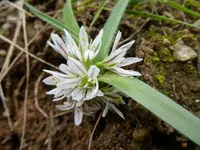
Dwarf garlic, Allium chamaemoly, is a small bulbous perennial from the Mediterranean region. It forms low clumps of narrow leaves and short flower stalks. The plant produces starry white flowers close to the ground, giving it a delicate, carpet-like look in rock gardens, troughs, or edging. Growth is typically winter-green and summer-dormant in mild climates. This species suits gardeners who prefer low, compact plants with a naturalistic feel. It is generally easy to grow when given sun, well-drained soil, and relatively dry conditions when dormant. Understanding how to care for Dwarf garlic helps keep bulbs healthy and flowering reliably each year.

Care Difficulty
Easy Care

Light Preference
Full Sun

Water Requirements
Low Water

Temperature Preference
Cold Hardy

Hardiness Zone
6–9

Soil Texture
Sandy, Loamy, Rocky

Soil pH
Slightly acidic (6.5–7.0), Slightly alkaline (7.0–7.5)

Soil Drainage
Well-drained

Fertilization
Minimal (feed rarely)
Scan your plant to receive care tips personalized for your specific plant
Available on iOS and Android
This small bulb prefers bright outdoor light similar to other sun-loving alliums.
This bulb is drought-tolerant and prefers slightly dry conditions between waterings.
This Mediterranean bulb handles cool winters and warm summers when kept relatively dry at rest.
Humidity is not a critical factor for Allium chamaemoly, which prefers relatively dry air.
Allium chamaemoly grows best in lean, sharply drained, mineral-based soil.
This species is well suited to container growing when drainage and bulb protection are carefully managed.
Allium chamaemoly is a small bulb that needs only modest feeding in typical garden soils.
Allium chamaemoly needs minimal pruning, mainly to keep plants tidy and support healthy bulbs.
This dwarf bulb is usually grown in the ground, with transplanting done infrequently and with care.
Allium chamaemoly is commonly propagated by bulb division and, less often, by seed under suitable conditions.
This small allium is generally cold hardy in temperate climates and needs only light winter attention.

Plant Health Check
Not sure what's wrong with your plant? Check your plant's health inside the app.
This species is a small geophyte, meaning it survives in a subterranean bulb and sends up leaves and flowers in the cooler, wetter months of autumn and winter around the Mediterranean.
Its leaves and flowers stay very close to the soil surface, forming a low rosette that helps the plant avoid strong coastal and open-field winds in its native range.
When crushed, the leaves and bulbs release a noticeable garlic-like smell, a typical trait of the onion family but particularly evident despite the plant’s very small stature.

In some Mediterranean regions, this species has been traditionally eaten in small amounts as a wild garlic-like seasoning, reflecting a long history of local foraging use despite its diminutive size.
Lack of flowering usually comes from insufficient light, overcrowded bulbs, or nutrient-poor soil. Ensure full sun, allow foliage to mature fully, and lift and divide congested clumps every few years to restore energy for blooms.
Keep your plants happy and healthy with plant identification, disease detection, and easy care guidance.