Catathelasma ventricosum Care

Catathelasma ventricosum

About Catathelasma ventricosum

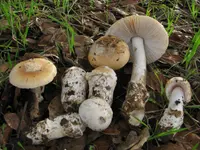
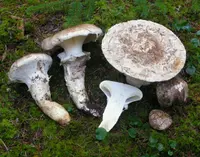
Catathelasma ventricosum is not a leafy plant but a large, fleshy mushroom-forming fungus that appears from the ground, often near coniferous trees. It forms thick, white to cream caps with firm, dense stems that can be partly buried in soil or leaf litter.

This species occurs naturally in temperate forests of North America and parts of Europe, usually in cool, moist, higher-elevation habitats. It is considered edible in some regions, but correct identification is critical before anyone attempts to care for Catathelasma ventricosum in a controlled setting.

In nature it associates with tree roots, which makes it difficult to cultivate at home. It generally prefers cool conditions, consistent soil moisture, and undisturbed forest-type soils.

Main Plant Requirements

Care Difficulty

Moderate Care

Light Preference

Partial Shade

Water Requirements

Moderate Water

Temperature Preference

Cool Climate

Hardiness Zone

Unknown

Soil Texture

Loamy, Sandy, Organic-rich

Soil pH

Acidic (5.5–6.5), Slightly acidic (6.5–7.0)

Soil Drainage

Moist but well-drained

Fertilization

Minimal (feed rarely)

Get Personalized Care Plan

Scan your plant to receive care tips personalized for your specific plant

Available on iOS and Android

How to Care for the Catathelasma ventricosum

This fungus prefers forest light conditions rather than direct open-sun exposure.

  • Provide bright, dappled light under trees, similar to a conifer or mixed woodland edge, avoiding open fields with full midday sun.
  • Allow 2–4 hours of gentle morning sun if growing near forest margins, but protect from strong afternoon sun that can overdry the fruiting area.
  • In summer, maintain partial shade using leaf litter, logs, or understory plants; insufficient light reduces fruiting of Catathelasma ventricosum, while intense sun dries the substrate.

Moist but not waterlogged soil supports healthy mycelium and fruiting.

  • Aim for evenly moist soil to a depth of 5–8 cm; the surface can dry slightly between rains or irrigations but should not become dusty or cracked.
  • Use free-draining, humus-rich soil; avoid standing water for more than 24 hours to reduce risk of mycelium rot and poor mushroom formation.
  • Increase moisture inputs during dry, warm periods, watching for shriveling or aborted caps as a sign of drought stress, and for sour smell or slimy patches as overwatering indicators.

This species favors cool to mild conditions typical of montane or northern forests.

  • Optimal mycelial activity and fruiting usually occur around 50–64°F (10–18°C), especially during cool, moist seasons such as fall.
  • The fungus tolerates brief drops near 32°F (0°C), but hard, prolonged frost below 28°F (-2°C) can damage fruiting bodies at the surface.
  • Sustained heat above 77–82°F (25–28°C) with dry air suppresses fruiting; shade, mulch, and consistent moisture help buffer soil temperatures across seasons.

Humidity levels are not a major factor for Catathelasma ventricosum compared with moisture and substrate conditions.

This mycorrhizal fungus requires a loose, aerated, humus-rich substrate rather than dense mineral soil to develop properly.

  • Use a deep layer of well-aerated, organic-rich forest-like substrate, such as a mix of leaf mold, composted bark, and coarse wood chips.
  • Ensure the substrate drains freely yet retains some moisture; avoid compacted clay or waterlogged ground that excludes air around the mycelium.
  • Aim for slightly acidic to neutral conditions (pH 5.5–7.0), which match typical conifer or mixed woodland litter layers.
  • Improve aeration and structure by mixing in coarse materials (shredded bark, coarse sawdust, chunky wood chips) rather than fine peat alone.

This ectomycorrhizal species is generally unsuitable for long-term container cultivation because it depends on living tree roots and extensive soil contact.

This ectomycorrhizal fungus relies mainly on its tree partners for nutrition and usually does not need additional fertilizer in natural or garden settings.

As a wild, mycorrhizal mushroom, Catathelasma ventricosum does not require pruning because its fruiting bodies are temporary and decompose naturally.

Transplanting focuses on maintaining suitable host trees and undisturbed soil rather than moving the fungus itself.

  • Avoid disturbing forest or woodland soil where mycelium may be present, since disruption can reduce future fruiting.
  • If cultivating host trees, transplant them in early spring or fall when temperatures are mild and soil is moist.
  • Choose a permanent site with compatible tree species and well-drained, organically rich soil to encourage stable mycorrhizal association.
  • Limit soil compaction and digging around roots to reduce stress on the fungal network and host trees.

Propagation of this ectomycorrhizal species is complex and not practical for typical home cultivation, so it is rarely attempted.

This cold-hardy forest mushroom requires no active winter care in the ground, as its mycelium is adapted to seasonal temperature shifts.

Care Tips

Spore hygiene

Harvest caps before they fully flatten and release heavy spore loads, and avoid cleaning gills with compressed air to reduce inhalation risk and contamination of nearby cultivation areas when growing Catathelasma ventricosum.

Deep substrate layering

Use a deeper, well-compacted but still aerated substrate layer (10–15 cm) above spawn to support this species’ large, stocky fruiting bodies and reduce tipping or stem deformation.

Ventilation for thick stems

Provide steady, low-velocity fresh air exchange rather than strong drafts so the thick stipes can develop without drying or cracking while still preventing CO₂ buildup that causes elongation and misshaping.

Gradual hardening outdoors

If moving a cultivated bed from a protected space to outdoors, increase light, air movement, and temperature variation gradually over 5–7 days to avoid stress that can abort developing mushrooms.

Slug and rodent deterrence

Use low, fine-mesh barriers and keep surrounding leaf litter to a minimum to reduce slug and rodent damage, removing any half-eaten or decaying mushrooms promptly to limit attraction of more pests.

Common Pests and Diseases

Fungal mycelial rot

This disease affects stored or cultivated fruiting bodies, causing wet, cottony white growth that quickly breaks down the mushroom tissue. Symptoms include soft, water-soaked areas that turn slimy and discolored.

Solution

Remove and discard all affected mushrooms and nearby debris, and avoid stacking or storing caps in thick, poorly ventilated layers. Keep harvested material cool, dry, and well aerated, and disinfect collection baskets, knives, and any cultivation surfaces with a mild bleach solution (about 1:10 bleach to water).

Bacterial blotch

This disease produces greasy, yellow to brown spots on caps and stipes, often starting where surfaces stay wet for long periods. Symptoms include localized soft patches that may exude watery droplets and give off an unpleasant odor.

Solution

Separate and discard blotched mushrooms, then reduce surface moisture by improving airflow and avoiding overhead misting or spraying onto caps. Use clean, disinfected tools and containers, and keep storage temperatures low with good ventilation to slow bacterial spread.

Mite infestation

These insects feed on gills and cap surfaces, leaving tiny pits, tunnels, or powdery frass and sometimes causing deformation or collapse of young fruiting bodies. This pest often builds up in poorly cleaned cultivation rooms or in old forest litter where mushrooms are repeatedly collected.

Solution

Discard heavily infested mushrooms and clean collection or cultivation areas thoroughly, removing old substrate, spent mushrooms, and plant debris. For cultivation, use fine mesh screens, heat-treat or steam substrate before use, and, if necessary, apply a targeted miticide approved for edible fungi following label directions and withholding intervals.

Sciarid fly larvae

These insects lay eggs in moist substrates, and the larvae tunnel through developing mushrooms, leaving holes, internal browning, and premature collapse of caps. Symptoms include distorted or hollow stems and visible maggots inside damaged tissue.

Solution

Maintain clean, well-drained substrate and remove spent or decaying mushrooms quickly to reduce breeding sites. In cultivation setups, use sticky traps for adult flies, cover substrate with fine mesh, and consider a biological control such as Bacillus thuringiensis israelensis (Bti) in the substrate, following label directions carefully as part of broader Catathelasma ventricosum care instructions.

Interesting Facts

Large ectomycorrhizal partner

This species forms robust ectomycorrhizal associations with conifer trees, especially pines and spruces, helping them absorb water and nutrients while receiving sugars from the host roots.

Thick, clubbed stem

Mature fruiting bodies typically develop a distinctly ventricose, or swollen, lower stem that appears club-shaped and partially buried in the soil, a key feature used to distinguish it from similar white mushrooms.

Underground ring connection

The ring on the stem often originates from a membranous veil that is attached to a distinct underground, sac-like structure enveloping the young mushroom, which can help separate this species from superficially similar Amanita species.

Botan icon

Did you know?

In some European and Asian regions, this large woodland fungus has been locally collected and eaten for generations, and its frequent appearance in the same conifer stands over many years reflects the long-lived underground mycelial networks that persist even when fruiting bodies are absent.

FAQs about Catathelasma ventricosum

This species is considered an edible wild mushroom in several regions, but accurate identification is critical. Many similar-looking mushrooms are poisonous. For safety, only consume specimens identified in person by a qualified local mycologist.

Grow Healthy Plants with Botan Care

Keep your plants happy and healthy with plant identification, disease detection, and easy care guidance.

Botan plant care app — identify plants on mobile

Explore More Plants