Frost's Amanita Care (Amanita frostiana)

Frost's Amanita

About Frost's Amanita

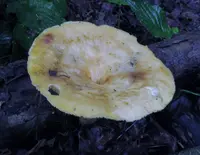
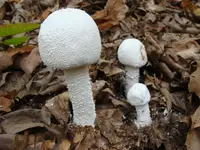
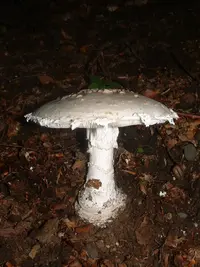
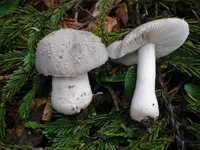
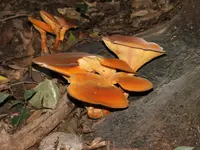
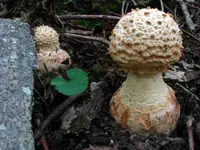
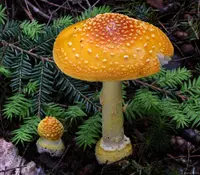
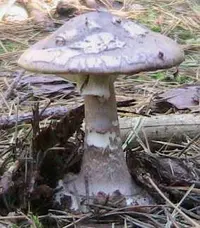
Frost's amanita (Amanita frostiana) is a small ectomycorrhizal mushroom that forms partnerships with tree roots in forests. It is not a houseplant and is usually observed in the wild. Caps are often yellow to orange with pale warts, and the stem carries a ring and a distinct cup-like base, giving it a classic amanita look.

This species occurs mainly in temperate forests of eastern North America, especially in mixed hardwood and conifer woods. It can be locally common but appears only under suitable host trees and seasonal conditions.

Because it depends on complex root and soil relationships, it is very difficult to cultivate deliberately, and attempts to care for Frost's Amanita at home are rarely successful.

Main Plant Requirements

Care Difficulty

Hard Care

Light Preference

Partial Shade

Water Requirements

Keep Soil Moist

Temperature Preference

Cool Climate

Hardiness Zone

Unknown

Soil Texture

Loamy, Silty, Organic-rich

Soil pH

Strongly acidic (4.5–5.5)

Soil Drainage

Moist but well-drained

Fertilization

Minimal (feed rarely)

Get Personalized Care Plan

Scan your plant to receive care tips personalized for your specific plant

Available on iOS and Android

How to Care for the Frost's Amanita

This ectomycorrhizal mushroom prefers cool, dappled forest light rather than direct sun exposure.

  • Provide 2–4 hours of soft morning sun or bright, filtered light under deciduous trees; avoid harsh midday and afternoon sun that can dry the substrate rapidly.
  • Allow partial to full shade in summer, ensuring leaf litter or moss cover reduces surface drying and protects developing caps from bleaching and cracking.
  • In autumn, when canopy leaves drop, rely on low-angle sun and thicker organic mulch to prevent substrate overheating and moisture loss while still allowing diffuse light.

This species depends on consistently moist, never waterlogged, forest soil conditions.

  • Aim for evenly damp soil, with the top 2–3 cm feeling slightly springy and moist; avoid standing water or sticky, anaerobic mud that indicates poor drainage.
  • In the fruiting season, use visual cues: caps that stop expanding and dry, cracked soil indicate insufficient moisture, while slimy bases or rotten tissue suggest overwatering or stagnant conditions.
  • Allow high-organic, well-drained soil to drain freely after rain or irrigation, and reduce added water in cool, wet weather to prevent prolonged saturation around the mycelium of Amanita frostiana.

This forest fungus favors cool to mild conditions and reacts strongly to temperature extremes.

  • Best fruiting typically occurs around 55–68°F (13–20°C), with mycelium remaining active in a broader range if soil stays moist and shaded.
  • It tolerates short dips near 32°F (0°C) in the soil but young fruiting bodies are easily damaged by hard freezes below about 28°F (-2°C).
  • Sustained heat above 80°F (27°C), especially with dry air and exposed soil, can halt fruiting; increase shade and surface organic matter during hot spells to buffer temperature swings.

This ectomycorrhizal fungus is not suited to controlled indoor humidity and is best left in its natural forest habitat.

This mycorrhizal mushroom depends on specific forest soil and tree partners, so it cannot be reliably cultivated in standard horticultural substrates.

  • Naturally occurs in acidic, humus-rich, well-drained forest soils, often under birch or conifer hosts.
  • Relies on a symbiotic root association, so isolated potting mixes without host trees will not support normal development.
  • Loose, airy layers of leaf litter over mineral soil provide the moist yet free-draining structure it requires in the wild.
  • Avoid compacted, limed, heavily fertilized, or waterlogged soils, which disrupt fungal growth and mycorrhizal formation.

This species is not suitable for container growing and should not be treated as a conventional potted plant.

This ectomycorrhizal fungus usually gains nutrients through its tree partners, so extra fertilizer is rarely helpful for caring for Frost's Amanita.

Amanita frostiana does not require pruning in the usual horticultural sense, since the visible mushroom is a temporary fruiting body.

This species is not suited to conventional repotting, since it lives in symbiosis with tree roots in soil rather than as a stand‑alone potted organism.

  • Avoid attempting to grow it in standard pots; it depends on living host tree roots for survival and nutrition.
  • If studied in controlled settings, use host tree seedlings in deep, well‑drained, low‑nutrient substrate.
  • Minimize disturbance of the root zone, since breaking fine roots disrupts the mycorrhizal network and can prevent fruiting.
  • Maintain stable moisture and avoid compaction around the host roots whenever the organism is moved or handled.

Reproduction of this fungus is normally left to natural spore dispersal and is not a routine home propagation project.

Outdoor populations of this fungus are generally cold hardy in their native range and do not need targeted winter care.

Care Tips

Containment barriers

Always cultivate this species in enclosed, clearly marked containers or trays with an impermeable base to prevent unintended spread of spores or mycelium into lawns, play areas, or natural woodland.

Spore-handling hygiene

Use a dedicated workstation and tools for spore printing or culture work, disinfect surfaces with 70% isopropyl alcohol afterward, and avoid eating or drinking near the area when caring for Frost's Amanita.

Targeted slug control

Protect developing fruiting bodies with fine mesh collars or low barrier rings and, if needed, use iron phosphate slug bait placed outside the immediate cultivation tray so wildlife and pets cannot access the mushrooms.

Labeling and segregation

Keep this species in a clearly labeled, locked, or restricted-access area, and never grow it in the same beds or containers used for edible mushrooms to avoid accidental harvest or cross-contamination.

Personal protective routine

Wear disposable gloves when handling fruiting bodies or substrate, wash hands thoroughly afterward, and store all related equipment in a sealed bin dedicated to this species to reduce any risk of accidental contact or ingestion.

Common Pests and Diseases

Mycophagous springtails

These insects feed on fungal mycelium and developing fruiting bodies, sometimes leaving pits or ragged damage on caps and stems. This pest is most common in very moist, organic substrates around the mycelium.

Solution

Reduce excessive surface moisture and improve drainage in the growing area so the substrate is moist but not waterlogged, and remove heavily damaged primordia or fruiting bodies. If populations remain high, use targeted sticky traps around the fruiting zone and, in controlled cultivation, briefly lower humidity and increase fresh air exchange to disrupt their lifecycle without desiccating the mycelium.

Fungus gnat larvae

This pest lives in damp, organic-rich substrates where it chews on young mycelium and pin-stage fruiting bodies, which can cause collapse of small mushrooms. Adults are small dark flies hovering near the substrate surface.

Solution

Allow the upper layer of substrate or casing to dry slightly between mistings and avoid standing water, then remove any decaying plant debris that supports larvae. In indoor or controlled setups, apply biological control agents such as Bacillus thuringiensis israelensis (Bti) in irrigation water and use yellow sticky cards to reduce adult numbers around the fruiting area as part of broader Amanita frostiana care instructions.

Parasitic mold (Trichoderma)

This disease appears as fast-spreading white to green patches on the substrate that can overrun and suppress the mycelium, reducing or stopping mushroom formation. Symptoms include stalled growth and discolored, malformed fruiting bodies near the infected area.

Solution

Promptly remove and discard heavily contaminated substrate sections and any affected fruiting bodies to limit spread, then improve air exchange and avoid over-misting to keep surfaces just slightly moist. In future cycles, start with clean tools and containers, pasteurize or replace contaminated substrate, and avoid introducing unsterilized forest debris into controlled cultivation spaces.

Bacterial blotch

This disease causes yellow to brown, greasy-looking spots on caps, especially when water stands on the surface for extended periods. Symptoms include localized softening of the cap skin and sometimes slight odor development.

Solution

Minimize overhead watering and avoid leaving visible water droplets on caps by using fine misting from the side and ensuring strong but gentle air movement. Remove and discard severely blotched fruiting bodies, then reduce humidity slightly and increase fresh air exchange to keep surfaces dry while still maintaining an overall humid environment for fruiting.

Slugs and snails

These pests feed on young and mature fruiting bodies, leaving large irregular holes, slime trails, and sometimes complete loss of small mushrooms. Damage typically occurs at night in moist, outdoor or shade-house conditions.

Solution

Hand-pick slugs and snails in the evening or early morning, and use physical barriers such as copper tape, sharp grit, or fine mesh around the fruiting area. Remove nearby hiding places like boards, dense leaf litter, and overturned pots, and if pressure is high, place beer or yeast traps just outside the growing zone to draw them away from the mushrooms.

Interesting Facts

Distinctive frost-like warts

The cap of this species is covered with small, pale warts that often look like frost crystals against the yellow to orange background, which inspired its common name Frost's amanita.

Specialized forest partner

This fungus forms ectomycorrhizal associations, a type of root symbiosis, primarily with hardwoods such as beech and birch in eastern North American forests, helping trees absorb water and minerals in exchange for sugars.

Toxic look-alike risk

Although not as extensively studied as some relatives, this species is considered toxic and can resemble other small, brightly colored amanitas, which makes correct identification critical and rules out any culinary use.

Botan icon

Did you know?

Amanita frostiana is regarded as one of the smaller, more delicate members of the amanita genus, with fragile fruiting bodies that often appear briefly in summer and early autumn and can be easily overlooked compared with larger, more conspicuous amanitas in the same forests.

FAQs about Frost's Amanita

This species is considered poisonous and must not be eaten under any circumstances. It contains psychoactive and potentially neurotoxic compounds. Identification mistakes are common, so foragers should completely avoid consumption and treat it as strictly inedible.

Grow Healthy Plants with Botan Care

Keep your plants happy and healthy with plant identification, disease detection, and easy care guidance.

Botan plant care app — identify plants on mobile

Explore More Plants