Mycorrhizal partner focus
When planting near compatible trees such as spruce, pine, or birch, disturb the soil as little as possible so the fungal mycelium can form stable mycorrhizal connections with fine feeder roots.

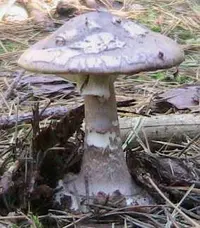
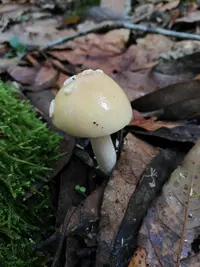
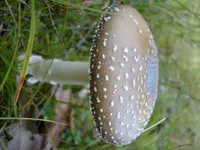
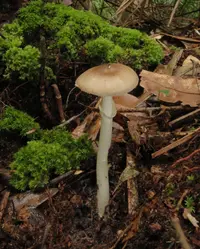
The grey-veiled amanita, Amanita porphyria, is a mycorrhizal mushroom that forms a close association with tree roots rather than growing as a typical garden plant. It produces slender, pale to dark grayish-brown caps with a smooth surface, a ring on the stem, and a gray, sometimes ragged veil at the base. This species occurs mainly in temperate coniferous and mixed forests across Europe, parts of Asia, and some regions of North America. It can be highly specific about its tree partners and soil conditions, which makes it difficult to cultivate intentionally. For anyone wishing to learn how to care for Grey-veiled Amanita, it is important to understand that it is best observed in its natural woodland habitat rather than grown at home.

Care Difficulty
Hard Care

Light Preference
Partial Shade

Water Requirements
Keep Soil Moist

Temperature Preference
Cool Climate

Hardiness Zone
Unknown

Soil Texture
Loamy, Peaty, Organic-rich

Soil pH
Strongly acidic (4.5–5.5), Acidic (5.5–6.5)

Soil Drainage
Moist but well-drained

Fertilization
Minimal (feed rarely)
Scan your plant to receive care tips personalized for your specific plant
Available on iOS and Android
This ectomycorrhizal mushroom prefers cool, subdued forest light rather than direct sun.
This forest-dwelling fungus depends on consistently moist, not saturated, soil conditions around its host trees.
This species favors cool to mild conditions typical of coniferous and mixed forests.
Humidity is not a practical care factor for Grey-veiled Amanita in typical outdoor conditions, as it depends mainly on naturally moist forest microclimates rather than controlled ambient humidity levels.
Amanita porphyria relies on natural forest soils and cannot be maintained long-term in artificial mixes, but its typical substrate can be described for understanding habitat preferences.
This species is not suitable for container growing because it depends on mycorrhizal partnership with tree roots in undisturbed soil profiles.
This mycorrhizal mushroom relies on natural forest soils and generally should not be fertilized in cultivation.
Pruning is not applicable to Amanita porphyria, as it is a wild mycorrhizal mushroom rather than a plant with stems or branches.
This species is not suited to typical repotting or transplanting because it forms complex mycorrhizal partnerships with tree roots in undisturbed soil.
Routine propagation is not practical, as this fungus depends on a living tree partner and specific soil fungi and microbes.
In native habitats, this ectomycorrhizal mushroom overwinters naturally in the soil as mycelium and needs no winter care.

Plant Health Check
Not sure what's wrong with your plant? Check your plant's health inside the app.
This species often shows grey to purplish veil fragments on the cap and ring, a feature that helps distinguish it from similar brown-capped amanitas in coniferous forests.
It forms ectomycorrhizal partnerships with conifers, especially spruce and pine, exchanging mineral nutrients from the soil for sugars from the tree roots.
The fruiting bodies contain ibotenic acid and muscimol, psychoactive and neurotoxic compounds typical of some amanitas, which is why Amanita porphyria care instructions for foragers always stress that it must not be eaten.

This mushroom is often reported to have a somewhat unpleasant, raw potato-like or earthy odor, which field mycologists use as an additional clue when separating it from more palatable woodland species.
This mushroom is strongly toxic to humans and pets. Ingestion can cause severe gastrointestinal distress and potentially more serious nervous-system effects. It must never be eaten, handled as food, or offered to animals under any circumstances.
Keep your plants happy and healthy with plant identification, disease detection, and easy care guidance.