


Use Sterile Substrate
Prepare hardwood-based substrate in small sealed bags or containers and pressure-sterilize it at 250°F (121°C) for 60–90 minutes to greatly reduce contamination before inoculation.

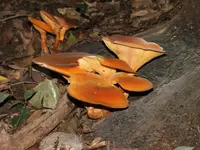
The Jack o'Lantern mushroom, Omphalotus olearius, is a bioluminescent, wood-decaying fungus, not a true plant. It forms dense clusters of bright orange, funnel-shaped caps on buried wood, stumps, or at the base of hardwood trees. At night, the gills can glow faintly green in very dark conditions.
This species is native to Europe and parts of North Africa and has close relatives in North America. It is considered challenging to cultivate reliably at home, so most information on how to care for Jack o'Lantern mushroom focuses on observing it in nature rather than active cultivation. In nature it prefers moist, shaded woodland habitats and well-rotted wood as its food source.

Care Difficulty
Hard Care

Light Preference
Partial Shade

Water Requirements
Keep Soil Moist

Temperature Preference
Warm Climate

Hardiness Zone
Unknown

Soil Texture
Loamy, Silty, Organic-rich

Soil pH
Acidic (5.5–6.5), Slightly acidic (6.5–7.0)

Soil Drainage
Moist but well-drained

Fertilization
Minimal (feed rarely)
Scan your plant to receive care tips personalized for your specific plant
Available on iOS and Android
This wood-decaying fungus prefers low to moderate natural light rather than full, direct sun.
Moist, not saturated, conditions around the colonized wood support reliable fruiting.
This species fruits best in mild conditions with cool nights and moderate days.
This wood-decay mushroom prefers moderately moist air to support healthy fruiting bodies.
This fungus develops best in organic-rich, wood-based substrates rather than typical garden soil.
This species can be grown in containers if the vessel supports stable, evenly moist wood-based substrate.
Omphalotus olearius, the Jack o'Lantern mushroom, is a saprophytic fungus that normally extracts all needed nutrients from decaying wood and does not benefit from conventional fertilizing.
Omphalotus olearius does not require horticultural pruning, since each mushroom cluster is short-lived and replaced naturally.
Omphalotus olearius is usually grown on logs or wood-based substrates rather than in standard pots, so transplanting focuses on its colonized substrate.
Propagation of Omphalotus olearius is specialized and typically handled by mycology growers rather than home gardeners.
Outdoor Omphalotus olearius on hardy logs usually needs little targeted winter care in temperate climates.

Plant Health Check
Not sure what's wrong with your plant? Check your plant's health inside the app.
This species produces a faint green glow from its gills due to luciferin–luciferase chemistry, similar to that in fireflies, with the light most visible in complete darkness after the eyes adjust.
Although sometimes mistaken for edible chanterelles, this fungus contains stable toxins that cause severe vomiting and diarrhea, and cooking does not reliably neutralize them.
It is a parasitic wood-decay fungus that colonizes the roots and lower trunks of broadleaf trees such as olive, oak, and chestnut, contributing to white rot by breaking down lignin and cellulose in the wood.

Genetic and biochemical studies suggest that the bioluminescence of this mushroom may function as a visual signal that attracts nocturnal insects, which can help spread its spores to new substrates.
This species is poisonous and must not be eaten, even when cooked. It causes severe gastrointestinal upset: cramps, nausea, vomiting, and diarrhea. Symptoms usually appear several hours after ingestion and can require medical attention, especially in children.
Keep your plants happy and healthy with plant identification, disease detection, and easy care guidance.

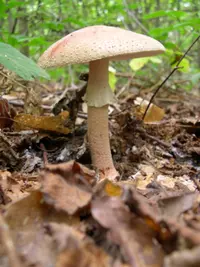
blusher
Amanita rubescens
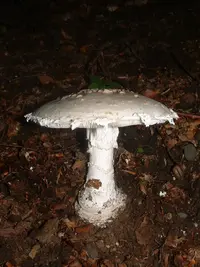
European Pine Cone Lepidella
Amanita strobiliformis
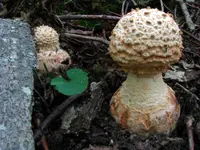
Carrot-Footed Lepidella
Amanita daucipes
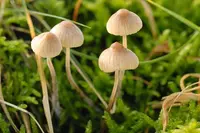
Ivory Bonnet
Atheniella flavoalba
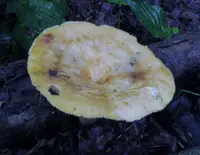
Bresadolia craterella
Bresadolia craterella
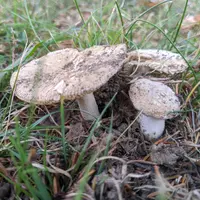
Poison Champagne Amanita
Amanita crenulata
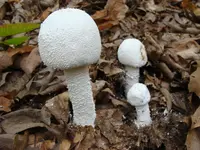
Plateful of Pyramids Lepidella
Amanita polypyramis
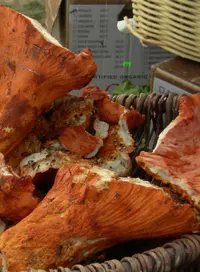
lobster mushroom
Hypomyces lactifluorum