Spore-friendly habitat
Leave a few mature caps in place to drop spores onto the surrounding leaf litter, which helps maintain a self-sustaining patch when caring for blusher in the same area over several seasons.

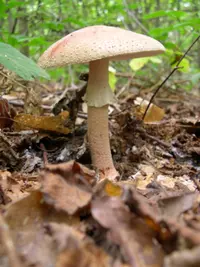
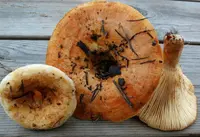
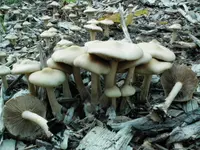
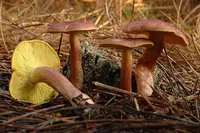
The blusher, Amanita rubescens, is a fleshy, gilled mushroom rather than a leafy plant. It is named for the reddish “blushing” color that appears on damaged or aging parts of the cap and stem. Caps are usually brownish with paler warty patches, and the gills are pale, becoming slightly pinkish with age.
This species is native to Europe but has also been reported in parts of North America, typically in mixed woodlands and forest edges. It grows on the ground in association with tree roots, forming a mycorrhizal partnership that helps both fungus and tree access nutrients.
Because it depends on living trees and specific soil fungi, it is not simple to cultivate at home, and practical guides on how to care for blusher are limited. It generally favors moist, well-drained forest soils and dappled light conditions.

Care Difficulty
Hard Care

Light Preference
Partial Shade

Water Requirements
Keep Soil Moist

Temperature Preference
Cool Climate

Hardiness Zone
Unknown

Soil Texture
Loamy, Silty, Organic-rich

Soil pH
Strongly acidic (4.5–5.5), Acidic (5.5–6.5)

Soil Drainage
Moist but well-drained

Fertilization
Minimal (feed rarely)
Scan your plant to receive care tips personalized for your specific plant
Available on iOS and Android
This ectomycorrhizal fungus prefers dappled woodland light rather than open sun.
This woodland fungus depends on consistently moist, but not saturated, soil and organic litter.
This species thrives in mild to cool conditions typical of temperate woodlands.
This ectomycorrhizal fungus relies on naturally moist forest conditions, so humidity is relevant mainly outdoors.
This fungus grows best in undisturbed, moist, aerated forest soil rather than conventional potting substrates.
This species is not realistically suitable for container growing because it depends on complex root associations with living trees.
This ectomycorrhizal fungus relies mainly on its tree partners and natural soil nutrients, so additional fertilizer is usually unnecessary for blusher.
Pruning is not applicable to Amanita rubescens, as it is a wild, fleshy fungus that fruits seasonally and then decomposes naturally.
This species is not suited to normal repotting, since it lives in symbiosis with tree roots in the soil rather than as a potted plant.
Artificial propagation of Amanita rubescens is complex and rarely attempted outside research settings, due to its dependence on living tree roots.
No active winter care is needed, as the underground mycelium is generally cold hardy and survives typical temperate winters without intervention.

Plant Health Check
Not sure what's wrong with your plant? Check your plant's health inside the app.
This species reliably turns pink to wine-red where bruised or cut, especially on the gills and stipe, a color change caused by oxidation of specific pigment compounds in the flesh. That blushing reaction is a key field character that separates it from some dangerously toxic look-alikes that stay white.
In parts of Europe, this mushroom has a long history of careful culinary use after thorough cooking, because its raw flesh contains heat-labile toxins that can cause gastrointestinal symptoms. Despite this tradition, many modern field guides advise treating it with caution due to its confusion risk with deadly amanitas.
This species forms ectomycorrhizal associations, a type of root-fungus partnership, most frequently with conifers such as spruce and pine in temperate forests. Through this symbiosis, its underground mycelium exchanges mineral nutrients for sugars from the host tree, improving tree nutrient uptake and drought tolerance.

The cap surface often shows scattered, fragile, greyish to flesh-colored warts that are remnant patches of the universal veil, but unlike some other amanitas, these warts can be easily washed off by rain, so older or rain-exposed specimens may appear almost smooth, which complicates reliable field identification for beginners.
This mushroom is considered edible only after thorough cooking, but it is easily confused with dangerous Amanita species. Identification mistakes can be fatal, so consumption is strongly discouraged without expert mycological confirmation.
Keep your plants happy and healthy with plant identification, disease detection, and easy care guidance.