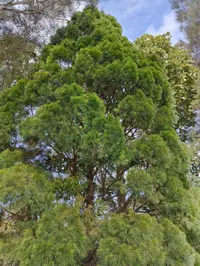
mountain ebony Care (Bauhinia variegata)

Also known as: Orchid tree, Camel's foot tree
mountain ebony

About mountain ebony

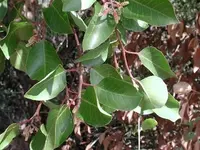
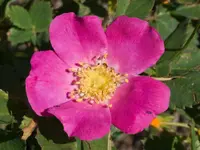
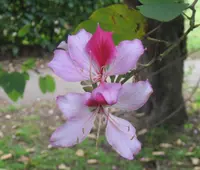
Mountain ebony, Bauhinia variegata, is a small to medium ornamental tree known for its orchid-like flowers and distinctive, two-lobed leaves. It is semi-deciduous in cooler climates and can grow with a broad, spreading canopy.

This species is native to parts of South and Southeast Asia, where it thrives in warm, subtropical to tropical conditions. It is often used as a street or garden tree for its showy spring blooms.

Mountain ebony is generally considered moderately easy to grow if given enough sun, well-drained soil, and protection from hard frost. Understanding how to care for mountain ebony mainly involves providing warmth, light, and space to develop its natural form.

Main Plant Requirements

Care Difficulty

Moderate Care

Light Preference

Full Sun

Water Requirements

Moderate Water

Temperature Preference

Tropical / Frost Sensitive

Hardiness Zone

9–11

Soil Texture

Sandy, Loamy, Organic-rich

Soil pH

Slightly acidic (6.5–7.0), Neutral (7.0)

Soil Drainage

Well-drained

Fertilization

Minimal (feed rarely)

Get Personalized Care Plan

Scan your plant to receive care tips personalized for your specific plant

Available on iOS and Android

How to Care for the mountain ebony

Bauhinia variegata grows best in bright, direct outdoor light with some protection from harsh extremes.

  • Provide 6–8 hours of direct sun daily, ideally with morning sun and light afternoon shade, especially in hotter climates above 90°F (32°C).
  • Tree tolerates light partial shade but flowering of mountain ebony is reduced if daily direct sun drops below about 4 hours.
  • Avoid extreme reflected heat from pavement or walls, which can scorch leaves, and ensure young trees are not shaded by taller plants in summer.

Watering for Bauhinia variegata should balance regular moisture with fast drainage to protect the roots.

  • In established landscape trees, water deeply when the top 5–8 cm of soil feels dry, then allow the soil to partly dry again before the next deep soak.
  • Increase frequency during hot, dry spells when leaves start to lose turgor or curl slightly; reduce in cool or rainy seasons to avoid waterlogged soil.
  • Watch for yellowing leaves and soft new growth as signs of overwatering, and crisp browning leaf edges plus premature leaf drop as signs of underwatering.

This species prefers warm, frost-free conditions and responds poorly to prolonged cold.

  • Ideal growing temperatures are 70–90°F (21–32°C), with strongest growth in consistently warm, bright seasons.
  • The tree tolerates brief drops to about 28–30°F (-2 to -1°C) but young growth is easily damaged; repeated frosts can cause dieback.
  • In hot regions where summer exceeds 100°F (38°C), provide soil mulch and occasional afternoon shade to limit heat stress and leaf scorch.

This species grows well in moderate ambient humidity and copes with slightly dry air.

  • Aim for 40–60% humidity; typical outdoor conditions in warm regions usually meet this need.
  • Leaf tips browning and marginal crisping during hot, dry winds indicate humidity stress rather than nutrient issues.
  • For young mountain ebony in very dry climates, group plants, add a nearby water tray, or use windbreaks to reduce drying air.

This tree prefers well‑structured, aerated soil that drains freely yet holds some moisture.

  • Use a loamy or sandy‑loam base amended with 20–30% compost to provide structure and moderate water retention.
  • Ensure fast drainage by incorporating coarse sand or fine gravel, especially in heavy or compacted native soil.
  • Keep pH slightly acidic to neutral, around 6.0–7.5, as Bauhinia variegata tolerates a range but dislikes very alkaline ground.
  • Avoid waterlogged, clay‑bound, or constantly soggy sites; raise the planting area or use mounded beds to improve aeration and runoff.

This species can be grown in containers when kept pruned and provided with ample root volume.

  • Choose a deep, wide, heavy container to counterbalance the developing canopy and reduce tipping in strong winds.
  • Use a fast‑draining, bark‑based tree mix so irrigation water passes through quickly while roots still access air pockets.
  • Raise the pot on feet or blocks outdoors so drainage holes stay clear and excess water cannot pool under the base.

Bauhinia variegata benefits from moderate feeding to support foliage and flowering, especially in containers.

  • Use a balanced, slow-release NPK fertilizer or well-rotted compost at the start of spring growth.
  • Feed every 6–8 weeks during the growing season, adjusting for soil richness and plant vigor.
  • Apply at half the label strength for container plants to avoid salt buildup and root burn.
  • Stop feeding in late summer to early fall so growth hardens before winter dormancy.

Pruning Bauhinia variegata helps maintain a strong framework and enhances flowering display.

  • Carry out main pruning in late winter to very early spring, before new growth starts.
  • Remove dead, diseased, crossing, or inward-growing branches to open the canopy and improve airflow.
  • Shorten or thin crowded shoots to shape the crown and encourage sturdy, well-spaced branches.
  • Use clean, sharp bypass pruners or a pruning saw, making smooth cuts just outside the branch collar.

This tree is usually grown in the ground, so focus on thoughtful transplanting rather than frequent repotting.

  • Transplant in late winter to early spring when dormant and temperatures are mild.
  • Look for signs such as roots circling the pot, slow growth, or soil drying very fast in containers.
  • Move young trees every 2–3 years at most, shifting into a slightly larger pot or permanent site with well-drained soil.
  • Water deeply before and after transplanting, keep the root ball intact, and shade the canopy for 1–2 weeks to reduce stress.

Bauhinia variegata is most often propagated from seed, with vegetative methods used for selected forms.

  • Collect ripe seed pods in late summer to fall and sow seeds in spring after a brief soak in warm water.
  • Use a free-draining mix, keep it evenly moist, and maintain 70–80°F for reliable germination.
  • Take semi-hardwood cuttings in late spring to summer and root them under high humidity with bottom warmth.
  • Provide bright, indirect light and avoid waterlogging to reduce rot during early establishment.

Mountain ebony is only mildly frost tolerant and needs planning in cooler climates.

  • In USDA zones colder than 9, grow Bauhinia variegata in containers and overwinter in a bright, frost-free space.
  • Mulch the root zone with 5–8 cm of organic material in fall to moderate soil temperature.
  • Avoid heavy winter watering; keep soil just barely moist to limit root and stem damage.

Care Tips

Root zone mulching

Apply a 5–8 cm layer of coarse organic mulch around the drip line, keeping it 5–10 cm away from the trunk, to keep roots cooler, reduce evaporation, and limit weed competition in warm climates.

Early canopy training

In the first 2–3 years, selectively keep 3–5 well-spaced main branches and remove steep, crossing, or rubbing shoots to create a strong, open framework that supports heavy flowering later.

Wind and branch support

In exposed sites, loosely stake young trees and use soft ties on long, arching branches during the first couple of seasons to prevent wind rock and reduce the risk of branch splitting at narrow crotch angles.

Salt and drought management

In areas with hard or salty irrigation water, give the tree a slow, deep flush with low-salt water several times in the hot season to leach accumulated salts from the root zone and reduce leaf tip burn.

Bloom and litter planning

Site the tree where falling flowers and seed pods will not cause problems, or place paving and seating slightly outside the canopy line, since planning for litter is an important part of caring for mountain ebony in small gardens.

Common Pests and Diseases

Leaf gall mites

This pest causes swollen, blister-like galls on young leaves and sometimes on flower buds, leading to distortion and reduced vigor. Symptoms include thickened, curled, or puckered leaf tissue that may turn reddish or brown.

Solution

Prune and destroy heavily galled shoots to remove the mite population and improve plant appearance. For recurring problems, apply a targeted miticide or sulfur-based spray at bud break and repeat according to label directions, and avoid excessive nitrogen that stimulates very soft, mite-prone growth.

Leaf spot

This disease produces small brown, tan, or purplish spots on leaves that may merge into larger irregular patches, sometimes with yellow halos. Symptoms include premature leaf yellowing and drop, especially in humid or rainy conditions.

Solution

Remove and dispose of fallen and heavily spotted leaves to reduce fungal spores, and water at soil level instead of overhead to keep foliage dry. In areas with frequent outbreaks, apply a copper-based or chlorothalonil fungicide at the first sign of spotting and improve air circulation around the canopy by light thinning cuts.

Powdery mildew

This disease shows as white to gray, powdery patches on the upper leaf surface, young shoots, and sometimes flower buds. Symptoms include leaf distortion, reduced flowering, and early leaf drop in shaded, humid, or crowded conditions.

Solution

Increase sun exposure and airflow by careful pruning of dense branches and avoid overhead watering, especially in the evening. At first appearance, treat foliage with a labeled fungicide such as potassium bicarbonate, horticultural oil, or sulfur, and repeat as directed until new growth emerges clean; this is a key step in Bauhinia variegata care in damp climates.

Caterpillar defoliation

These insects chew irregular holes and edges in leaves and can strip young trees of much of their foliage in a short period. Symptoms include skeletonized leaves, frass (insect droppings), and visible larvae on the undersides of leaves or along stems.

Solution

Handpick and destroy caterpillars where infestations are light, inspecting foliage in the early morning or evening. For heavier feeding, use a biological control such as Bacillus thuringiensis (Bt) applied to foliage so that feeding larvae ingest it, and encourage birds and beneficial insects by avoiding broad-spectrum insecticides.

Scale insects

This pest appears as small, immobile bumps on stems and leaf veins, often accompanied by sticky honeydew and black sooty mold. Symptoms include yellowing leaves, weak growth, and dieback of twigs if populations are high.

Solution

Gently scrub or wipe infested stems with a cloth dipped in soapy water or horticultural oil to remove scales and honeydew, repeating as needed. For larger trees with heavy infestations, apply systemic insecticides labeled for ornamental trees during active growth, and support natural predators such as lady beetles by minimizing unnecessary insecticide use.

Interesting Facts

Distinctive bilobed leaves

This species has deeply notched, bilobed leaves that resemble a camel’s hoof, a trait so characteristic that it gave rise to the common name orchid tree and has been used by taxonomists to distinguish it from closely related Bauhinia species.

Spring-flowering habit

In many subtropical climates it flowers in late winter to early spring on mostly leafless branches, creating a striking display of pink to white blossoms before the new foliage emerges.

Nitrogen-fixing association

Like many legumes, it forms symbiotic relationships with root bacteria that can fix atmospheric nitrogen, which helps improve soil fertility over time in the areas where it is established.

Botan icon

Did you know?

This species is one of the parents of the famous Hong Kong orchid tree hybrid (Bauhinia × blakeana), contributing its showy flowers and leaf form to a sterile ornamental that has become a floral emblem of Hong Kong.

FAQs about mountain ebony

Flowering is reduced if the tree is too young, heavily pruned, shaded, or stressed by drought, nutrient imbalance, or root disturbance. Allow full establishment, avoid hard pruning before spring, and keep conditions stable to restore blooms.

Grow Healthy Plants with Botan Care

Keep your plants happy and healthy with plant identification, disease detection, and easy care guidance.

Botan plant care app — identify plants on mobile

Explore More Plants