American Floury Amanita Care (Amanita farinosa)

American Floury Amanita

About American Floury Amanita

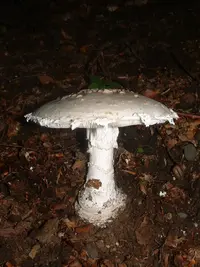
The American floury amanita, Amanita farinosa, is a small to medium-sized woodland mushroom, not a houseplant or ornamental garden species. It forms mycorrhizal partnerships with trees, meaning it grows in soil around roots rather than in pots or beds.

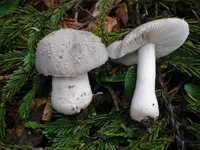
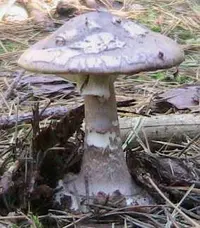
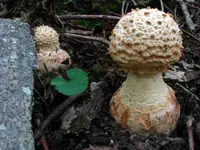
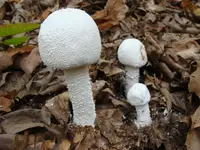
Caps are usually pale gray to tan with a powdery or flour-like surface, and the slender stem often shows similar mealy patches. It appears in mixed and coniferous forests across parts of North America, typically on the ground in summer and fall.

Because it depends on complex tree-root associations, it is not considered practical to grow or care for American Floury Amanita in home settings.


Main Plant Requirements

Care Difficulty

Hard Care

Light Preference

Partial Shade

Water Requirements

Keep Soil Moist

Temperature Preference

Cool Climate

Hardiness Zone

Unknown

Soil Texture

Loamy, Silty, Organic-rich

Soil pH

Acidic (5.5–6.5)

Soil Drainage

Moist but well-drained

Fertilization

Minimal (feed rarely)

Get Personalized Care Plan

Scan your plant to receive care tips personalized for your specific plant

Available on iOS and Android

How to Care for the American Floury Amanita

This ectomycorrhizal fungus prefers cool, shaded forest conditions rather than direct open sun.

  • Provide dappled or filtered light under trees, similar to deciduous or mixed woodland, avoiding more than 1–2 hours of direct sun, especially at midday.
  • American Floury Amanita fruits best where leaf litter and canopy create partial to full shade, with indirect light for most of the day in spring and fall.
  • Excessive sun dries the forest floor, reducing fruiting; aim to maintain moist, shaded microsites and protect from strong afternoon sun exposure.

This forest-dwelling fungus depends on consistently moist, not waterlogged, soil conditions around its tree partners.

  • Maintain evenly moist leaf litter and upper soil, allowing only the top 1–2 cm to dry slightly between natural rain or supplemental watering if cultivated microsites are managed.
  • Ensure excellent drainage with loose, humus-rich soil; standing water or sour, swampy smells indicate overwatering and can lead to rot of mycelium and fruiting bodies.
  • Reduced fruiting, shrinking caps, and dry, brittle gills suggest insufficient moisture, while soft, collapsing caps and slimy surfaces suggest oversaturation affecting Amanita farinosa.

This species develops and fruits in cool to mild conditions typical of temperate forests.

  • Optimal fruiting usually occurs around 55–70°F (13–21°C), with steady soil moisture and moderate day–night temperature shifts supporting stable mycelial activity.
  • It tolerates cool weather down to about 32°F (0°C) in the soil, but hard freezes below this can halt activity and damage exposed fruiting bodies.
  • Prolonged heat above 80°F (27°C) with dry conditions suppresses fruiting; shaded, humid microclimates under leaf litter buffer temperature swings across seasons.

Humidity is not a controllable or relevant factor for safe Amanita farinosa handling in typical home or garden conditions.

Amanita farinosa is an ectomycorrhizal forest mushroom that depends on natural woodland soil rather than prepared mixes.

  • Grows in undisturbed, moist but not waterlogged forest soil rich in leaf litter and decaying wood.
  • Prefers well-aerated, loose mineral soil beneath trees, often sandy-loam with abundant organic debris on top.
  • Typically associates with slightly acidic soil, roughly in the pH 4.5–6.0 range common in conifer and mixed woods.
  • Avoid compacted, fertilized, or heavily amended garden beds, as these conditions disrupt the required tree-root and soil-fungi relationships.

This species is not suitable for container growing because it relies on complex root partnerships with living trees in natural soil.

This woodland fungus forms nutrient-sharing mycorrhizae with trees, so Amanita farinosa in natural soil does not benefit from direct fertilization.

This mushroom is not managed through pruning, and Amanita farinosa fruiting bodies are short-lived structures.

This species is a wild ectomycorrhizal fungus, so caring for American Floury Amanita focuses on conserving its woodland habitat rather than container culture.

  • Avoid attempting to grow it in pots; it depends on living tree roots for nutrition and cannot adapt to standard potting media.
  • Do not transplant fruiting bodies; they are temporary and not the main organism, which lives as fine threads in soil and roots.
  • If habitat disturbance is unavoidable, limit soil removal and compaction around host trees to preserve the underground fungal network.

Artificial propagation of Amanita farinosa is highly specialized and not practical for home growers, so routine methods are not recommended.

This native woodland fungus is naturally cold hardy and does not need dedicated winter care in its natural range.

Care Tips

Spore-Friendly Substrate

When returning this fungus to a habitat, lightly rake a thin layer of leaf litter and decomposing conifer or hardwood needles over the area to create a loose, aerated surface where spores can settle and form mycorrhizae with nearby tree roots.

Minimal Disturbance Zones

Flag or mark small zones around known fruiting spots and avoid trampling, raking, or compacting the soil there, since repeated disturbance can damage the fine fungal network in the upper 5–10 cm of soil.

Gentle Collection Technique

If collecting a few specimens for study, cut the stem cleanly at soil level with a knife instead of pulling, then replace the disturbed litter so the remaining underground mycelium stays protected from drying and mechanical damage.

Moisture-Retentive Mulch

In managed woodlands or naturalized garden edges, maintain a 2–5 cm layer of undecorated wood chips mixed with natural leaf litter to help stabilize moisture and temperature around the root zone of host trees.

Host Tree Support

Focus on overall tree health by avoiding root damage, compaction, and high-salt fertilizers near trunks, since a vigorous root system improves the long-term stability of the symbiotic fungus and supports growing American Floury Amanita in that location.

Common Pests and Diseases

Mycophagous springtails

These insects feed on fungal tissues, grazing the fruiting surface and veil remnants of the mushroom. This pest can leave pitted, scarred caps and distorted young buttons.

Solution

Remove and discard heavily grazed fruiting bodies and surrounding debris, and avoid overly wet, stagnant conditions that favor springtail buildup. Lightly disturb and aerate the upper soil or substrate layer and, if grown in controlled conditions, reduce constant surface moisture while maintaining overall humidity appropriate for growing American Floury Amanita.

Fungus gnat larvae

This pest lives in moist organic substrates and chews into young mushroom buttons and stem bases. Symptoms include collapsing pins, hollowed stems, and slimy damage at the substrate line.

Solution

Discard badly damaged fruiting bodies and allow the top layer of substrate to dry slightly between mistings so it is moist but not saturated. Use fine mesh over vents and openings to exclude adults and place yellow sticky traps nearby to reduce breeding populations around the cultivation area.

Mite infestation

These insects, often called grain or mold mites, feed on fungal tissue and spores, creating a dusty, eroded appearance on caps and gills. Symptoms include roughened surfaces, slow development, and visible tiny moving specks on close inspection.

Solution

Physically remove infested fruiting bodies and any contaminated substrate, then clean nearby surfaces to remove stray mites and spores. Improve ventilation, avoid storing damp organic materials close to the growth area, and if cultivating indoors, rest the space between flushes to break the mite life cycle.

Bacterial blotch

This disease is caused by opportunistic bacteria that colonize persistently wet mushroom surfaces. Symptoms include yellow to brown greasy spots on caps that may become sunken and soft.

Solution

Remove and discard affected fruiting bodies promptly and avoid overhead watering that leaves standing droplets on caps. Improve air movement around developing mushrooms and water or mist early in the day so surfaces dry quickly while the substrate remains evenly moist.

Competing mold contamination

This disease occurs when fast-growing molds colonize the same substrate, outcompeting the Amanita mycelium. Symptoms include patches of green, gray, or black fuzzy growth, stunted or aborted fruiting, and off odors from the substrate.

Solution

Cut out and discard heavily contaminated substrate sections and any malformed fruiting bodies in contact with mold. In future cycles, start with clean, well-pasteurized substrate, limit handling and airborne dust, and maintain moderate airflow so surfaces do not stay stagnant and mold spores are less likely to settle and dominate.

Interesting Facts

Floury cap texture

The cap surface is covered with dense, mealy granules that give it a dry, flour-dusted look rather than showing distinct warts or patches like many other amanitas.

Specialized forest partner

This species forms ectomycorrhizal associations with trees such as oaks and other hardwoods, trading mineral nutrients from the soil for sugars produced by the host tree.

North American distribution

It is native to North America and is typically found in mixed or deciduous forests, often fruiting singly or in small groups on the forest floor rather than in large, conspicuous clusters.

FAQs about American Floury Amanita

This species is considered poisonous and must not be eaten. It contains amatoxins and related compounds that can cause severe liver and kidney damage. Identification is difficult, so all similar mushrooms should be treated as unsafe for consumption.

Grow Healthy Plants with Botan Care

Keep your plants happy and healthy with plant identification, disease detection, and easy care guidance.

Botan plant care app — identify plants on mobile

Explore More Plants