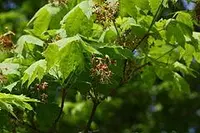
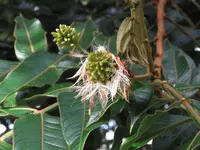
pacara earpod tree Care (Enterolobium contortisiliquum)

pacara earpod tree

About pacara earpod tree

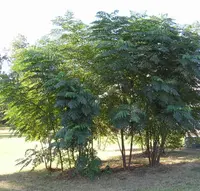
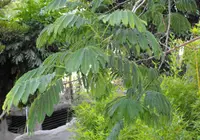
The pacara earpod tree, Enterolobium contortisiliquum, is a fast-growing, deciduous legume tree known for its broad canopy and distinctive, ear-shaped seed pods. It develops a thick trunk and wide, spreading branches with fine, fern-like foliage that casts light, dappled shade.

This species is native to tropical and subtropical regions of South America, where it grows in warm, humid lowlands and river plains. In cultivation it is mainly used as a large landscape or shade tree in frost-free climates.

Its rapid growth and toughness make it relatively easy to establish outdoors, but its eventual size and vigorous roots require ample space. To care for pacara earpod tree, provide full sun, well-drained soil, and consistent moisture during the main growing season.

Main Plant Requirements

Care Difficulty

Moderate Care

Light Preference

Full Sun

Water Requirements

Moderate Water

Temperature Preference

Tropical / Frost Sensitive

Hardiness Zone

10–11

Soil Texture

Sandy, Loamy, Clay

Soil pH

Slightly acidic (6.5–7.0), Neutral (7.0)

Soil Drainage

Well-drained

Fertilization

Minimal (feed rarely)

Get Personalized Care Plan

Scan your plant to receive care tips personalized for your specific plant

Available on iOS and Android

How to Care for the pacara earpod tree

Enterolobium contortisiliquum thrives in strong outdoor light with long daily exposure.

  • Provide full sun for 6–8 hours per day; a pacara earpod tree handles intense light once established on deep, moist soil.
  • Allow light partial shade in very hot climates, especially protection from harsh late-afternoon sun to reduce leaf scorch on young trees.
  • In cooler seasons, choose the brightest, most open site available, avoiding heavy shade that leads to weak, elongated growth and sparse canopy development.

This fast-growing tree needs consistent moisture during establishment but dislikes prolonged waterlogging.

  • Water deeply when the top 5–8 cm of soil feels dry, aiming to moisten the upper 20–30 cm of soil rather than applying light, frequent splashes.
  • Ensure well-drained soil; standing water, sour smell, yellowing leaves, or soft new growth indicate overwatering or poor drainage issues.
  • In cooler or rainy seasons, extend the interval between waterings, while in hot, dry periods, monitor soil more often and water when leaves start to lose firmness.

This species prefers warm climates and is not suited to regions with severe frosts.

  • Optimal growth occurs around 70–90°F (21–32°C), with vigorous canopy and root development in consistently warm conditions.
  • Tolerates brief drops to about 30–32°F (-1–0°C) once mature, but young trees are easily damaged, so protect them from radiative frost near ground level.
  • Handles high heat up to about 100–105°F (38–41°C) if soil moisture is adequate; prolonged cold below 40°F (4°C) slows growth and can cause dieback.

Humidity is rarely critical for Enterolobium contortisiliquum, which adapts well to typical outdoor ranges.

  • Target 40–60% humidity, as the pacara earpod tree naturally tolerates moderate atmospheric moisture.
  • Dry air is usually tolerated, but prolonged hot winds can increase leaf edge browning and premature leaf drop.
  • Increase humidity slightly during extreme heat by grouping plants, mulching the root zone, and providing occasional overhead rinsing in the morning.

Enterolobium contortisiliquum prefers deep, well-draining mineral soils but accepts a range of textures if drainage is maintained.

  • Use a sandy or loamy base with added compost to create a loose, crumbly structure that supports strong root penetration.
  • Aim for slightly acidic to neutral pH, around 6.0–7.5, avoiding strongly acidic or saline conditions that restrict nutrient uptake.
  • For container or prepared beds, mix roughly 50% loam, 25% coarse sand, and 25% compost or fine bark to balance moisture retention and aeration.
  • Avoid compacted clay, waterlogged spots, or heavily peat-based mixes that stay wet and limit oxygen around the roots.

This species can be grown in containers for the first years, but long-term size and vigor are restricted.

  • Choose a tall, heavy container to stabilize the developing woody canopy and reduce tipping in strong wind.
  • Use a fast-draining tree mix so water moves through quickly yet the root ball does not dry out within a few hours.
  • Position the pot where radiant heat from walls or paving does not overheat the root zone in summer.

This fast-growing leguminous tree needs only moderate feeding in cultivation, as it also fixes atmospheric nitrogen in its roots.

  • Use a balanced slow-release fertilizer (e.g., 10-10-10) or well-rotted compost at the start of spring for pacara earpod tree in containers or poor soils.
  • Feed container or nursery plants every 6–8 weeks during the active growing season, keeping soil slightly moist before and after application.
  • Apply fertilizer at half the label strength for young trees to avoid excessive, weak growth and salt buildup in the root zone.
  • Stop or sharply reduce feeding in late fall and winter, when growth naturally slows or the plant is leafless outdoors.

Pruning Enterolobium contortisiliquum is mainly used to manage size, structure, and safety rather than to stimulate flowering.

  • Carry out structural pruning in late winter or very early spring before vigorous new growth starts.
  • Remove dead, diseased, crossing, or storm-damaged branches first, using clean, sharp bypass pruners or a pruning saw.
  • Thin crowded interior branches to improve light penetration and airflow, encouraging a strong, well-spaced framework.
  • Limit cuts on mature trees to smaller branches where possible, avoiding heavy topping that leads to weak, fast regrowth.

This large, fast-growing tree is usually field-grown, so transplanting young specimens correctly is more important than long-term container repotting.

  • Transplant in late winter to early spring, when soil is workable and before strong new growth begins.
  • Look for signs such as roots circling the container, slow growth despite good care, or the pot drying out very quickly.
  • Move up only 1–2 pot sizes or into a well-prepared ground hole, using a free-draining soil mix and firm but not compacted backfill.
  • Water thoroughly after planting, shade the canopy from intense sun for 1–2 weeks, and keep soil evenly moist to limit transplant shock.

Propagation of this species is most commonly done from seed, which provides high numbers of uniform young trees.

  • Collect mature, dry pods and remove seeds, then scarify the hard coat by lightly sanding or pouring hot (not boiling) water over them.
  • Sow in late spring to early summer in a warm, free-draining seed mix, maintaining 75–85°F and consistent, light moisture.
  • Provide bright light and good air circulation to limit damping-off, a fungal disease that kills seedlings at soil level.
  • For selected forms, semi-hardwood cuttings under warm, humid propagation conditions can root but are slower and less reliable than seed.

This subtropical tree is not frost hardy and needs protection in regions with freezing winters.

  • In-ground trees tolerate only brief light frosts; young plants are especially sensitive to temperatures below 30°F.
  • Apply a 5–8 cm mulch layer over the root zone in fall, keeping it slightly away from the trunk to reduce rot risk.
  • Move container plants indoors or into a heated greenhouse before the first frost, placing them in bright light and cooler, above-freezing temperatures.
  • Reduce watering in winter, allowing the top soil to dry slightly, while avoiding complete root ball desiccation.

Care Tips

Establish Strong Leader

In the first 3–5 years, select a single straight central stem and remove competing leaders or very narrow branch crotches to build a stable trunk framework and reduce future storm damage risk when growing pacara earpod tree.

Stage Root Pruning

Before planting in a final landscape position, lightly root-prune container or nursery trees 6–12 months in advance to encourage a dense, fibrous root system that anchors better and establishes faster after transplanting.

Plan Wide Spacing

Allow at least 8–10 m clearance from buildings, power lines, and other large trees to accommodate the wide canopy and prevent future conflicts that would require heavy corrective pruning.

Protect Young Bark

On young trees in full sun, use a breathable trunk wrap or light-colored tree guard for the first 1–2 summers to reduce sunscald and mechanical injury, removing or loosening it at least once a year to prevent girdling.

Manage Surface Roots

Keep a wide grass-free mulch ring around the base and avoid frequent shallow irrigation so roots grow deeper and are less likely to heave pavements or become exposed at the soil surface.

Common Pests and Diseases

Mimosa webworm

These caterpillars feed on the foliage, webbing leaflets together and causing browned, skeletonized patches that reduce canopy density.

Solution

Prune and discard infested, webbed foliage, then monitor for new activity; for trees small enough to treat directly, use a targeted Bacillus thuringiensis (Bt) or spinosad spray on young larvae, and encourage natural predators by avoiding broad-spectrum insecticides nearby.

Defoliating caterpillars

These larvae, often from various moth species, chew leaflets heavily and can cause partial to near-complete defoliation during outbreaks.

Solution

Inspect the canopy during early feeding stages, handpick or shake caterpillars from reachable branches, and, where feasible, apply Bt or spinosad in late afternoon to young larvae; in larger landscape trees, protect tree vigor with adequate watering during drought rather than attempting full chemical control.

Root-knot nematodes

These microscopic roundworms attack fine roots, leading to galls, reduced root efficiency, stunting, and poor canopy development, especially in sandy or previously cropped soils.

Solution

Avoid planting young trees in known nematode-infested soils, use substantial organic mulches to support beneficial soil organisms, and, in nursery or container culture, rotate planting sites and use clean, sterilized substrate to reduce pressure on young Enterolobium contortisiliquum plant care efforts.

Powdery mildew

This disease produces white, powdery fungal growth on young leaflets and shoots, leading to distortion, dull foliage, and reduced vigor in humid but not overly wet conditions.

Solution

Improve air circulation around the canopy by thoughtful spacing and pruning, avoid overhead watering of foliage, remove heavily infected leaves, and, if needed, apply a sulfur or potassium bicarbonate fungicide labeled for ornamental trees during early stages of infection.

Leaf spot complex

Symptoms include small brown or dark spots on leaflets that may coalesce, leading to premature leaf drop during extended warm, wet periods.

Solution

Rake and remove fallen leaves to reduce fungal inoculum, maintain a mulch layer to limit soil splash, avoid wetting foliage with irrigation, and in high-value or nursery trees, use a labeled protective fungicide at the start of rainy periods if leaf spots have been a repeated issue.

Interesting Facts

Ear-shaped seed pods

This species produces large, dark, curved pods whose coiled shape resembles a human ear, which inspired its common name pacara earpod tree and the species name contortisiliquum, meaning twisted pod.

Nitrogen-fixing legume

As a member of the legume family, it forms symbiotic associations with nitrogen-fixing bacteria in its roots, enriching poor soils and supporting surrounding vegetation in its native South American habitats.

Fast-growing canopy tree

In suitable tropical and subtropical climates, this tree develops a very broad, umbrella-like crown that offers deep shade and can dominate open landscapes, especially along rivers and floodplains.

Botan icon

Did you know?

In parts of South America, the light yet relatively durable wood of this species is widely used for making dugout canoes and rural furniture, taking advantage of its large trunk diameter and workable grain without being considered a high-value timber.

FAQs about pacara earpod tree

This species is considered fast-growing, often adding 90–150 cm in height per year in warm climates with adequate water and nutrients. Growth slows in pots, cooler regions, or where roots are restricted or stressed.

Grow Healthy Plants with Botan Care

Keep your plants happy and healthy with plant identification, disease detection, and easy care guidance.

Botan plant care app — identify plants on mobile

Explore More Plants