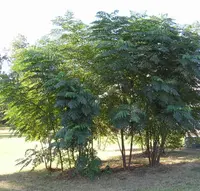
Root flare check
When planting or assessing an established tree, gently scrape back mulch and soil until the first major roots are visible at the surface, since a buried root flare increases risk of rot and instability over time.

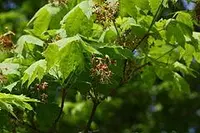
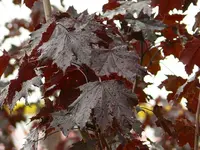
Keijo maple, Acer pseudosieboldianum, is a hardy deciduous shrub or small tree valued for its finely cut leaves and strong cold tolerance. It offers layered branching and attractive seasonal interest. New foliage often emerges in soft tones, matures to rich green, and finishes with vivid autumn color in red, orange, or gold, depending on climate and light. The bark and twig structure add subtle winter appeal.
This species is native to cool, mountainous forests of Korea and nearby regions, where it grows in dappled light and moist, well-drained soil. Many gardeners choose it when they care for Keijo Maple in colder areas where Japanese maples struggle, as it is generally easier and more resilient under low winter temperatures.

Care Difficulty
Moderate Care

Light Preference
Partial Shade

Water Requirements
Moderate Water

Temperature Preference
Cold Hardy

Hardiness Zone
4–8

Soil Texture
Loamy, Sandy, Organic-rich

Soil pH
Acidic (5.5–6.5), Slightly acidic (6.5–7.0)

Soil Drainage
Moist but well-drained

Fertilization
Minimal (feed rarely)
Scan your plant to receive care tips personalized for your specific plant
Available on iOS and Android
This hardy maple prefers bright conditions with some protection from intense afternoon sun.
This species prefers evenly moist, cool soil that never stays saturated for long periods.
This cold-hardy maple thrives in climates with cool to moderate summers and cold winters.
Acer pseudosieboldianum handles a fairly wide humidity range and usually does not need special adjustment outdoors.
Acer pseudosieboldianum prefers cool, moist, well-structured soil that drains freely yet retains some consistent moisture.
This species can be grown in containers for many years if the pot provides stable conditions for its woody root system.
Acer pseudosieboldianum benefits from modest feeding but grows well in reasonably fertile soil without heavy fertilizer use.
Pruning Acer pseudosieboldianum is mainly done to maintain structure and remove problem wood, not to control size aggressively.
This maple is more often planted in the ground, so transplant timing and gentle root handling matter more than frequent repotting.
Propagation of Acer pseudosieboldianum is feasible but slow, so it is usually done by nurseries rather than casual gardeners.
This maple is notably cold hardy but young plants and those in containers benefit from simple winter care.

Plant Health Check
Not sure what's wrong with your plant? Check your plant's health inside the app.
This species tolerates winter temperatures far below those survived by many Japanese maple cultivars and is naturally native to cold, mountainous regions of northeastern Asia, including parts of Korea, China, and the Russian Far East.
Its leaves have a slightly thicker, more leathery texture than many other ornamental maples, which helps reduce water loss and contributes to its good performance in exposed, cold-windy sites.
Wild populations show notable variation in leaf shape, size, and autumn coloration, which has made the species an important parent for breeding hardier hybrid maples for cold climates.

This species has been widely used in breeding programs to create so‑called Korean maple hybrids that combine the ornamental qualities of Japanese maples with much improved winter hardiness for regions with severe cold.
This tree has a moderate growth rate, typically adding about 20–30 cm per year once established. Growth is slower in colder or exposed sites and somewhat faster in sheltered locations with consistent moisture and fertile, well-structured soil.
Keep your plants happy and healthy with plant identification, disease detection, and easy care guidance.