Sucker Management
Leave a limited number of strong basal suckers and remove extras at ground level in late winter to maintain an open thicket instead of an overcrowded, weak stand.

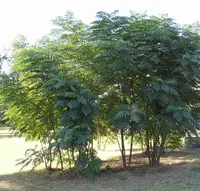
Devil's walkingstick (Aralia spinosa) is a hardy, deciduous shrub or small tree known for its heavily spined stems and large, tropical-looking leaves. It forms thickets by suckering, creating dense colonies over time.
In late summer it produces tall clusters of small white flowers, followed by dark berries that attract birds. The overall look is bold and architectural rather than delicate.
This species is native to eastern North America, where it grows on woodland edges, clearings, and disturbed ground. It is fairly tough but the sharp spines and suckering habit are the main challenges for those who care for devil's walkingstick.
It generally prefers full sun to light shade, moderately moist but well-drained soil, and space to spread without crowding nearby plants.

Care Difficulty
Easy Care

Light Preference
Full Sun

Water Requirements
Moderate Water

Temperature Preference
Cold Hardy

Hardiness Zone
4–9

Soil Texture
Loamy, Clay, Organic-rich

Soil pH
Acidic (5.5–6.5), Slightly acidic (6.5–7.0)

Soil Drainage
Moist but well-drained

Fertilization
Minimal (feed rarely)
Scan your plant to receive care tips personalized for your specific plant
Available on iOS and Android
This large shrub or small tree prefers bright conditions with some protection from harsh midday sun.
This species prefers evenly moist, well-drained soil once established in the landscape.
This hardy species tolerates a wide temperature range but grows best in moderate conditions.
This shrub tolerates a wide humidity range and usually does not need special humidity management outdoors.
Aralia spinosa establishes best in loose, well-aerated ground that drains freely but does not dry out rapidly.
This species can be grown in large containers, mainly for temporary display or young plants rather than long-term confinement.
This native tree generally needs little feeding in the ground, but light nutrition supports better growth in poor soils.
Pruning Aralia spinosa focuses on safety, structure, and removing problem wood rather than constant shaping.
This species is most often grown in the ground, so guidance centers on transplanting rather than frequent repotting.
New Aralia spinosa plants are most often produced from root suckers, division, and seed in managed landscapes.
Mature Aralia spinosa is cold hardy across much of the eastern and central US and usually needs minimal winter care.

Plant Health Check
Not sure what's wrong with your plant? Check your plant's health inside the app.
This species develops thick, corky bark armed with sharp, stout spines along stems and branches, which likely evolved as protection against large herbivores. The dense armoring gives rise to the common name devil's walkingstick and makes the shrub almost impenetrable to browsing animals.
Mature plants produce huge, branched clusters of tiny white flowers at the stem tips, often over 30 cm across. These late-summer blooms provide important nectar and pollen resources for bees, wasps, flies, and other pollinators when many woodland plants are no longer flowering.
After flowering, the plant forms large clusters of small, dark purple to black drupes that ripen in late summer to fall. Many bird species eat the fruits and disperse the seeds, helping the shrub colonize forest gaps, roadsides, and disturbed areas.

Devil's walkingstick often resprouts vigorously from its root system after the main stem is cut or damaged, forming dense clonal thickets that can quickly dominate disturbed forest edges and clearings.
This species spreads by suckering roots and can form dense thickets over time. In gardens, remove unwanted shoots promptly and consider root barriers if space is limited. Careful monitoring is part of responsible Aralia spinosa care.
Keep your plants happy and healthy with plant identification, disease detection, and easy care guidance.