
devil's walking stick Identification (Aralia spinosa)

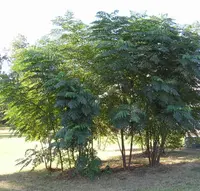
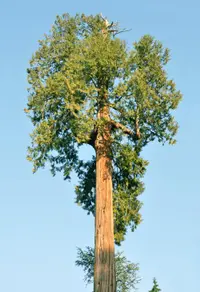
Recognize devil's walking stick by its single to few upright trunks armed with stout prickles, topped by very large, twice- to three-times compound leaves that can reach several feet long.

At first glance, Aralia spinosa also shows a sparse, umbrella-like crown and broad, branched flower clusters held above the leaves.

Aralia spinosa Identification

Check Your Plant with Botan

Not sure about your plant ID? Upload a photo and check it with Botan.

Clear images work best. Avoid photos taken too close or too far away

Check the plant’s overall form first.

  • Usually a single, upright trunk or a few stems, often 10-25 feet (3-7.6 m) tall, with sparse branching near the top.
  • Stems and leaf stalks carry many sharp, stout prickles, giving the trunk a rough, armed look.
  • Leaves are huge and twice compound, often 2-4 feet (0.6-1.2 m) long, made of many oval leaflets.
  • Branch tips hold large, airy clusters of many small white flowers, followed by tight groups of dark purple to black berries.

The combination of a spiny trunk and very large compound leaves is especially useful.

Aralia spinosa shows clear structural shifts from a single cane to a branched crown.

  • Young plant: Usually a single upright, very spiny stem with one or few giant bipinnate leaves clustered near the top, giving a sparse, umbrella-like outline.
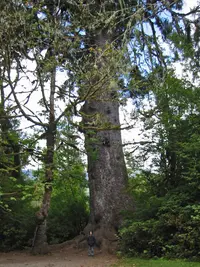
  • Mature plant: Develops a thicker trunk and a narrow crown of stout branches, often reaching 15-25 feet (4.6-7.6 m), while retaining dense prickles on stems.
  • Flowering stage: Branch tips carry broad, many-branched panicles, a loose compound flower cluster, held above the leaves and changing the plant from spiky to plume-topped.
  • Fruiting stage: After bloom, the same elevated clusters fill with small dark berries, making the crown look dotted and heavier than during the flowering stage.

In spring, Aralia spinosa leafs out late with very large, divided leaves clustered near the stem tips, changing a bare, spiny outline into a tropical-looking crown. By late summer, tall branched flower clusters rise above the leaves. In fall, dark fruits follow, then the leaves drop and the stout prickly stems stand exposed through winter.

A few spiny, large-leaved plants are regularly mistaken for devil's walking stick.

Japanese angelica tree(Aralia elata)

Often confused because both have huge divided leaves, stout prickly stems, and broad flower clusters. Aralia elata usually has more upright, tree-like branching and often forms suckering thickets, while Aralia spinosa is more often a single-stemmed small tree with a looser crown.

Hercules' club(Zanthoxylum clava-herculis)

Can mislead at a glance because it is also a spiny small tree with compound leaves. It differs by having pinnate leaves with fewer leaflets, not the very large twice-compound leaves typical here, and by its corky, knobby twigs and trunk.

Aralia spinosa is native to the eastern and south-central United States, from Pennsylvania and Ohio south to Florida and west to Texas. That range helps narrow identification when a wild or naturalized plant appears within the eastern half of the country. It is most often found in woodland edges, forest openings, streambanks, fencerows, and disturbed ground. Seeing it in sunny to partly shaded edge habitat, often forming thickets from root sprouts, supports identification better than location alone.

  • Sharp spines: Aralia spinosa has stout spines on the trunk, branches, and leaf stalks. This is a skin-contact hazard for humans and pets and can cause painful puncture wounds.
  • Fruit and plant parts: Reports describe the berries and some other parts as potentially harmful if eaten. Treat ingestion by humans and pets as a safety concern, especially with children and dogs that may sample fallen fruit.

Does Your Plant Match?

Use Botan to compare a photo and help identify or confirm the plant before you label it incorrectly.

FAQ

The quickest clue is the combination of a cane-like woody stem covered with stout prickles and very large, twice- or thrice-compound leaves that can reach several feet long. That structure is central to devil's walking stick identification.

More Plant Identification Guides

Know What Plant You Have

Identify it from a photo with Botan, then review plant details, care information, and common problems for a more informed next step.

Botan app identifying a plant from a photo
How to Mist Plants – Proper Technique and Common Mistakes

7 min read · 30 Jul 2026

How to Mist Plants – Proper Technique and Common Mistakes

Find out when misting works well and when to avoid it. Here, you’ll find detailed information about compatible and incompatible species, tips on how often to mist plants and do it correctly, and some great alternatives for raising humidity.

Beginner Guides

How to Mist Plants – Proper Technique and Common Mistakes
How to Repot a Plant: A Step-by-Step Guide

7 min read · 28 May 2026

How to Repot a Plant: A Step-by-Step Guide

In spring, many plants need repotting—an essential part of care. To avoid stress, consider the plant’s type and size. This article offers a step-by-step guide for repotting indoors or outdoors and shows how to check plant health and get care tips using the Botan app.

Plant Care
How to Repot a Plant: A Step-by-Step Guide
15 Best Scary Halloween Plants and Fungi for a Spooky Garden

8 min read · 9 Oct 2026

15 Best Scary Halloween Plants and Fungi for a Spooky Garden

Want a garden that looks eerie in October? Here are 15 Halloween plants and fungi, from carnivorous traps to bleeding mushrooms. For each species, we cover its appearance, care requirements, and potential uses in your landscape.

Plant Recommendations
15 Best Scary Halloween Plants and Fungi for a Spooky Garden