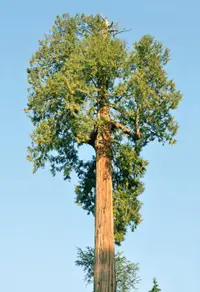

western redcedar Identification (Thuja plicata)

To recognize western redcedar, look for flattened sprays of scale-like leaves arranged in opposite pairs, with drooping branchlets that hang in layered sheets. Trees are tall and narrowly conical.

The trunk often shows fibrous, reddish-brown bark that peels in long vertical strips, and mature branchlets stay distinctly flattened rather than rounded.

Thuja plicata Identification

Check Your Plant ID

Check your plant ID by uploading a clear photo to Botan.

Clear images work best. Avoid photos taken too close or too far away

Check the foliage sprays, trunk, and cones on Thuja plicata.

  • Branchlets form flat, fan-like sprays that hang slightly at the tips.
  • Leaves are tiny, overlapping scales, about 1⁄16–1⁄8 inch (2–3 mm) long, pressed tightly to the stems.
  • The crown is narrow to broadly conical, often with a strong central leader and drooping side branches.
  • Cones are small and slender, about 1⁄2 inch (1–1.5 cm) long, with 8–12 thin scales.
  • Older trunks show fibrous, stringy bark in long vertical strips.

Crushed foliage often helps confirm the ID if visible traits are close.

Western redcedar shows clear age-related changes in foliage, branching, cones, and trunk form.

  • Seedling: Early plants carry soft, needle-like juvenile leaves instead of flat spray-like scales, with a slender upright stem and sparse side branching.
  • Juvenile plant: Foliage begins mixing awl-like juvenile leaves with short scale leaves; branchlets stay finer and less flattened than on older plants.
  • Mature plant: Adults form dense, strongly flattened sprays of overlapping scale leaves and a straight trunk that may broaden with a buttressed base.
  • Fruiting stage: Seed cones appear at branch tips as small, oblong structures about 1/2 inch (1.3 cm) long, turning from green to brown as they mature.

Several named selections of western redcedar are identifiable by foliage color and growth habit.

  • Thuja plicata 'Zebrina': New sprays are irregularly banded yellow and green, giving the branchlets a striped look unlike the plain green typical form.
  • Thuja plicata 'Atrovirens': Foliage is notably darker, deep glossy green and the crown is narrower and denser than the species.
  • Thuja plicata 'Whipcord': Forms a low mound, often about 4-5 feet tall and wide (1.2-1.5 m), with long, string-like drooping branchlets instead of flat fan-shaped sprays.
  • Thuja plicata 'Goldy': Outer foliage stays bright golden yellow through much of the year rather than medium to dark green.

Thuja plicata stays evergreen, so it does not develop bare winter stems. In cold weather, the flattened sprays often darken to a deeper green or slightly bronzy tone. Pollen cones become noticeable in spring at branch tips, and seed cones develop by late summer to fall as small, upright cones among the foliage.

A few conifers are regularly mistaken for Thuja plicata.

western arborvitae(Thuja occidentalis)

Often confused because both have flattened, scale-like sprays. Telling features: western arborvitae usually has smaller sprays and narrower, upright branchlets; its mature cones are typically about 1/2 inch (1.3 cm) long, smaller than western redcedar cones.

Lawson cypress(Chamaecyparis lawsoniana)

Similar in having flat evergreen sprays. Check the cones first: Lawson cypress has round, berry-like cones about 1/4 to 3/8 inch (0.6 to 1 cm) wide, not the longer, layered cones of Thuja. Branchlets also tend to look finer and more feathery.

Native to the Pacific coast of North America, Thuja plicata ranges from southeastern Alaska through British Columbia and Washington to Oregon and northwestern California, with inland populations into Idaho and western Montana. It is most often found in moist to wet conifer forests, stream corridors, swamps, and coastal lowlands, and also in mountain valleys. Seeing a large Thuja in cool, humid forests of the Pacific Northwest helps narrow identification toward this species.

Thuja plicata has a meaningful safety concern because its foliage and sap can irritate skin in some people, and ingesting plant material can be harmful to humans and pets.

  • Skin contact: Leaves and sap may cause contact dermatitis, a skin rash or irritation, in sensitive people after handling branches or crushed foliage.
  • Ingestion: Leaves and other plant parts contain compounds that can be harmful if eaten by humans or pets. This is an ingestion risk, not a routine touch risk.

Confirm It from a Photo

Use Botan to identify or verify the plant from an image, which helps avoid mix-ups with similar species.

FAQ

The clearest feature is its flattened, drooping sprays of scale-like leaves. The underside usually shows small white stomatal markings, and crushed foliage has a strong resinous scent that helps with western redcedar identification.

More Plant Identification Guides

Identify It. Learn More About It.

Use Botan to identify a plant from a photo, then get species-specific care information, safety notes, and common problems.

Botan app identifying a plant from a photo
Thorny Plants: A Comprehensive Guide

10 min read · 25 Aug 2026

Thorny Plants: A Comprehensive Guide

Many plants defend themselves with sharp thorns. This guide explores over 20 examples among flowers, shrubs, trees, and vines. You'll learn what each plant looks like, why it grows thorns, and how to quickly identify them.

Plant Recommendations
Thorny Plants: A Comprehensive Guide
How to Repot a Plant: A Step-by-Step Guide

7 min read · 28 May 2026

How to Repot a Plant: A Step-by-Step Guide

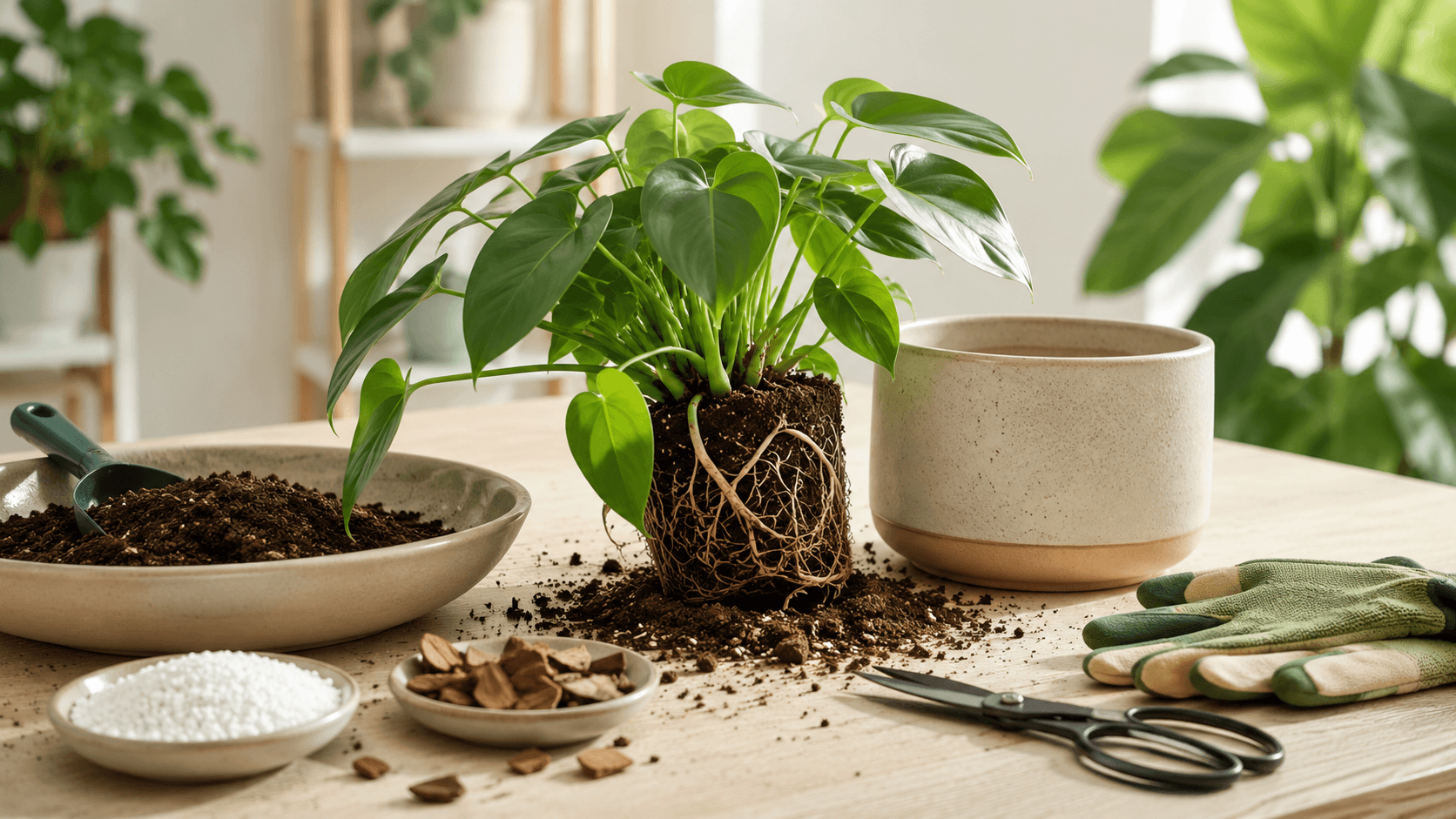
In spring, many plants need repotting—an essential part of care. To avoid stress, consider the plant’s type and size. This article offers a step-by-step guide for repotting indoors or outdoors and shows how to check plant health and get care tips using the Botan app.

Plant Care
How to Repot a Plant: A Step-by-Step Guide
Banana Peel Water for Plants: 5 Things to Know Before Trying It

5 min read · 9 Jul 2026

Banana Peel Water for Plants: 5 Things to Know Before Trying It

Banana water can provide potassium and some nutrients that may support plant growth, but it is not a universal fix. Use it carefully and only when the plant actually shows signs of nutrient deficiency rather than as a routine treatment.

Plant Care
Banana Peel Water for Plants: 5 Things to Know Before Trying It