Seed pre-treatment
Scarify the hard seed coat lightly with sandpaper and soak seeds in room-temperature water for 12–24 hours before sowing to improve germination speed and uniformity when growing prairie acacia.

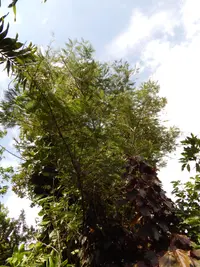
Prairie acacia, Acaciella angustissima, is a small shrubby legume known for its fine, feathery foliage and fluffy white flower clusters. It often forms dense thickets with a light, airy look.
This species is native to dry, open habitats in parts of the southern United States, Mexico, and Central America. It is drought-tolerant and fixes nitrogen in the soil, which can support nearby plants.
Its tolerance of poor soils and dry conditions makes it relatively easy to establish in suitable climates. Those learning how to care for prairie acacia should note that it prefers full sun, well-drained soil, and only occasional supplemental water once established.

Care Difficulty
Moderate Care

Light Preference
Full Sun

Water Requirements
Low Water

Temperature Preference
Warm Climate

Hardiness Zone
8–11

Soil Texture
Sandy, Loamy, Rocky

Soil pH
Slightly acidic (6.5–7.0), Neutral (7.0)

Soil Drainage
Well-drained

Fertilization
Minimal (feed rarely)
Scan your plant to receive care tips personalized for your specific plant
Available on iOS and Android
This sun-loving shrub thrives in open, bright conditions typical of dry habitats.
This drought-tolerant legume prefers deep, infrequent watering once established.
This species is adapted to warm, subtropical to warm-temperate climates with mild winters.
This species tolerates a wide humidity range and rarely needs special humidity management.
This plant prefers freely draining, slightly lean soil that does not stay wet.
This species can be grown in containers for early establishment or in space-limited gardens.
This drought-tolerant shrub usually needs minimal feeding, especially in native or lean soils.
Acaciella angustissima benefits from light structural pruning to keep it healthy and accessible.
This species is more often transplanted outdoors than grown long-term in containers.
Acaciella angustissima is most commonly propagated from seed under warm conditions.
This shrub is moderately frost tolerant in mild climates but benefits from some winter protection in colder areas.

Plant Health Check
Not sure what's wrong with your plant? Check your plant's health inside the app.
Acaciella angustissima forms nodules on its roots that host Rhizobium bacteria, which convert atmospheric nitrogen into forms usable by plants and help improve soil fertility over time.
The leaves are unusually rich in protein for a shrub, which is why in parts of Mesoamerica it has been tested and locally used as a supplemental fodder resource for goats, sheep, and cattle.
This species occurs naturally from the southern United States through Mexico and Central America into parts of northern South America, showing strong ecological adaptability to different warm, seasonally dry habitats.

Genetic and morphological studies have shown that this species, once placed in the large genus Acacia, is distinct enough to belong in the separate genus Acaciella, contributing to major taxonomic revisions of New World acacias.
This species spreads mainly by seed and can self-sow readily in open, disturbed ground. In dry, well-managed gardens it is usually manageable, but in warm regions with poor control it may form dense thickets over time.
Keep your plants happy and healthy with plant identification, disease detection, and easy care guidance.