Sturdy support system
Install a strong, rust-resistant wire or post-and-rail support before the plant matures, and tie new canes loosely with soft ties so wind cannot rock the base and snap fresh growth.

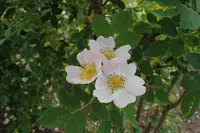
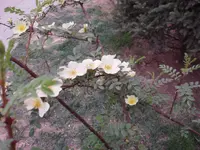
Northern dog-rose, Rosa caesia, is a hardy wild rose species typically found in hedgerows, woodland edges, and open scrub. It forms arching, prickly stems with greyish-blue bloom on the young shoots.
The plant bears simple, toothed leaves and soft pink, single flowers followed by red hips that support wildlife. It is native to parts of Europe and western Asia, often thriving in cool to mild climates.
Rosa caesia generally prefers sun to light shade, moderately moist but well-drained soil, and benefits from an open position with good air movement. Once established, it is robust and quite forgiving, which makes it relatively straightforward to care for Northern Dog-rose in suitable conditions.

Care Difficulty
Moderate Care

Light Preference
Full Sun

Water Requirements
Moderate Water

Temperature Preference
Cold Hardy

Hardiness Zone
4–7

Soil Texture
Sandy, Loamy, Rocky

Soil pH
Slightly acidic (6.5–7.0), Neutral (7.0)

Soil Drainage
Well-drained

Fertilization
Minimal (feed rarely)
Scan your plant to receive care tips personalized for your specific plant
Available on iOS and Android
Rosa caesia performs best in open sites with consistent sun exposure.
Rosa caesia prefers evenly moist, well-drained soil rather than constant saturation.
This rose is a hardy shrub adapted to temperate outdoor climates with cold winters.
Humidity is not a major factor for Rosa caesia, which thrives in typical outdoor conditions.
Rosa caesia prefers moderately fertile, well-structured mineral soil that drains freely yet holds steady moisture.
This species can be grown in containers if the pot is large and stable enough for its shrubby, suckering habit.
Rosa caesia usually needs modest feeding, especially when grown in poorer soils or containers.
Rosa caesia benefits from light, structured pruning to maintain health and flowering.
This wild shrub is more often transplanted in the ground than repotted, and moves best when dormant.
Rosa caesia is commonly propagated for restoration plantings and hedgerows using several straightforward methods.
This cold-hardy rose usually needs minimal winter attention in the ground across most temperate climates.

Plant Health Check
Not sure what's wrong with your plant? Check your plant's health inside the app.
The leaf undersides of Rosa caesia often show a noticeable bluish or glaucous coating caused by a fine waxy layer, which gives the plant its common name of glaucous dog-rose and helps reduce water loss in exposed habitats.
This species is characteristically associated with calcareous (lime-rich) substrates such as chalk and limestone, and in many European floras it serves as an indicator of base-rich, relatively dry scrub and woodland edge communities.
Rosa caesia belongs to a complex of closely related dog-roses that frequently hybridize, and careful examination of features like prickle shape, leaflet texture, and hip form is often needed for reliable identification by field botanists.
Yes, this species is very attractive to bees, hoverflies, and some butterflies. Its simple, open flowers provide easy access to pollen and nectar, supporting local pollinators and increasing overall garden biodiversity when planted in groups.
Keep your plants happy and healthy with plant identification, disease detection, and easy care guidance.