Support Against Wind
Install a sturdy stake or low rose hoop on exposed sites to keep long canes from rocking in the wind, which reduces root disturbance and cane breakage over time.

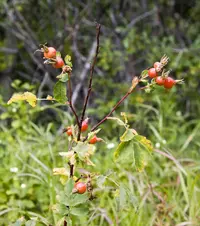
Mountain rose, Rosa montana, is a wild shrub rose valued for its simple beauty and resilience. It typically forms a bushy, upright plant with branching stems and sharp thorns.
The foliage is usually medium green, with single or semi-double flowers in soft pink to deeper rose tones, followed by small decorative hips. It occurs naturally in mountainous regions, where it adapts to cooler temperatures and relatively poor, well-drained soils.
This background makes it generally robust in gardens, provided it has enough light and is not waterlogged. For those learning how to care for Mountain Rose, its main needs are sun, airflow, and soil that does not stay wet for long.

Care Difficulty
Moderate Care

Light Preference
Full Sun

Water Requirements
Moderate Water

Temperature Preference
Cool Climate

Hardiness Zone
5–8

Soil Texture
Loamy, Sandy, Clay

Soil pH
Acidic (5.5–6.5), Slightly acidic (6.5–7.0)

Soil Drainage
Moist but well-drained

Fertilization
Minimal (feed rarely)
Scan your plant to receive care tips personalized for your specific plant
Available on iOS and Android
Rosa montana performs best in bright, direct outdoor light with some protection from harsh afternoon sun.
Rosa montana prefers consistently moist but not waterlogged soil, with watering guided by soil feel rather than a fixed schedule.
Rosa montana is a hardy outdoor shrub that tolerates cool winters and moderate summer heat when properly established.
Rosa montana manages well in outdoor conditions and usually does not need special humidity control.
Rosa montana prefers moderately fertile, well-structured soil that drains freely yet retains some moisture.
This species can be grown in containers if the pot is large and stable enough for its root system.
Rosa montana benefits from modest, balanced feeding rather than heavy fertilization.
Rosa montana responds well to light, structured pruning that maintains health and flowering.
This rose is more often transplanted in the ground than kept long term in containers.
Rosa montana is commonly propagated by semi-hardwood cuttings and seeds.
This species is generally cold-hardy but benefits from simple winter care in colder regions.

Plant Health Check
Not sure what's wrong with your plant? Check your plant's health inside the app.
This wild rose is naturally found in mountainous regions of central and southern Europe, where it grows as a shrub on rocky slopes, forest edges, and subalpine meadows, often between mid- to high-elevation zones. Its presence is tied to cooler summer temperatures and well-drained, often calcareous, soils.
The plant forms long, arching canes equipped with numerous prickles that help support it among neighboring vegetation on slopes. This growth form allows it to exploit light gaps while remaining relatively resistant to browsing by herbivores.
Its red hips (fruits) develop after flowering and are an important seasonal food source for birds and small mammals in its native mountain habitats. These animals contribute to seed dispersal by eating the hips and spreading the seeds across the landscape.
Poor flowering usually relates to insufficient light, incorrect pruning time, or nutrient imbalance. This species blooms on new growth, so heavy pruning in late spring, excess nitrogen, or too much shade often reduces buds and flowers.
Keep your plants happy and healthy with plant identification, disease detection, and easy care guidance.